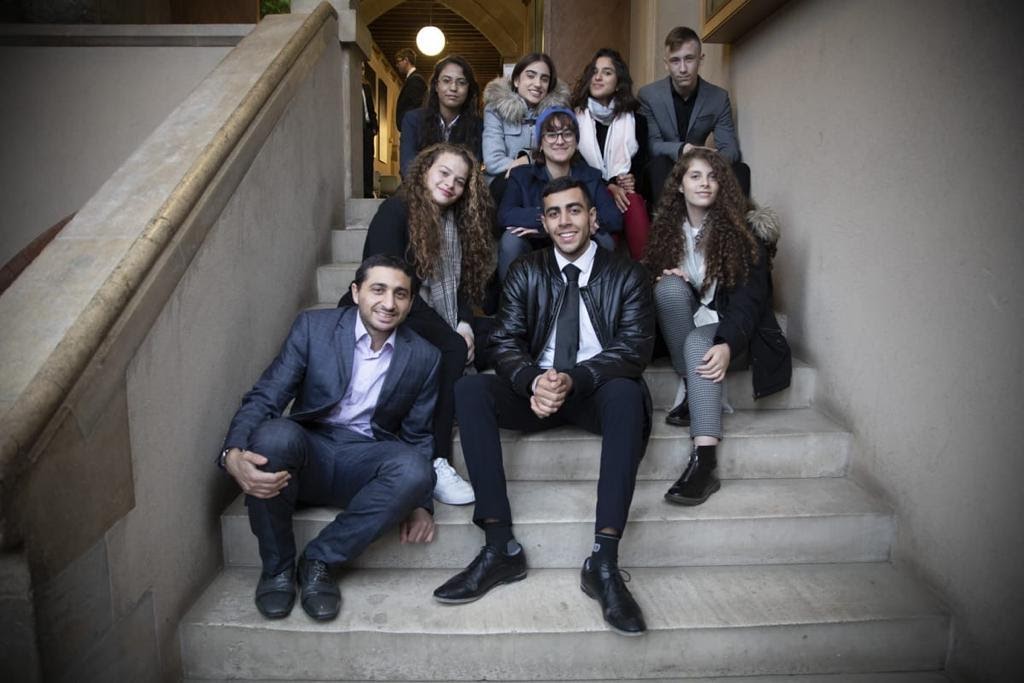
IOMUN 14: Students from a Dozen Schools on 3 Continents Debate Ethics of AIs

On Sunday November 12, over 50 students from over a dozen schools around Israel as well as Europe, Asia and South America, participated in IOMUN (International Online MUN) 14. The students gave speeches, debated and negotiated resolutions on the topic of “Ethical challenges of ChatGPT and AIs, dealing with issues like education, medicine and diplomacy.

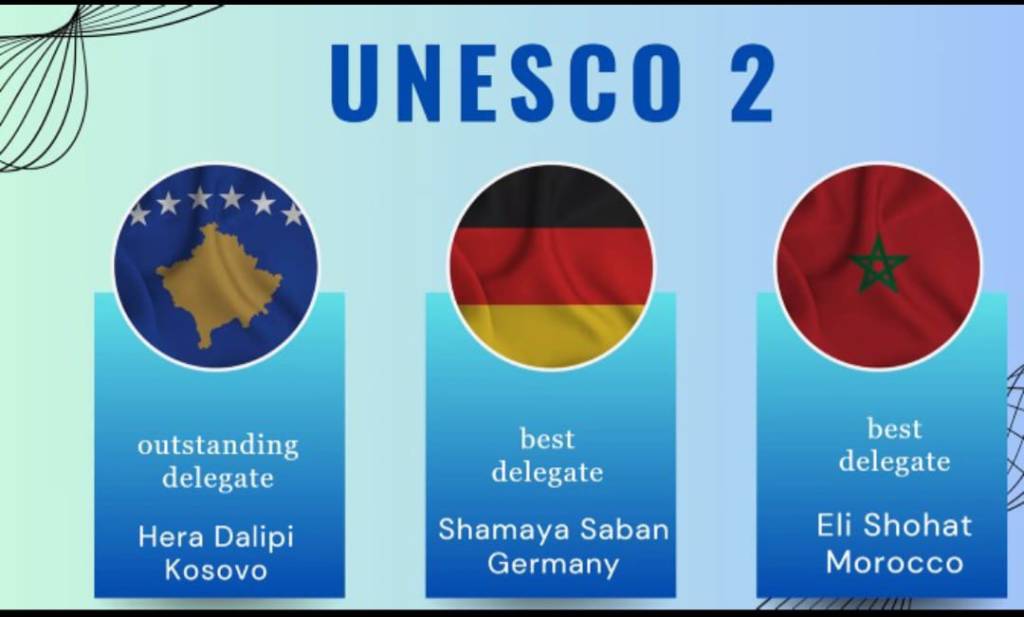
At the closing ceremony, the students heard from US diplomat Caroline Platt, who praised the students for their engaging debates, and for the initiative to come together during a challenging period. Then the award winners were recognized. In the beginners committee, Hera Dalipi (Pristina high school) won Outstanding Delegate, while Shamaya Saban (Shaked Darca) and Eli Shohat (Chen Young Ambassadors School) won Best Delegate. In the advanced committee, Andrey Rudnevskiy (Atid Raziel) and Roy Berenstein (Atid Lod) were outstanding delegates, and Itamar Assenheim (Atid Lod) and Yehuda Lester (Shaked Darca) were best delegates.

IOMUN 14 was led by a dedicated secretariat of Yaniv Becker from the Chen Young Ambassadors school, Maria Cheremina and Ethan Moncarz from the Walworth Barbour American International School, and Nana Awadeie from the Greek Catholic high school. Yuval Saar and Tslil Israeli from Atid Lod high school for Sciences served as chairs.

IOMUN 15 will take place on Sunday December 3. Registration and topics will be available on the IOMUN Instagram account.

Sukkat Shalom 2023

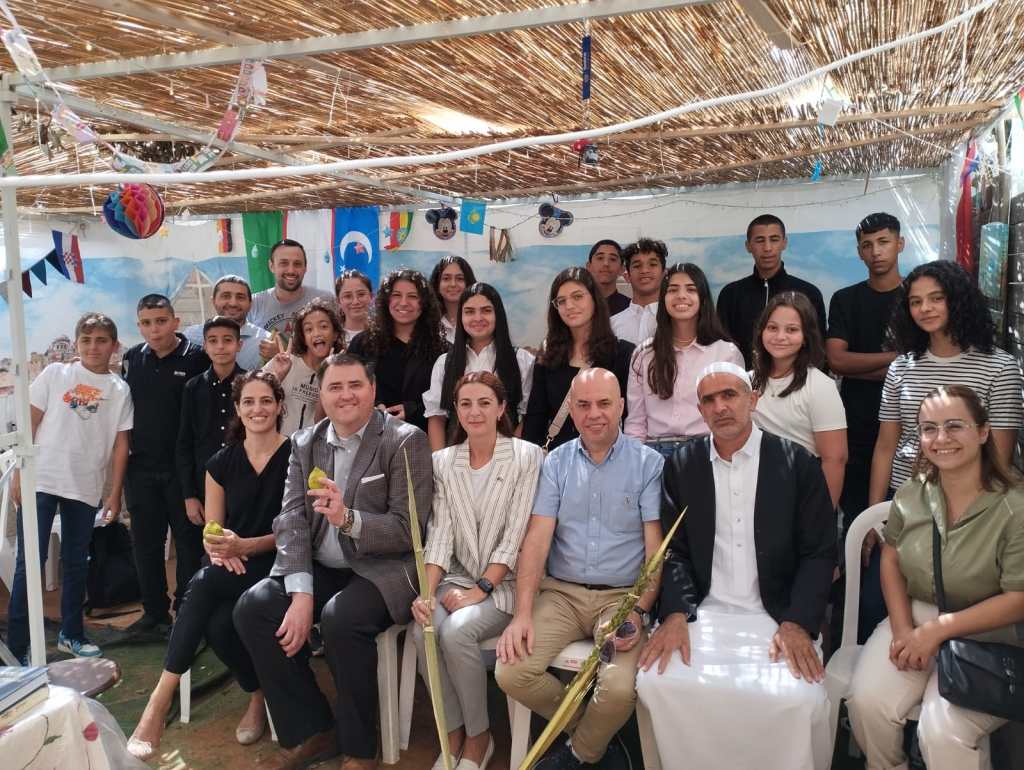
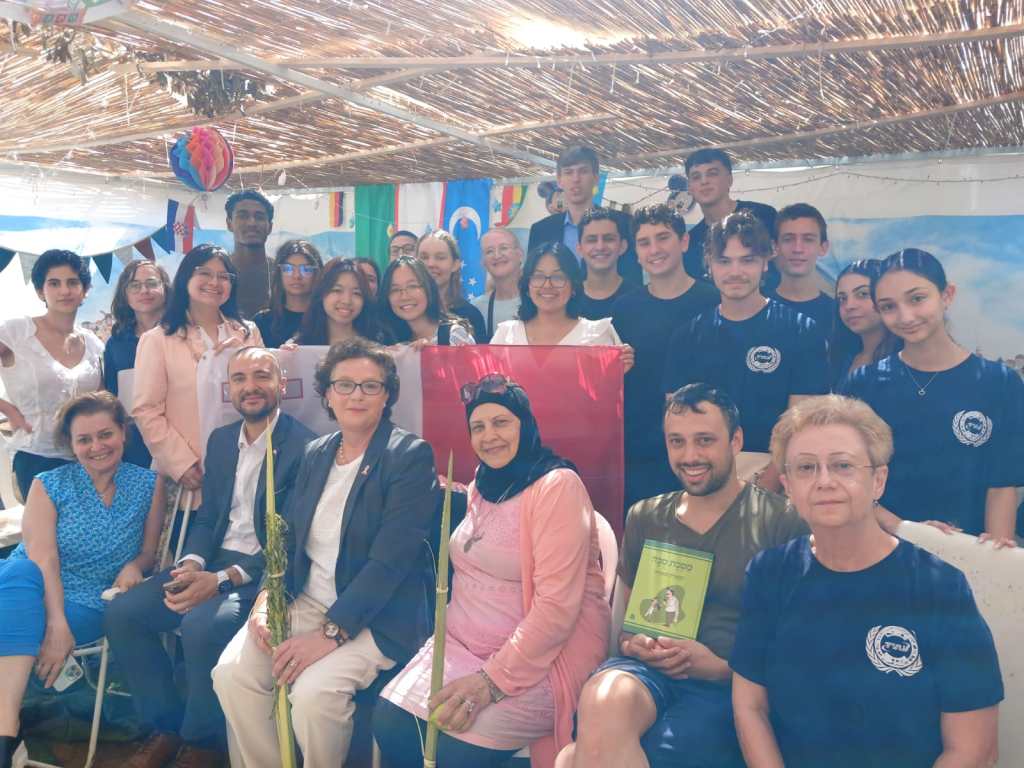
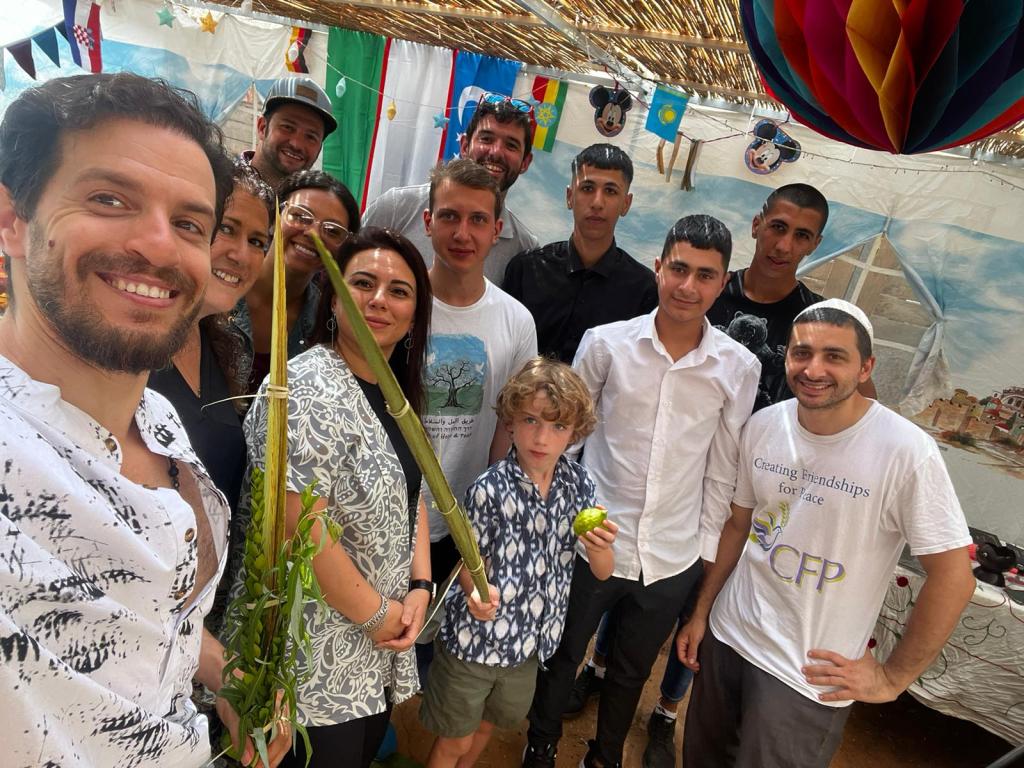
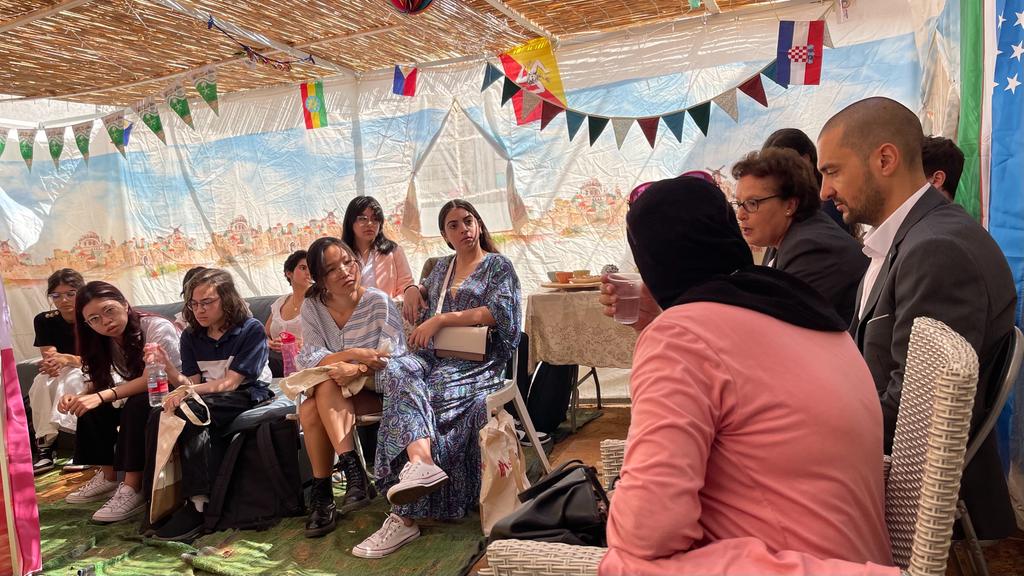
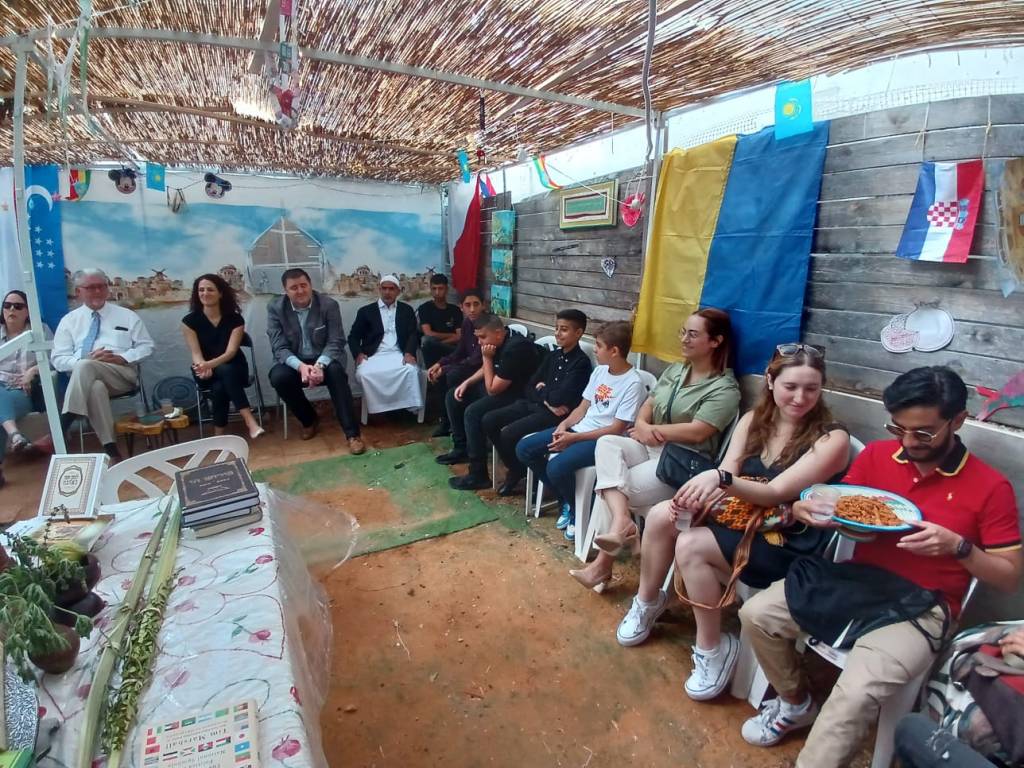
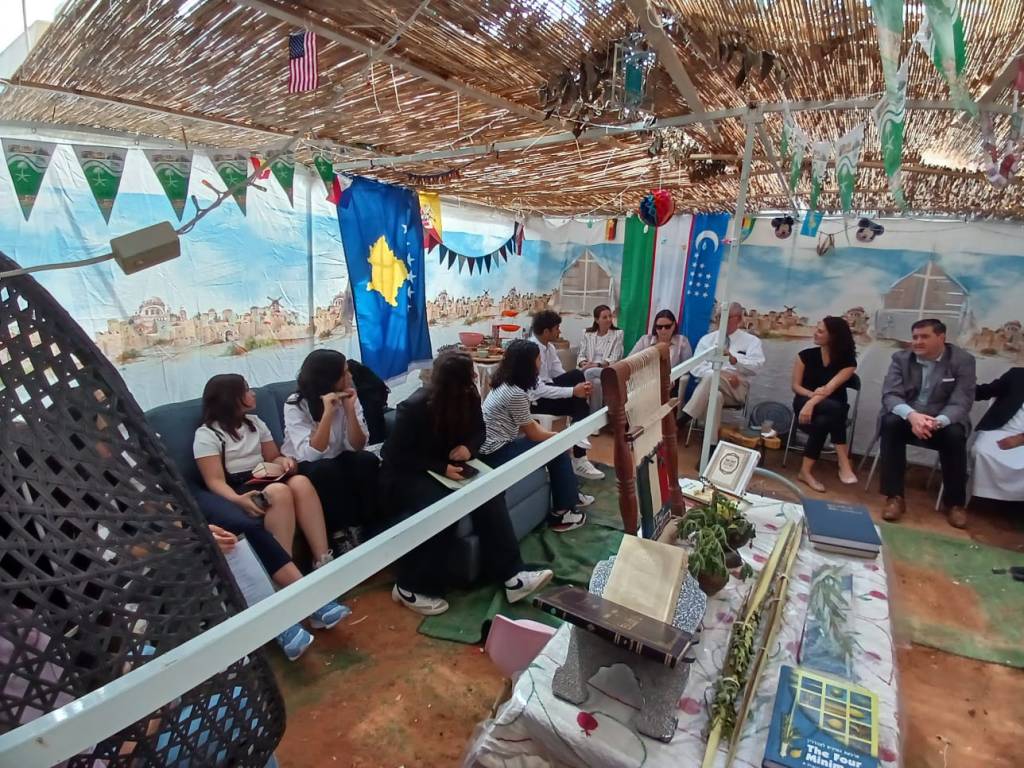
In what has become an annual tradition, Debate for Peace once again held meetings with students, diplomats and civil society leaders from various faiths and communities. This year the meetings were held on Sunday, Wednesday and Thursday, October 1, 4 and 5.

During the meetings, all of the participants introduced themselves, and received an explanation about the unique characteristics of the holiday, from the Sukkah to the “4 Species”, to the commandment to be happy over the holiday, as well as various customs and the agricultural components of the holiday. The students were also able to ask questions, both about the holiday and diplomacy.

Participants came from cities all over Israel and the West Bank, as well as from various other countries, representing over 15 countries and 5 continents. For about a half of the 70 participants, it was their first visit in a Sukkah, making for a very memorable intercultural experience.

Debate for Peace thanks all of the participants, including the Ambassador and First Secretary of the Embassy of Malta; Chargée d’Affaires of the Embassy of Kosovo; Deputy Chief of Mission of the Embassy of Cyprus; Director of the Romanian Cultural Institute; head of the Azerbaijan Tourism Representative Office; Vice Consul and Deputy Management Counselor at the US Embassy; Representative of the Taipei Economic and Cultural Office; the Jerusalem Representative of the Baha’i International Secretariat; and the head of the Waqf of Kufr Yasif, as well as delegations from Atid Lod, Givat Haviva International School, and QSchools.

Delegation to the United Nations in Vienna

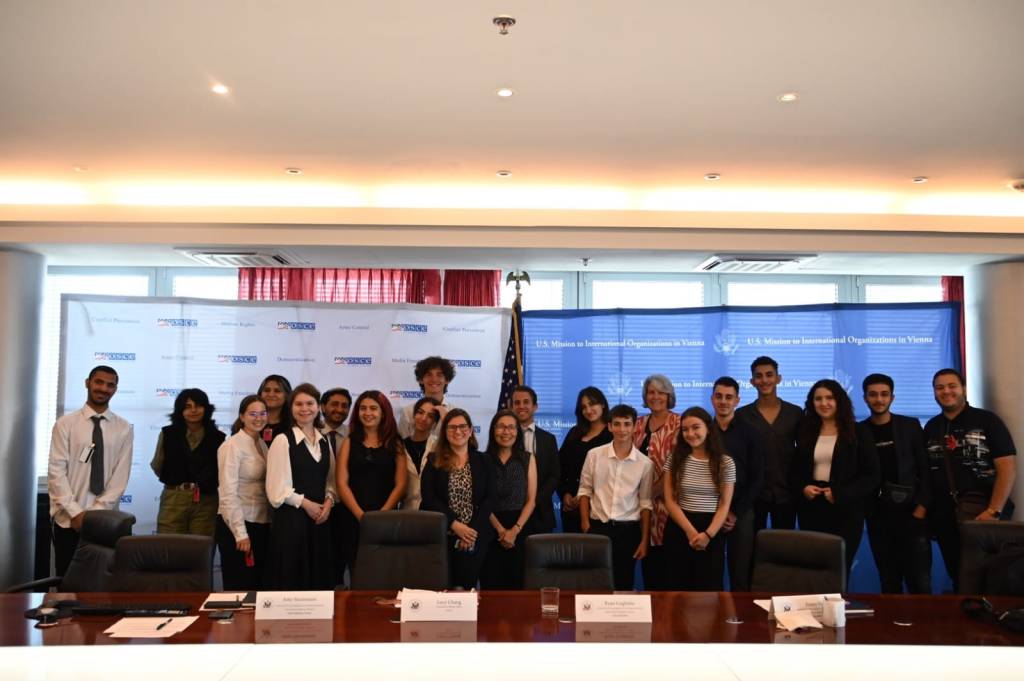
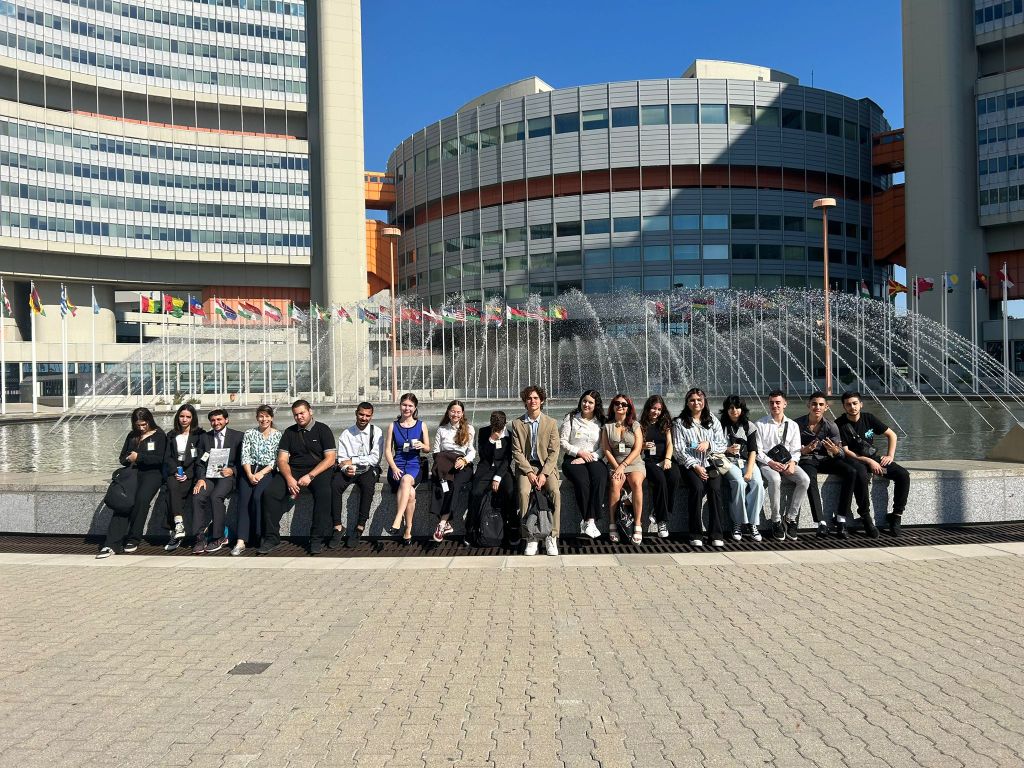
It’s never too early to start engaging in diplomacy. 15 Model UN students: ages 13-18, along with 2 alumni and 2 teachers, traveled to the UN headquarters in Vienna this month to learn more about diplomacy in practice. 

The delegation, comprised of Druze, Jewish and Palestinian students, first visited the Spanish Embassy in Vienna, where they met with the Charge d’Affaires and Deputy Permanent Representative, and learned about multilateral diplomacy with the OSCE as well as efforts at the UN to prevent nuclear weapons proliferation, and promote cooperation in outer space. Later, they toured the historic city hall, and saw the hall where Vienna’s parliament meets.

The next day the students visited the UN, where they met with a public information officer at UNHCR and learned about the challenges that refugees face, and the work of UNHCR to help them, within the framework of international treaties. Later in the day, at a meeting with the Independent International Commission of Inquiry on Ukraine, the focus was on public international law, and the intricacies of the Commission’s mandate and how its members work to carry it out despite an ongoing war.

At the Foreign Ministry of Austria, the delegation met the head of the Middle East unit and discussed the challenges facing Israel domestically, and in the Israeli-Palestinian context, as well as trends facing the MENA region as a whole. 

At the US Mission to the United Nations in Vienna, the group heard from a panel of American diplomats about the dynamic work in the spheres of combating drug trafficking and organized crime; keeping outer space clean and peaceful, and limiting nuclear weapons proliferation while encouraging nuclear energy as a clean energy alternative. 

Finally, the delegation met with Ambassador Natasha Meli Daudey, who also serves as the Permanent Representative of Malta to the OSCE and the UN in Vienna. The Ambassador highlighted the challenges of engaging in bilateral and multilateral diplomacy simultaneously, while also being part of a larger entity, the European Union, with its own foreign policy impact. 

All of the students returned home with a heightened understanding of the nuances of international law and a greater appreciation for multilateral diplomacy. Much thanks to all of the diplomats, embassies and missions who took the time to meet the delegation.

Interfaith Delegation from Israel Visits Albania, North Macedonia and Kosovo

A Debate for Peace delegation featuring students and educators from four religions and ten cities around Israel traveled to three countries in the Balkans in July, learning about the history and culture of the region. Prior to the trip, a meeting was held at the Embassy of Kosovo in Jerusalem, where they learned about the concept of BESA, through which Jews were saved courageously during the Holocaust by Muslim and Christian Albanian families.

The group traveled first to Albania, where they visited southern Albania, including the Blue Eye nature preserve; UNESCO world heritage sites of Gjirokaster castle and Butrint archeological park, and the 5th century synagogue remains in Saranda. 

Crossing into North Macedonia, the group stopped at Lake Ohrid, which straddles Albania and North Macedonia. Continuing on to Bitola (Monastir), the delegation visited the Jewish cemetery, stopping for a few minutes to clear weeds from some of the tombstones. In the city center of Bitola, the group was led by a local volunteer, Zoran, who told them about the Jewish history of the city, and showed them buildings that remained behind, like the Alliance Jewish school, after the devastating impact of the Holocaust. Later they stopped at the municipal museum, at the site where Kamal Ataturk once attended high school.

In Skopje the group went to the Jewish community center and synagogue, and heard about the local community. At the Holocaust Museum, one of the only dedicated Holocaust museums in the world, the students learned more about the Holocaust in Macedonia, where nearly the entire Jewish community had been deported and murdered. They also visited Mother Theresa’s home.

Arriving in Prizren, Kosovo, the group celebrated shabbat dinner with the local Jewish community, as well as local youth. After a short explanation about Judaism and shabbat, kiddush was recited and the Israeli and Kosovan youth got to interact. The next morning the students visited the Roman Catholic Church, Sinan Pasha mosque, Halveti Suffi center, as well as the site of Jewish community center being constructed.

Concluding the trip in Pristina, the capital of Kosovo, the delegation visited UNMIK, the UN peacekeeping mission in Kosovo, for a fascinating discussion on the diverse challenges faced in peacebuilding with a range of experts from the political affairs, media and communications, and human rights offices. 

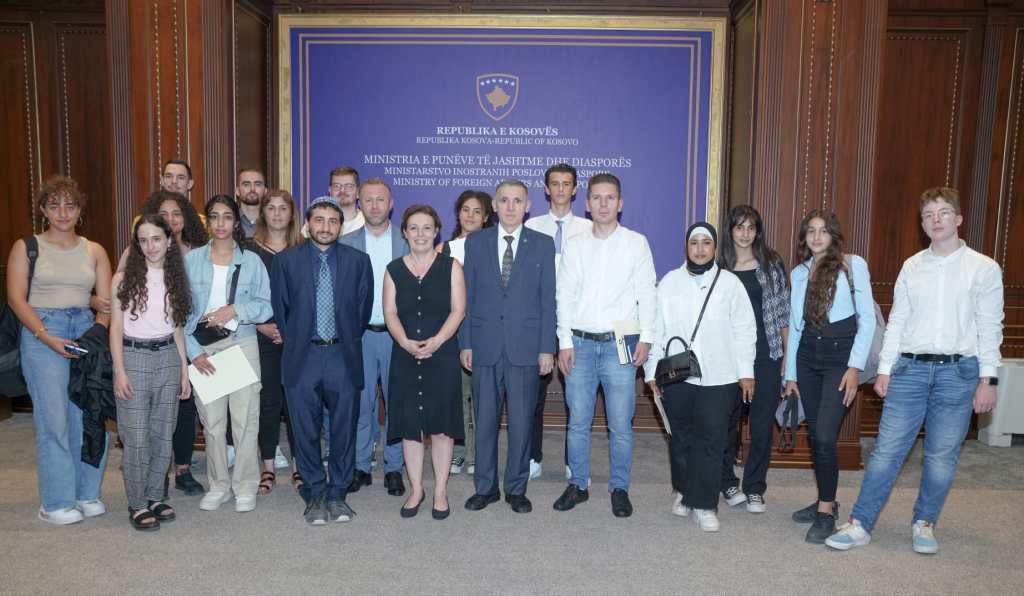
A planning session together with local youth under the auspices of the Ministry of Culture, Youth and Sport laid the groundwork for the third Kosovo International Model UN, scheduled for December 2023. Finally the delegation held two important meetings with Kosovo ministries. The first meeting was with the Minister of Regional Economic Development, who is from the Turkish community in Kosovo, and who talked about his unique office and their work to advance economic development throughout the country. The final meeting was held with the Minister of Foreign Affairs and the Diaspora, who entertained questions from all of the students, and explained the direction of her office to the aspiring diplomats.

Debate for Peace extends its deep appreciation to the embassy of Kosovo in Jerusalem; key partner ICHAT in Pristina; the Jewish community in Prizren; UNMIK, the ministries of Culture, Youth and Sport; Regional Economic Development, and Foreign Affairs and the Diaspora, Dr. Shelly Drummer in Israel; Gentian in Albania; Zoran in Bitola; Ana and Maja from the Jewish community in Skopje; the Demiri family in Prizren, and Dr. Ilir in Pristina, for their assistance and hospitality throughout the delegation.

The Promised Neverland

bashar 2

The Promised Neverland by Bashar

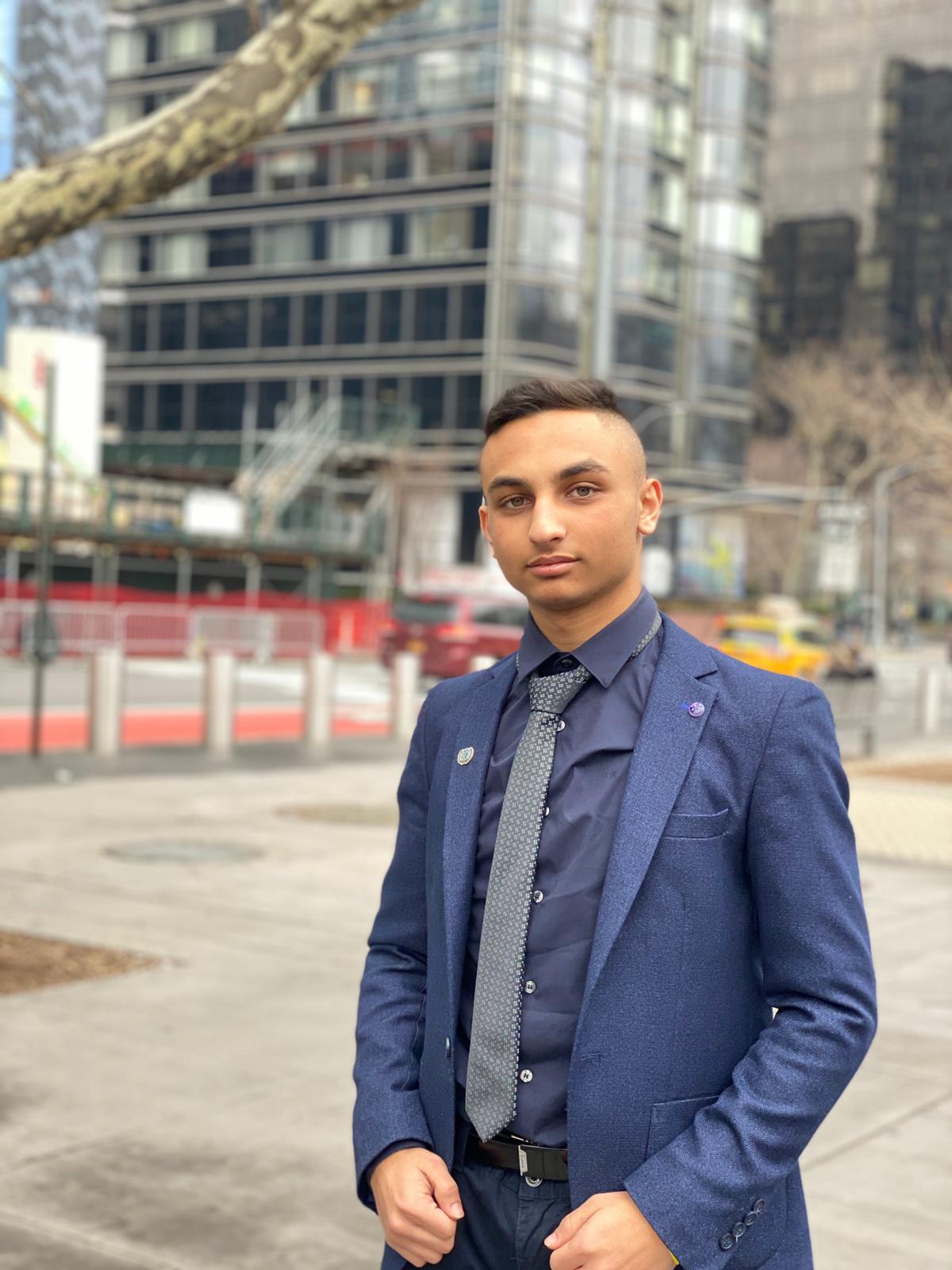
The Promised Neverland is a Japanese TV series which talks about the dream land everyone wants to visit. In the small village I live in, the US is just like that Promised Neverland. So I was shocked when my teacher told me that I was going participate in the John Hopkins University Model United Nations, in Baltimore, USA.

Although it was my first time to go abroad without my family, I wasn’t scared or stressed at all. Each new opportunity I try just gets me more excited. Our group consisted of four Arab students and four Jewish students, through the program DfP (Debate for Peace), a program for educating the younger generation that there can be peace between Jews and Arabs.

To be honest at first I didn’t believe in the idea that Jews and Arabs could get along with each other but this trip changed my whole view about Jews. I discovered that they are very kind and nice people, and I’m still in touch with them so far!

The first station during the trip was New York City where we spent three days in a motel and visited many places such as the Statue of Liberty and met some important political people. It wasn’t easy to catch up with Steven’s fast walk but it was pretty funny😂.

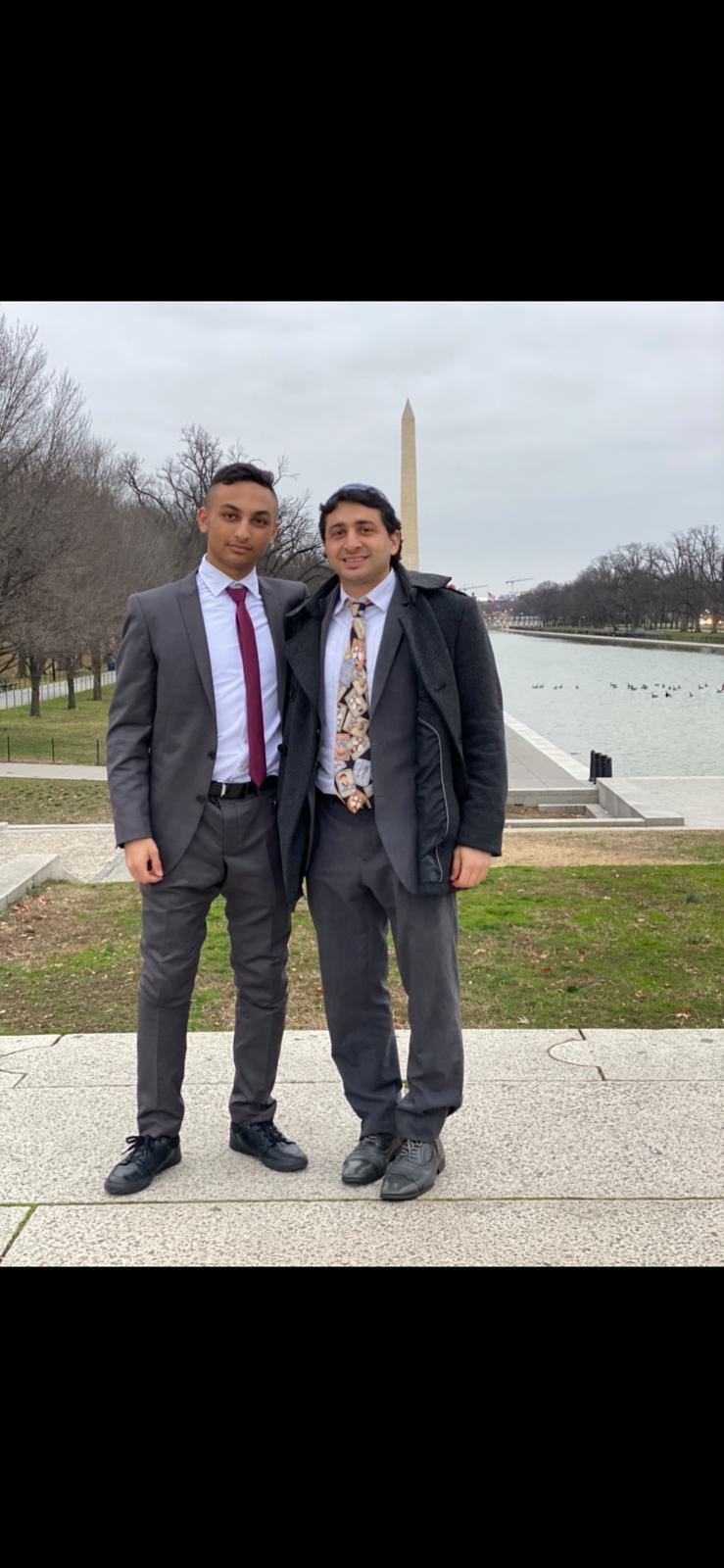
The second station was Washington DC. I hoped to meet President Trump but unfortunately it wasn’t in our plan. At least we walked beside the White House and it wasn’t as I expected, it was bigger and more beautiful than we see in the movies. We met important people and visited places that I never thought I would ever enter in my life. But at least I could now cope with Steven’s fast walking😂

The last three days were the conference that was held in Baltimore hosted by John Hopkins University. The committee I was in talked about Brexit and post-Brexit (Britain exit from the European Union), and I represented the Member of the British Parliament Luciana Berger.

Even though it was a little bit difficult to debate with 86 delegates, they all were amazing and funny people.

The best part of the trip is that I got to know the Jewish students and their culture better than before. The previous idea I had is the opposite of what I discovered during this trip.

I’m very glad that I could make my parents proud of me and live up to my teacher’s expectations.

bashar

Most Likely to be a Dictator at Oxford Global MUN

By Yaari

rawan 2

Earlier this year I had the pleasure of participating in the prestigious OXfORD GLOBAL MUN which is hosted at the University of Oxford campus in Oxford, England. This was one of the most well organized, enjoyable, and overall educational Model United Nations conferences I have had the opportunity of participating in. Between the beautiful campus, meeting amazing new people, and the packed 3 day conference, I didn’t have a second to breathe. 

I can honestly say that I enjoyed every bit of it. The sheer amount of delegations and students from other countries which attended was overwhelming. Having the opportunity to experience so many different cultures is definitely a massive upside of attending, coupled with the amazing feeling of changing minds and hearts one by one about the state of Israel and the people who live here. 

All that aside, I was assigned to represent the Russian Federation on the topic of sustainability in development, an extremely important and relevant topic nowadays. After that we had a surprise crisis targeted at me, (fake news) and then we swiftly moved to the second topic, which was the use of telecommunications in developing countries. At the end, not only did I win “Most Likely to be a Dictator” award, Ii also met some genuinely great people whom I have kept In touch with.

Learning about My Identity at Oxford

ansam

Hey my name is Ansam, I’m 16 years old, I am Palestinian and I was born in Israel. About a year ago Steven was invited to a meeting at my school, he told us about MUN, and we discussed some topics. After approximately two weeks, my teacher told me that I was chosen to attend an International conference at Oxford University. I was shocked because I had no idea yet about what to expect at conferences. 

I remember how scared I was in my first Model UN conference, and I was in the advanced committee! In my second conference I invested much effort and I felt a huge responsibility to do better. But unfortunately the second conference didn’t go well too. As the days went by I was getting more stressed and scared. I had to improve my English, to increase my confidence and my speaking skills. 

On 13.11.2019 the journey to London/Oxford started. I was so excited and nervous. We had many interesting meetings with magnificent people. The first meeting was with Professor Kimberley Trapp. She is a professor of public international law. We had about two meetings discussing the Palestinian-Israeli conflict, and these meetings made me realize more how much I struggle with my own personal identity. Every time we introduced ourselves in a meeting or to someone I felt lost and confused about telling who I am. 

In addition to the meetings that we had, we went to the embassy of Ecuador and the Kosovo embassy and it was truly astounding to learn more about these countries. The best part for me was the museums: The museum of natural history, National Gallery and the British museum.

My experience at Oxford was amazing although it wasn’t as I expected. I just wished that I was more prepared and ready. Besides all the fatigue and the stress, I had much fun with my friends and I met new people from different countries and cultures as well as making new friends. And I also tried some new dishes for the first time ッ 

A little while after the conference of Oxford, I attended the Hey MUN conference, where I won an award! And it was my first one and it felt so good;)♡

Educate for Peace; not Politics

By: David V


On Tuesday, February 25th, a week before the Israeli Elections to the 23rd Knesset, my high-school, Tichon Maccabim-Reut “Mor” in Modi’in hosted a meeting between The Parents Circle Families Forum and our 12th-grade students. It was met with heavy criticism from local residents and local politicians (one of two schools that were hit by heavy criticism – the other being a high-school in the coastal city of Holon).

I’ll start by talking about who, or what is the Parents-Circle Families Forum (PCFF): It is a grassroots organization of Palestinian and Israeli families who have lost immediate family members due to the on-going Israeli-Palestinian conflict. It was founded by Yitzhak Frankenthal alongside other bereaved families after the death of his son, 19-year-old soldier Arik Frankenthal, who was kidnapped and killed by Hamas.

The PCFF is famous for its joint Israeli-Palestinian memorial day ceremony, which occurs annually around Israel’s memorial day, “Yom HaZikaron”. However, the PCFF has also organized “dialogue meetings” as part of its initiative, which according to them seeks: “To convey its [PCFF] message, in dialogue meetings for youth and adults, in schools, community centers and other frameworks.” According to PCFF, it has arranged almost 7,000 dialogue meetings since the program inception. Each meeting lasts 90 minutes, and includes both facilitators: a Palestinian and an Israeli – sharing their personal story and journey towards reconciliation.

Many people I’ve talked to about this situation abroad ask naively: “David, why is this controversial?”, and the truth is: I don’t even understand why.

This dialogue meeting occurs every year in my school. It has never garnered much attention from local residents and politicians before, why has it now gained the wrath of many? One theory is because of its proximity to the elections, however, I don’t think that’s solely why.

The biggest spin was articulated by my city’s Deputy Mayor, who I think It’s important to state, his position is a salaried one unlike other deputies of the mayor and members of the local council. Deputy Mayor Ilan Yair Ben-Saadon is the head of the municipal-list “Ilan For Modi’in”, a list supported by the Israeli Labor Party, and whose support has waned since its inception.

Mr Ben-Saadon is a famous/infamous figure depending on who you ask. He’s been seen as an unreliable politician for many residents following his failure to properly tackle the issue of public transportation in the municipality while holding the portfolio for it between the years of 2013-18. It is also important to mention that Mr Ben-Saadon is also on the far right of the Labor Party, putting himself closer to the Likud in all but economic policy, and in fact following the merger of the Israeli Labor Party & Meretz in the last elections, announced that he would resign his membership of the party, a statement that seems to be left in ambiguity ever since the elections.

But back to our case: Deputy Mayor Ilan wrote an infuriating public statement on Facebook concerning the situation, in which he attacked the Parents-Circle Families Forum as being no less than dangerous than another peace-NGO, “Breaking the Silence”.  Ben-Saadon paints the Bereaved Families Forum as some sort of dangerous pro-terror entryist organization, who is attempting to “brainwash” the youth, and whose dialogue-meeting is unacceptable, especially if they include a Palestinian facilitator, who inherently and automatically earns the title of “terrorists” from Mr. Ben-Saadon.

Ilan’s post on Facebook featured multiple lies regarding the event that was held in my school and fell quickly into common anti-peace rhetoric. I will list a few below:

  1. All students were forced to attend the dialogue-meeting
    1. No, only 12th-graders were required to attend, and even then, they were allowed to leave if they felt uneasy.
  2. Phones were taken from students who attended
    1. Phones were not deliberately taken; rather students were asked to turn them off as they would normally during school activities or any lecture.
  3. There was a legitimization of a terrorist act
    1. There was not. PCFF does not give legitimacy to violence in any form. Due to the nature of the dialogue-meeting we are asked to understand the journey of reconciliation for the speakers, and that may include perspectives that students aren’t used to, and which may be uncomfortable.
  4. It was a politically-connected event by the school
    1. The Parents-Circle Families Forum is not a partisan, or for-profit organization, and the event was not political, unless you consider “peace” a contested political issue. It should be noted however that the school regularly invites many speakers and organizations who represent various points of view, for example. a notable figure from this years program was Miriam Peretz, a religious-zionist leader.
  5. These meetings are a gradual and dangerous security threat to the nation
    1. Are they really? I believe these meetings are more of a way to share differing perspectives regarding key issues in our public life, and as a liberal society, we must expose students to the pluralistic environment of diverse opinions surrounding the many conflicts in our lives. I cannot fathom someone being radicalized to terror because of one of these meetings.
  6. There are 28 Christian nations, 18 Muslim nations, and 1 Jewish nation.
    1. There are 15 nations who deem Christianity as the state religion and 27 nations who deem Islam as the state religion. Israel does not have a state religion, and its “Jewishness” is not defined by a religious belonging but rather an ethnic one, which makes this all-too-obvious that Ben-Saadon thinks that “Christian” is synonymous with European, and “Muslim” with Arab; a rather discriminatory idea.

In my view, it is all too saddening to see how easily influenced by populist rhetoric my city’s politicians are. How fast they will be quick to sully the reputation of one of the best secondary schools in Israel. How eager they will be to cash in a few more points for their next political campaign. However, don’t be fooled: This isn’t an isolated case, and the aforementioned school in Holon also suffered a similar fate – painting a bad light overall on most local & regional politicians in the country.

Deputy Mayor Ben-Saadon’s recent inquisition into our municipal school-system has done nothing but burn bridges, disenfranchise peace activists and organizations, and promote an echo-chamber mentality in the educational system of the city. He takes pride in making sure our system is free and safe from “infiltration” by organizations like PCFF, Breaking the Silence, and Bt’selem, and honestly as a student, I don’t feel safe with his rhetoric and crusade around.

My school did nothing wrong, they had the full support of its Parent-Association, and yet, the flammable rhetoric of a vocal few combined with the platform of the city politicians, has done nothing but put it and it’s excellent administration under heavy scrutiny, for nothing.

The start of a new decade ought to bring us forward, not backwards, and I hope it pushes us and everyone around us forward, to learn different views and perspectives, and towards greater understanding.

Travel Tips by Maya: Oxford MUN Reflections

WhatsApp Image 2019-11-21 at 7.15.12 AM

By Maya Qawasmi

We had a full week of amazing meetings about different subjects with different people, in which each one of them gave us much information and values to leave with. I liked the museums that we went to and the Harry potter place. I met many people from different places, and they become my friends, especially my group members.
Finally, we had three unusual and fantastic days at the oxford conference, a wonderful opportunity and the tiny oxford bear we got is nice!

WhatsApp Image 2019-11-15 at 2.11.06 PM

Tips and notes
1 – when you leave the plane your bag is going to shake with you so dress well
2 – take photos for your group members while they are sleeping in the plane
3 having the higher bed choice = bumping your head on the roof
4 Take videos for the spontaneous moves that one of your group members is going to make
5 two hours in the supermarket = strawberry + spaghetti (trust me you gonna throw it)
6 chocolate is not food
7 sleep a lot on the train and run fast so you could be behind “speed”
8 Try to not get sick on Saturday especially if the one responsible for you keeps shabbat
9 Make new friendships and have fun
10 The KFC in London is the best and it’s halal
11 Don’t fall asleep when they play piano
12 Hug someone in the street wearing strange alien costome but don’t take his ads
13 Listen carefully in the meetings and discuss a lot
14 Stomach medicine, Stomach medicine, Stomach medicine
15 When you see something moving in the museum that doesn’t mean that you are crazy
16 Hit the Harry potter wall, make strange shapes in the museum and don’t care about people.

WhatsApp Image 2019-11-15 at 12.31.07 PM

A Good Plan – IF We Cooperate: Peace to Prosperity Analysis

Debate for Peace be featuring responses of DfP students to the recently released Peace to Prosperity plan. The following analysis written by Yaari Cohen of Kadima high school focuses on the economic portion of the plan (released first, but currently found in the second portion of the plan). The full text of the Peace to Prosperity plan can be found here.


Peace to Prosperity (Economic): a Critical Review Part 1


Written by Yaari Cohen

The peace to prosperity plan is another attempt by the United States government to establish a more safe and stable Middle East. Whether the US is ultimately motivated by a goal to further American interests, or simply to stabilize a chaotic region,or both, is moot to the point of this review. Thus I will attempt to focus on the different aspects of the plans and how these might be implemented, rather than on any political point of view.

The entire Peace to Prosperity economic plan is a massive 40-page document that entails 3 different initiatives, which include 10 programs, each of which addresses a different aspect of the issue of the economic state of the Palestinian people in the West Bank and Gaza. This will be a 3 part article, with each part focusing on a separate initiative. This is part one, taking a closer look at the first initiative.

The first initiative: Unleashing economic potential by opening the West Bank and Gaza, is a detailed 4 part plan which explains how via the opening of the West Bank and Gaza not only physically but also economically, the economy would be capable of sustainable rapid growth.

The first program of this initiative is primarily focused on the reducing of constraints on the Palestinian economy by opening the West Bank and Gaza to “Regional and global markets.” Doing this by first investing largely in transportation and infrastructure, this will largely help increase the level of competitiveness of Palestinian products while also allowing those who live inside the West Bank or Gaza to travel to neighboring countries such as Israel, Jordan, or Egypt. 

This idea, in my opinion, is a very clear winner.  

It has been shown in many cases how investment in transportation and public infrastructure can improve an economy. It helps with the process of exporting goods abroad, as well as helping with importing goods from different countries. This is without mentioning how much tourism can help an economy to thrive, and without adequate infrastructure, that is simply not possible. Up until this point, transportation in the West Bank and Gaza is extremely lacking, with only very limited harbors in Gaza, and few and non-effective ground routes.

The second program of this initiative is less focused on transportation and more on essential infrastructure, a life aspect that is severely lacking in the West Bank and Gaza. An article written by Matthew C. Ives (A senior researcher from the University of Oxford), examines this issue deeply, by assessing the growing issue with essential infrastructure systems in the West Bank and Gaza. one of the biggest issues is that the almost non-existent infrastructure development cannot match the rate of population growth.

The second program explains how billions of dollars would be invested in essential infrastructure, including water, electricity and more, with the immediate goal of within 1 year having every house connected to electricity for at least 16 hours a day. This program also claims that the different relevant authorities will receive “training and assistance to manage this infrastructure and to increase competition to keep costs low for consumers.”

While this is most definitely a worthwhile goal, the different methods and means specified in the plan are simply in my honest opinion insufficient. They do not address one of the largest issues: the rapidly growing population and its limited space.

So far we have looked at two different parts of the first initiative, now I am moving on to the third program, and likely one of the most flashy parts of this entire economic plan, promising more than a million new jobs for Palestinians, a jobs program nearly unrivaled in its size. This program’s main goal is “Promoting private sector growth”. This program focuses on investments in small to medium-size businesses, as they are “the heart of the Palestinian people”

The early-stage goals include the removal of constraints to growth in order to increase GDP (gross domestic product) and create many new jobs. With the Palestinian economy sitting currently at around $10 billion dollars with a GDP per capita of just $1924 in the West Bank and $876 in Gaza, this plan is needed without a doubt. The real question is, what are the odds of this ambitious plan working?

Well, surprisingly, with cooperation from the Palestinian authorities, the odds look quite good. While reform to core laws and regulations is needed in order for incentives to be given to small to medium-size businesses, the core principle of this program is correct. Through investment into Palestinian Micro, Small, and Medium Enterprises (MSME), more high-quality jobs for the working class will become available, a factor which is almost certain to incentivize larger international companies and organizations to invest in this area. However, it should be noted that full cooperation from the Palestinian authority is not just an option, it is very clearly a necessity in this case. With all that aside there is another restricting factor on this program, which is how reliant it is on the first and second programs, and how without them it has nearly 0 chance of succeeding.

And finally, let’s take a look at the fourth program of the first initiative:

This might be the most controversial part of the first initiative, in this section, the proposal addresses the issue of “Strengthening regional development and integration.”

What does this mean? Basically, improve commerce and implement trade with neighboring countries, such as Jordan, Egypt, and of course, Israel. This program talks about how the West Bank and Gaza’s economy should “capitalize on growth opportunities by improving access to strong, neighboring economies”, but in practice what does this mean?

Basically, it suggests different methods and ways in which the Palestinian authorities can learn from stronger neighboring countries by having an increased amount of regional investment (especially given the fact that currently, regional development in the West Bank and Gaza is minimal). This also addresses other key factors, such as cross border services, and other joint country operations. An example given in the plan is “the development of a major wastewater treatment plant.”

Additionally, this program encourages regional tourism, and mentions (correctly in my opinion) how much the Palestinian economy would benefit from cross tourism with neighboring countries such as Jordan and Egypt. This project also offers support to “private companies or public-private partnerships to develop tourism sites, transportation options, and hotel and restaurant accommodations across Egypt, Jordan, and Lebanon”.

In conclusion, while there are many flaws to the first initiative, my early conclusion is that the benefits outweigh the flaws, with the glaring issues being the clear and blatant need for complete cooperation from both sides in order for this plan to follow through, especially in regards to the implementation of new infrastructure. I will give a more in-depth analysis on the cooperation needed in part two.