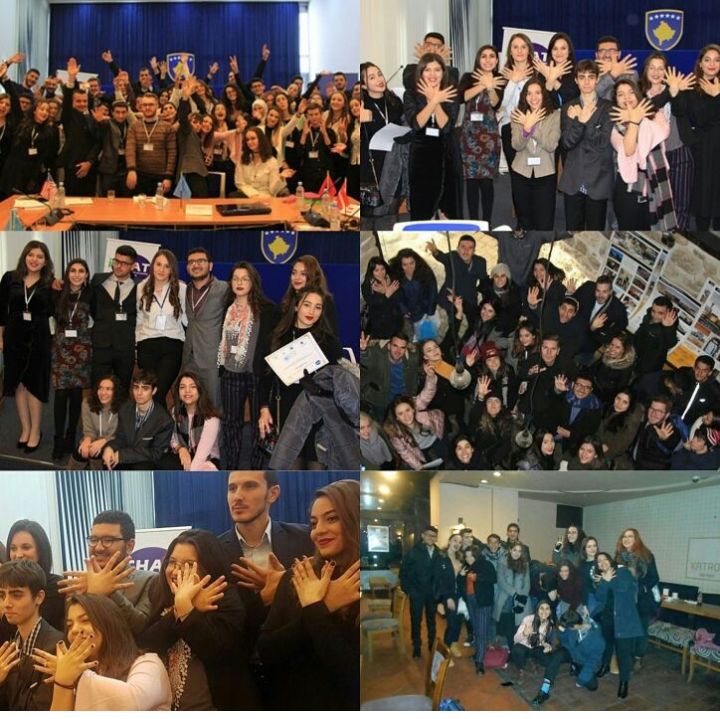
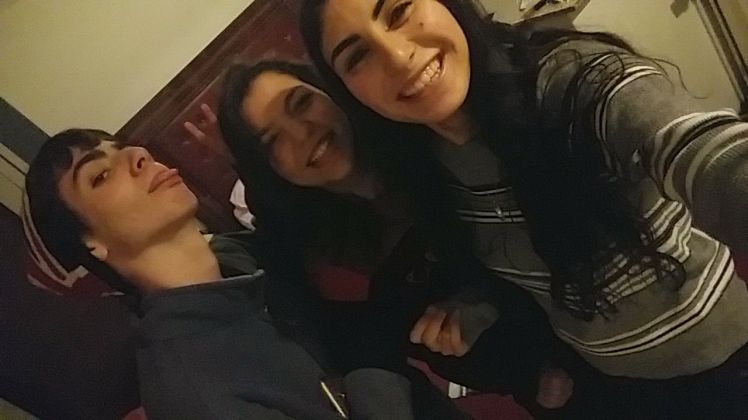
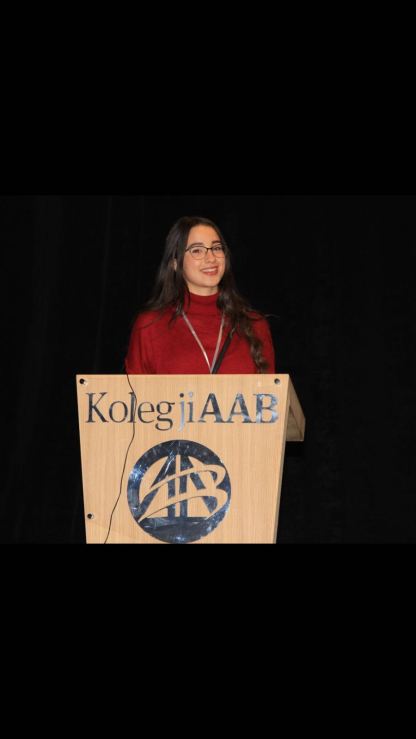
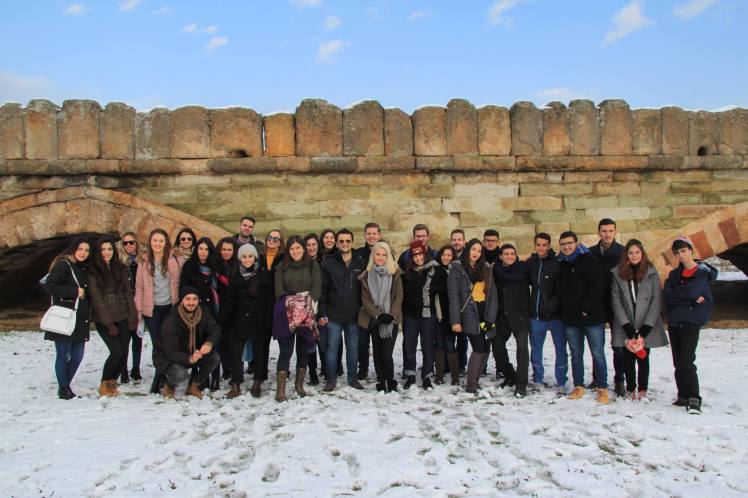
I did not know that going to Kosovo would be that amazing.
At first, I was so scared and nervous-traveling abroad with people I didn’t know, especially since it was my first time to travel without my family.
But it turned out that you guys……. were more than a family. I literally enjoyed every second.
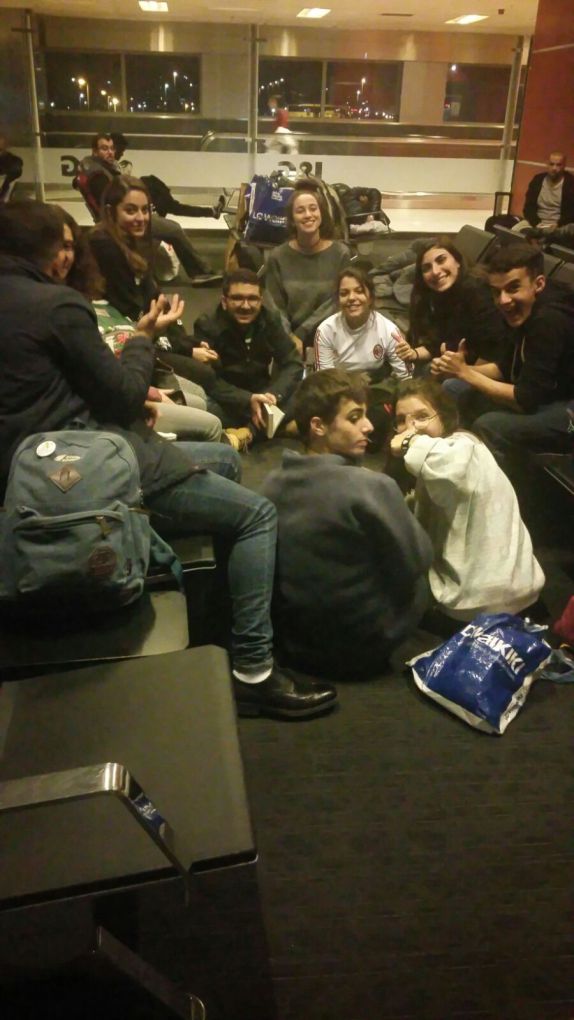
The eight hours we had to spend at the airport passed really fast: we talked, we played, we laughed and we helped each other with everything, just like family members, I love you guys.
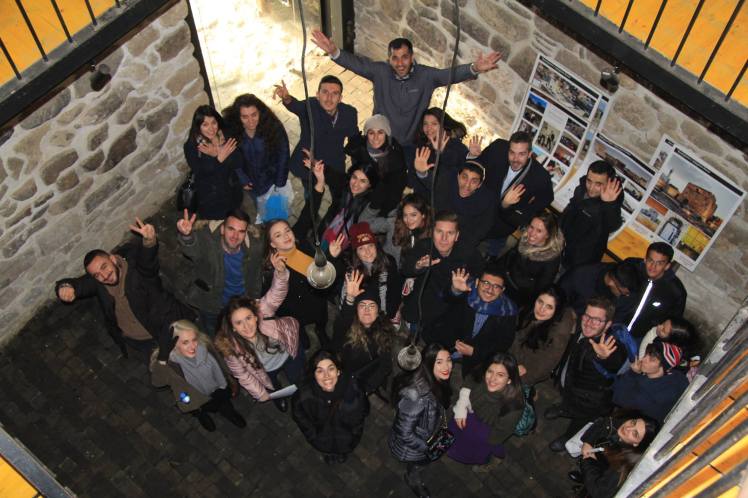
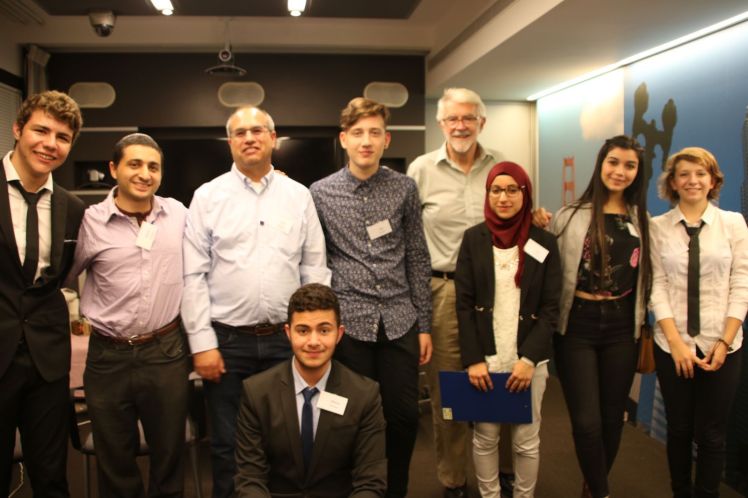
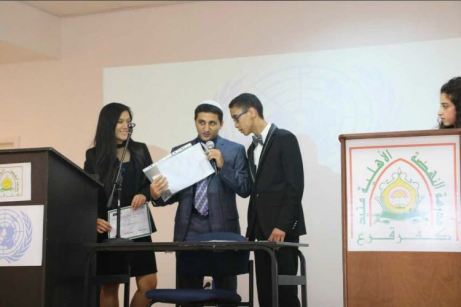
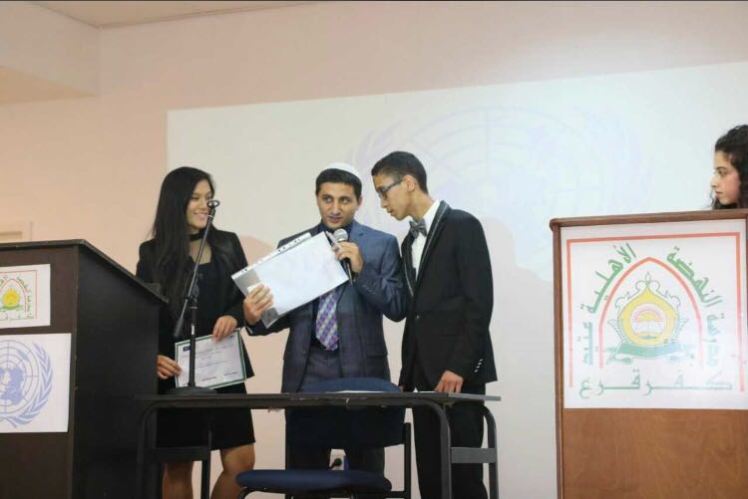
With delegation members at the UN Volunteering Day event
The people in Kosovo were more than amazing , they did their best for us to always feel well and comfortable during our stay there. It really felt like home, ain’t no words can describe you guys️.
With ICHAT Director Besmir Kokollari
And I want to thank Mr. Steven Aiello, the director of “Debate for Peace” for taking care of us and for being really nice and lovely.
And last but not least, a huge thank to the person who always cheers me up, the one who was the main reason I got the opportunity to travel to Kosovo, the one who wants the best for me and for everyone, the one who always gives me the right advice at the right time, my best friend, my role model, and my English Teacher Mr. Salah Fokra, you are a real legend. Thank you for believing in me; I will never let you down.
And finally thank you all for making my senior year an unforgettable one 🇽🇰️.
About a week ago, my mom kissed me goodbye at the airport.
Then it was just me, my suitcase, my social anxiety and a group of people I have never seen before.
in Sabiha Gokcen airport
The first stop was Istanbul, where the connection has started while helping each other write resolutions for the MUN conference, the main reason for the trip. Between writing and taking photos of our Starbucks coffee mugs, we started to get to know each other.
The group was diverse, 11 delegates, 5 of them are Jewish, 5 are Muslims and one Christian. I was one of the Jewish ones. For me, the diversity between us was one of the main reasons for the trip to be even better than I could have ever imagined.
The night afterward was the night we met most of the other delegates that will be in the conference. I got really scared knowing that everyone was older than 20, and I was 15, a thought that quickly disappeared through the days while meeting another group of high school students that was in the conference as well.
Sunday was the day we had the field trip to Prizren, one of the prettiest places in Kosovo.
On our way, we saw the house and heard the story of the national hero of Kosovo, and for my opinion, one of the biggest heroes in Europe, Adem Jashari.
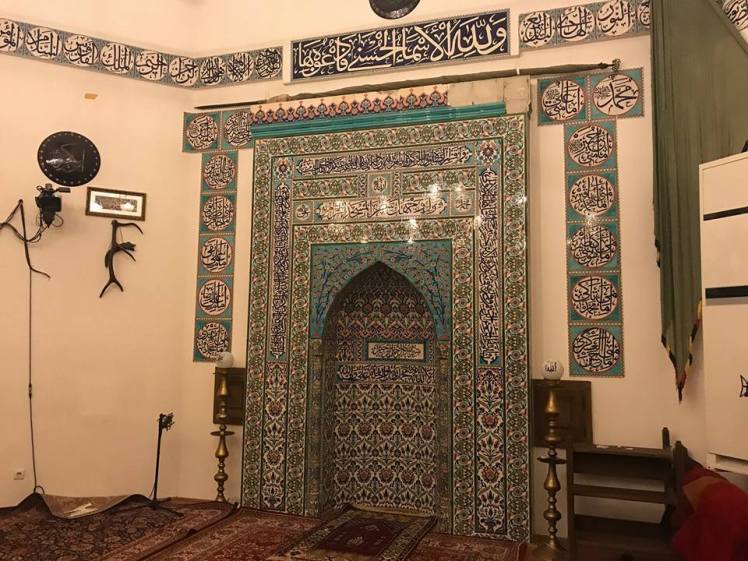
A Sufi tekke (center) in Prizren
In Prizren itself, we met three amazing people, the priest and head of the Catholic cathedral, the leader of the Jewish community and the sheikh of the (Halveti) Sufi community.
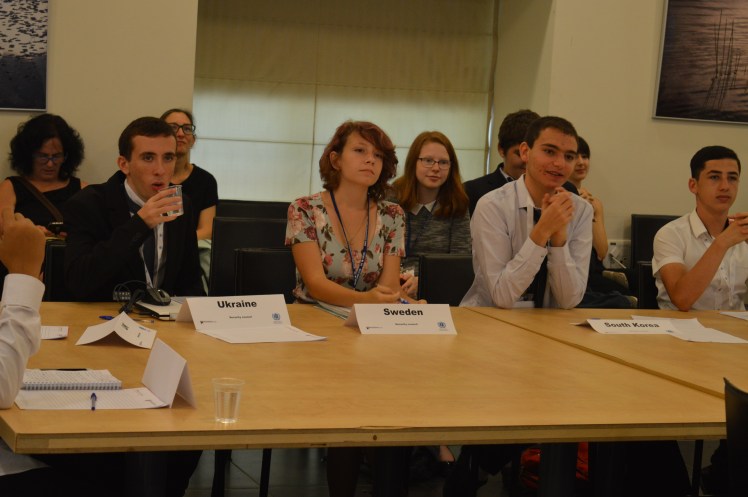
The last couple of days, especially the KIMUN (Kosovo International MUN) conferences, that was an amazing experience for itself.
Never in my life did I think that I would have such an incredible experience and meet such amazing people.
I couldn’t ask for a better trip and I’m thankful for that.
by: Shaked Haninovich
Meeting the head of the Jewish community in Prizren
A little over a week ago I left Israel for Kosovo with a unique delegation of 11 high school students: 5 Jewish, 5 Muslim, and 1 Christian. Coming from 9 cities or towns around Israel, many students met for the first time through this trip, but we left as a joint delegation to compete in the Kosovo International Model United Nations conference (KIMUN).
From previous experiences, including leading the first-ever Jewish-Arab MUN youth delegation abroad last year, I expected us to have a good time, and from my previous visit to Kosovo and Albania, I expected us to get a warm reception. But the last week exceeded even my most optimistic hopes.
From the very moment we arrived at Ben Gurion Airport, until the bittersweet end of the trip 6 days later, there was a powerful feeling of camaraderie that affected everyone around us. From security agents at the airport, to fellow passengers who stopped to say how impressed they were, to our wonderful hosts and the many amazing people we met in Kosovo: fellow students; religious leaders; diplomats, dozens of people got to witness what true Jewish-Arab and interfaith friendship can and should look like. Our group of 11 students truly lead by example.
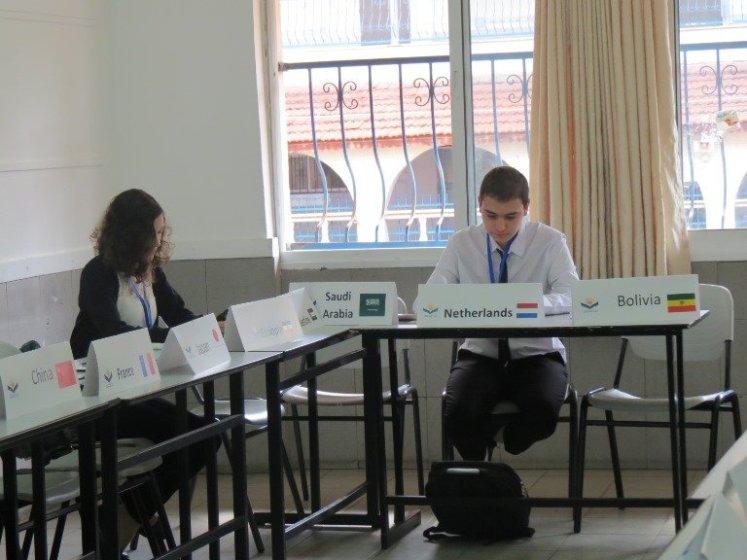
Preparing for the conference
in Sabiha Gokcen airport
True to our name, we had many great debates and intense discussions. Naturally many people we met were curious to learn more about Israel, and learn they did—with a great diversity of views coming from our group. We had lively discussions on issues of equality and discrimination in Israel; Jerusalem, refugees and other potential negotiation topics; even over security profiling while waiting for our final flight in Istanbul. The different views and backgrounds of participants only enhanced the experience, and as I’ve come to expect from our students, utmost respect and appreciation for one another was shown at all times. In an intense and competitive international trip we faced different kinds of adversity, and students took turns helping one another.
In a trip like this, the differences between people—religious, political, ethnic, don’t disappear. Just the opposite—the deeper the friendships, the more we learn about one another, and even about ourselves. It’s the appreciation for what makes us person unique, and their particular combination of characteristics, backgrounds, and personal views, that brings us all together. The differences in accents between Arabic speakers of different towns, the Tunisian, Romanian, Iraqi heritages, the different perceptions of growing up in the same country–these differences only brought us together and made the group as a whole stronger and more special.
Kosovo, with its strong history of religious tolerance, and more recent efforts to rebuild a sense of national community via democratic and grass-roots institutions after bitter ethno-religio-political conflict, was really the ideal destination for such a delegation. In Prizren I prayed minha (the Jewish afternoon prayer) in a mosque, then we walked down the street, passing Serbian and Albanian orthodox churches before reaching the still under-construction Jewish community center, facing the Roman Catholic cathedral. Within 3 hours we met with the head of the Catholic community in Kosovo, the head of the Jewish community in Kosovo, and the head of the Halveti Sufi order in the Balkans. All unique, all distinct, all Albanian and with admiration for one another. And in Prishtina we heard about Besa—the uniquely Albanian code of honor in which hospitality for those who reach your home trumps any differences, and by which humanity persevered in at least one nation during the Holocaust, with thousands of Jewish refugees saved by Albanian heroes.
Meeting the head of the Jewish community
Meeting the head of the Catholic community
Meeting the head of the Halveti community
Catholic church visit
I look forward to many such future delegations, and to seeing where our students can take these experiences and how they will incorporate them into their lives, and impart them upon the people they meet. As future leaders, they have incredible potential, and when they work together as a group of diverse young leaders from different backgrounds, they become much more powerful, poised to amplify the influence. Which is good, since they have many lessons to teach the world.
My name is Alon Mor, almost 16 years old from Petah Tiqwa (a boring little city near Tel Aviv), and I study in Ben Gurion High School.
I have been in MUN and Debate for Peace for three years including this year. During this time, I have experienced many new interesting and unique things that I doubt I could have done if I wouldn’t have joined the team. I participated in many UN conferences, mostly here in Israel and one even in Romania, and traveled abroad to a Leadership Camp in Connecticut, in the US.
Participation in MUN has brought many benefits for me: My English has improved, I educated myself about different countries in the world, I met amazing people from amazing communities that I would not meet without this program and I improved my teamwork abilities, and now, I am more comfortable with such work.
Many countries have recently chosen young leaders to lead them for a better future: France elected a 35-year-old President, Austria chose a 31-year-old Chancellor…. So I believe we are “old enough” to try and work together, Arabs and Jews, to build trust and aim for a better future (certainly our leaders aren’t very good at it). Call me “naïve”, I don’t give up.
My name is Zohar Yaron, currently living in Even Yehuda for ten years after moving back to Israel from the Netherlands. I am 17 and I study in the Wizo Hadassim high school.
Several months ago I discovered Debate for Peace through my English teacher, who had recommended me to go to a meeting in the US embassy.
After the meeting, I came out of the building overjoyed, knowing that I wanted to see what more Debate for Peace had to offer, and I wasn’t disappointed.
At the end of October, 6 students, including myself, were chosen to speak on a panel in Tel Aviv so that we could explain what Debate for Peace is and our experiences from it. I prepared a speech ahead of time, memorized it and still held it under my eyes so I wouldn’t forget anything.
Speaking in front of a crowd always has been one of my biggest fears and so the biggest block in my road. Whenever I stand in front of an audience knowing I will have to speak I get tense and uneasy, stutter, choke and start mixing between all the languages I know.
But as I was waiting for my turn, I listened to my friends speaking from their hearts, I looked at the audience and saw all of their eyes shine with hope and pride, their words were touching everybody. They had not rehearsed their speeches; they spoke what was true for them and what they were feeling confident about.
When it was my turn, I folded the paper, took a deep breath and said everything that came to mind and when I looked back at the audience, their eyes were shining at me as well.
Debate for Peace has taught me plenty of new skills for debate, diplomacy and more. But most importantly, for life as well, and I intend to use those skills to give others hope, help solve conflicts and keep improving myself and my surroundings.
Interfaith conference at the Ahmadiya community in Haifa
Peace be upon you, vibrant community
Allah says in the Noble Quran [ O mankind! Lo! We have created you male and female, and have made you nations and tribes that ye may know one another. Lo! the noblest of you, in the sight of Allah, is the best in conduct. Lo! Allah is Knower, Aware.]
One of the most educational platforms which I’ve joined in my life is MUN (Model United Nations).
It’s the main activity through which I have been able to develop many aspects in my life, including the social aspect, by joining conferences, debating, attending lectures, negotiations…etc.
And this is acceptable in Islam because Allah says in the Quran [25. Call unto the way of your Lord with wisdom and fair exhortation, and reason with them in the better way. Lo! Your Lord is Best Aware of him who strays from His way, and He is Best Aware of those who go aright].
With regards to this issue, I become motivated by MUN so I consider it is as the best stage in order to accomplish the message of my Lord, in addition to meeting new people from different countries, cultures..etc. It offers the best way to react with others, especially for me as a religious person, and additionally, you’ll become more open minded from many sides especially the political one.
Ali volunteering in south Tel Aviv
I hope that everyone who wants to start a new page in his life will join MUN
My name is Fiona. I’m a Filipino-Indonesian currently living in Israel. In recent years, I have learned the importance of youth empowerment. In a country where conflict is prevalent, youth are often silenced. Debate for Peace empowers youth in need of a platform. Debate for Peace has enabled me to feel empowered as a teenager, living in a world faced with conflicts.
In July 2017, I had the opportunity to partake in an Israeli-Palestinian negotiations simulation. It is vital to acknowledge one of the most contentious, complicated and volatile issues of our time. Our delegation had the ability to meet people with a diverse array of perspectives regarding the conflict with the common aim of working towards a peaceful resolution. It is imperative to consider the agenda of this simulation, which was to bridge the void between different perspectives. The sole concept of a community of people striving for peace enabled me to restore faith and hope in conflict resolution. We spent two days with long hours, discussing different key aspects of the conflict. Despite the difficult concessions and negotiations, we were able to come to a peaceful resolution through initiating dialogues. This event was a paradigm which showed that peaceful dialogues can lead to change without resorting to violence.
The Israeli-Palestinian negotiations simulation was one of the many opportunities I have been a part of that have inspired me significantly. As an individual who strongly believes in coexistence, the importance of diversity and peacemaking, Debate for Peace embodies such beliefs for me. Debate for Peace has connected me and many others in the hopes of working towards peace through peaceful dialogue, activities and conferences. Debate for Peace continuously allows us to speak, inspire and change the world around us. To my Debate for Peace family, may we continue to change and inspire the world we live in and achieve our prospects.
My name is Marsel Badir. I am currently 16 years old, and I live in Kfar Qasim. I am Muslim, I study in Al-Qasemi High School in Baqa al-al-garbiyye and most importantly I am part of a group called Debate for Peace!
I’ve been doing Model UN for the past one and a half year and honestly its been an amazing time!
Debate for Peace opened a channel that I did not believe existed up until my first conference. The first time I stood up to represent a country, the first speech, the one that made me shake the most was the one to make all of the difference. It made me realize that policy is not only about change, it is the way we embrace ourselves and we share our opinions with the acknowledgement that even though we are so diverse, we are not that different.
I made that choice to stand up and talk and without that first step I couldn’t have met all of the people that I’ve come to know today, some of the most amazing people that I believe to exist in this world of difference. Close friends, amazing people, my brothers and sisters of this humanity. For you we might be young diplomats, but for us Debate for Peace is family. And for that I am super thankful and I hope this family grows bigger and bigger with every person who joins, for we are the future. We build the change we want to see and we do it by debate, For peace 🙂
ما هي أفضل تجربة ممكن ان يخوضها شخص في سن السادسة عشر
بالنسبة لي اظن ان بداية أفضل تجربة لي كانت عند اختياري لأكون ضمن فرقة مكونة من ثمانية اشخاص لتمثل جمعية Debate For Peaceفي المؤتمر الذي أقيم في مقر الاتحاد الأوروبي في بروكسل– بلجيكا.
خلال المؤتمر مثلت عدة جمعيات وطرحت عدة مواضيع لكن الموضوع الرئيسي الذي تمحور عليه المؤتمر كان الصراع الإسرائيلي الفلسطيني، ما هو الوضع الراهن وما هي الحلول المقترحة لحل الازمة.
تسنت لي الفرصة لترجمة خطاب زياد سباتين ممثل جمعية “طريق الامل والسلام” من اللغة العربية الى الإنجليزية والذي تحدث عن معاناته في سجون الاحتلال وعن فكرة جمعيته.
Hilde Vautmans حضر عدد كبير من الأشخاص الى المؤتمر منهن عضوة البرلمان البلجيكي ،
Victor Bostinaro عضو الاتحاد الأوروبي
و السفير الفرنسي والممثل الدائم لفرنسا في مجلس السياسة والامن في الاتحاد الأوروبي
H.E. Ambassador Nicolas Suran
بعد المؤتمر حصلنا على فرصة التعرف والتحدث الى جميع الحاضرين ومعرفة آرائهم حول الصراع.
وخلال فترة مكوثنا في بلجيكا قابلنا مدير إدارة عمليات السلام في مؤسسة السلام الرومانية والذي تحدث عن ماهية الاستراتيجيات واهميتها في عمليات جلب السلام
كما اننا قابلنا عضوة البرلمان البلجيكي Simone Susskindوطرحنا عليها عدة أسئلة مثل ما هو سبب اهتمامها بالصراع الإسرائيلي الفلسطيني.
خلال هذه الأربعة أيام اكتسبت فعلا افضل تجربة ان التواجد في الاتحاد الأوروبي في سن صغير ومعرفة كم لدينا قدرة كبيرة ان نحدث تغيير وان نلهم العديد من الأشخاص هو امر رائع.
اليوم تبلورت في عقلي فكرة افضل عما يحدث حولي، تجربة مثيرة لزيادة الوعي و لتعزيز الثقة والثقافة.
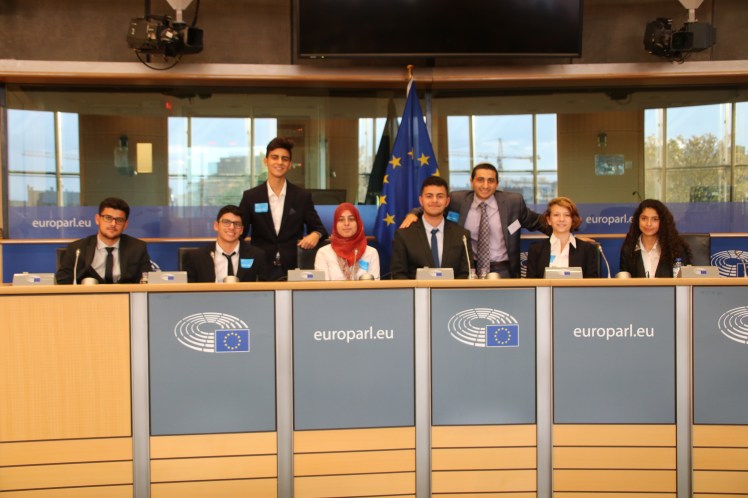
Debate for Peace at the European Parliament, Oct. 19, 2017
This month (October 2017) a group of six participants in the “Debate for Peace” MUN network, accompanied by Steven Aiello- the “Debate for Peace” founder and a “Debate for Peace” alumna- Hala Majadley, traveled to Brussels, Belgium. The highlight of the trip was participating in a special session at the European Parliament that tackled the Israeli-Palestinian conflict with an emphasis on civilized cooperation between the two nations.
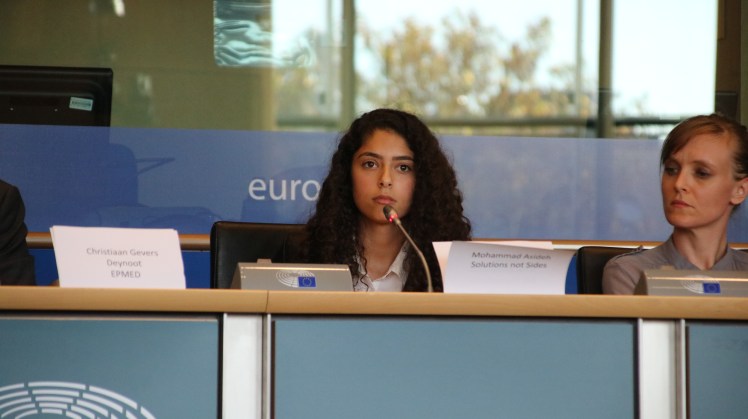
On the first day that followed the group’s landing in Brussels the group attended the European Parliament, where they have heard two different panels of speakers talk about their perspectives and personal experiences with the Israeli-Palestinian conflict. The first panel was named “Local perspectives on the peace process – Identifying needs – based solutions.” Steven Aiello was the first panelist, and he spoke about his experience with MUN in Israel and the founding and development of “Debate for Peace”. Steven was followed by Sara Linder, the founder of the “Political is Personal” organization that emphasizes the “feminine” side of the conflict, bringing both Israeli-Jewish and Palestinian women together in order to create and spread the value of peace. After Sara, Mohammad Asideh – A Palestinian non-violent activist had the floor and spoke about the importance of civilized, non-governmental cooperation between the civilians of Israel and Palestine. The founders of the “Path of Hope and Peace”, Phil Saunders and Ziad Sabateen, had the floor after Mohammad. Phil Saunders spoke mainly about his move from the Israeli metropolis Tel-Aviv to a small town called “Tzur Hadassah”, located just inside the so called “Green Line” and about his cooperation and experience with the Palestinians. Ziad expressed his dissatisfaction with the political efforts on both sides. Yafa Nassar a “Debate for Peace” student and participant, helped translate Ziad’s speech from Arabic to English for the audience.
Debate for Peace member Yafa Nassar translates at the European Parliament
The second panel was titled “Beyond the Paris Peace Conference – what role for the EU in the peace process” and consisted of three panelists who gave different perspectives about the way the EU should\shouldn’t intervene in the Israeli-Palestinian conflict.
The first panelist who had the floor was Kai Brand-Jacobsen, the director of PATRIR. Kai spoke about the somewhat decreasing belief in the “peace process” on both sides and about how peace is better built through talks and projects than weapons. The second speaker was Nicolas Suran, the ambassador of France to the EU, who mentioned the French support to the conflict and also spoke about the importance of taking advantage of the peace opportunities that we have today because they may not be there in the future. The last panelist Dr Tony Klug – special advisor on the Middle East to Oxford Research Group, consultant to the Palestine Strategy group and Israel Strategic Forum, talked about his hope for peace and how we should not trust slogans but take actual acts, to achieve peace.
After the second panel came to an end the floor was open for questions from the audience. One of the Israeli students Aviv Hanuka got the opportunity to ask the panel a question about what future peace efforts by the EU could do to perform better than previous efforts that have failed to achieve peace between the two nations.
DfP students Aviv (right), Omar (left) and Marsel (2d from left) with audience member
Right after the panel the students also got the opportunity to attend a reception with the audience, and the other panelists, which was a great chance to talk with the many interesting people who attended the conference.
Another enriching experience that the students enjoyed in this delegation occurred the next morning, when the group participated in a peace and conflict solving strategic workshop run by PATRIR’s Director of Peace Operations -Kai Brand-Jacobsen. The students discussed a lot of important questions such as: Why creating a strategy is especially important in peace building and how to create the pathways for peace.
As Claire Payne, Founder, EPMED, & PATRIR IPDTC Global Coordinator said: “It was wonderful to have the students of Debate for Peace among us for the EPMED PATRIR Conference ‘Palestinians and Israelis: Moving Towards Needs-Based Solutions’. They brought a whole new level of energy, passion, determination, and most importantly, hope. They showed the European Parliament an initiative which most in the room had never heard of, and rather than the typical negative dynamics we so often hear and experience in an event on this contentious conflict, we instead felt uplifted and reassured that the youth may be able to take us in a new direction. Rather than focusing on the past, they focused on the future. Each of them used the opportunity to the full, networking and questioning senior officials on their career paths, how they themselves could get there, and what they should study. In a politically-charged environment, with discourse stuck in tit-for-tat retributions, Debate for Peace was a breath of fresh air, and I have no doubt that they will go on to do great things for their country and the world”.
On Friday evening the Arab-Jewish delegation attended services at a liberal synagogue in Brussels. In addition to the prayers, the students got to present themselves and answer questions, and then shared a potluck dinner with the synagogue and its members and friends.
At the Beth Hillel synagogue
On Saturday, the last day of the delegation to Brussels the students started off with a breakfast and introduction with Avi Goldstein- the director of PATHWAYS institution for negotiation education. As Avi said later: “It was a pleasure to meet the participants from Debate for Peace during their recent visit to the European Parliament in Brussels. Composed, focused and motivated, they formed an inspiring inter-communal delegation with a timely message of the importance of joint problem-solving, two-way communication, and honest – even if sometimes difficult – discourse about tough, systematic issues. We can all learn much from these young leaders.”
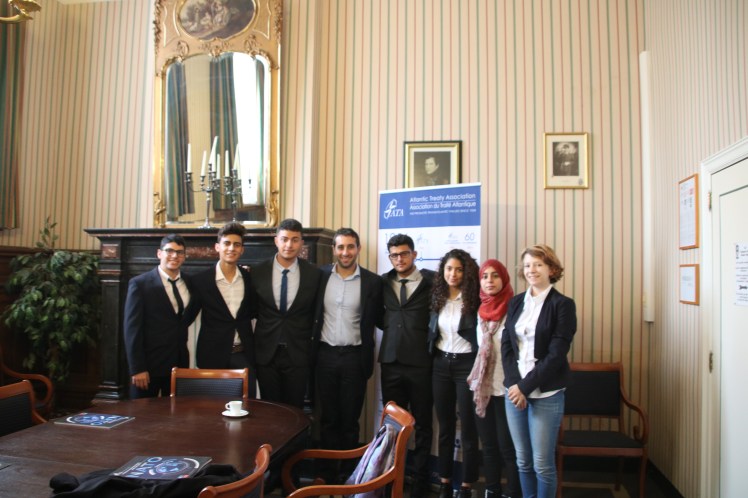
Debate for Peace at the Atlantic Treaty Association
The group also had the chance to visit and learn about the Atlantic Treaty Association, and the Brussels Parliament. After three intensive days of learning, presenting, and eating waffles, it was finally time to return home to Tel Aviv.
Seeing the sights on the way to the European Parliament