Fiona Imperial: Changing the World Around You


Greetings!

WhatsApp Image 2017-11-19 at 8.16.55 AM

My name is Fiona. I’m a Filipino-Indonesian currently living in Israel. In recent years, I have learned the importance of youth empowerment. In a country where conflict is prevalent, youth are often silenced. Debate for Peace empowers youth in need of a platform. Debate for Peace has enabled me to feel empowered as a teenager, living in a world faced with conflicts.

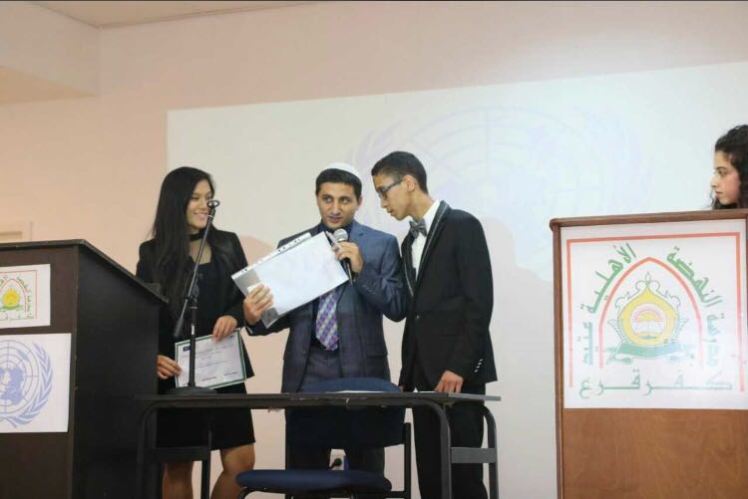
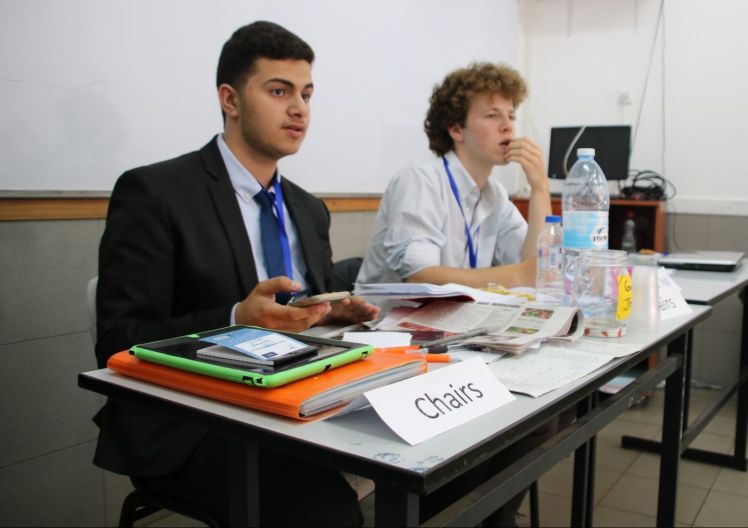
In July 2017, I had the opportunity to partake in an Israeli-Palestinian negotiations simulation. It is vital to acknowledge one of the most contentious, complicated and volatile issues of our time. Our delegation had the ability to meet people with a diverse array of perspectives regarding the conflict with the common aim of working towards a peaceful resolution. It is imperative to consider the agenda of this simulation, which was to bridge the void between different perspectives. The sole concept of a community of people striving for peace enabled me to restore faith and hope in conflict resolution. We spent two days with long hours, discussing different key aspects of the conflict. Despite the difficult concessions and negotiations, we were able to come to a peaceful resolution through initiating dialogues. This event was a paradigm which showed that peaceful dialogues can lead to change without resorting to violence.

The Israeli-Palestinian negotiations simulation was one of the many opportunities I have been a part of that have inspired me significantly. As an individual who strongly believes in coexistence, the importance of diversity and peacemaking, Debate for Peace embodies such beliefs for me. Debate for Peace has connected me and many others in the hopes of working towards peace through peaceful dialogue, activities and conferences. Debate for Peace continuously allows us to speak, inspire and change the world around us. To my Debate for Peace family, may we continue to change and inspire the world we live in and achieve our prospects.


Marsel Badir: The Debate for Peace Family


 مرحبا!
שלום!
Hello!

My name is Marsel Badir. I am currently 16 years old, and I live in Kfar Qasim. I am Muslim, I study in Al-Qasemi High School in Baqa al-al-garbiyye and most importantly I am part of a group called Debate for Peace!

WhatsApp Image 2017-11-19 at 12.06.55 AM

I’ve been doing Model UN for the past one and a half year and honestly its been an amazing time!
Debate for Peace opened a channel that I did not believe existed up until my first conference. The first time I stood up to represent a country, the first speech, the one that made me shake the most was the one to make all of the difference. It made me realize that policy is not only about change, it is the way we embrace ourselves and we share our opinions with the acknowledgement that even though we are so diverse, we are not that different.

I made that choice to stand up and talk and without that first step I couldn’t have met all of the people that I’ve come to know today, some of the most amazing people that I believe to exist in this world of difference. Close friends, amazing people, my brothers and sisters of this humanity. For you we might be young diplomats, but for us Debate for Peace is family. And for that I am super thankful and I hope this family grows bigger and bigger with every person who joins, for we are the future. We build the change we want to see and we do it by debate, For peace 🙂

Yafa Nassar: أفضل تجربة ممكن ان يخوضها شخص في سن السادسة عشر

ما هي أفضل تجربة ممكن ان يخوضها شخص في سن السادسة عشر

IMG_1759

بالنسبة لي اظن ان بداية أفضل تجربة لي كانت عند اختياري لأكون ضمن فرقة مكونة من ثمانية اشخاص لتمثل جمعية Debate For Peace في المؤتمر الذي أقيم في مقر الاتحاد الأوروبي في بروكسلبلجيكا.

خلال المؤتمر مثلت عدة جمعيات وطرحت عدة مواضيع لكن الموضوع الرئيسي الذي تمحور عليه المؤتمر كان الصراع الإسرائيلي الفلسطيني، ما هو الوضع الراهن وما هي الحلول المقترحة لحل الازمة.

IMG_1775

تسنت لي الفرصة لترجمة خطاب زياد سباتين ممثل جمعية “طريق الامل والسلاممن اللغة العربية الى الإنجليزية والذي تحدث عن معاناته في سجون الاحتلال وعن فكرة جمعيته.

Hilde Vautmans   حضر عدد كبير من الأشخاص الى المؤتمر منهن عضوة البرلمان البلجيكي ،

  Victor Bostinaro عضو الاتحاد الأوروبي   

   و السفير الفرنسي والممثل الدائم لفرنسا في مجلس السياسة والامن في الاتحاد الأوروبي

H.E. Ambassador Nicolas Suran

بعد المؤتمر حصلنا على فرصة التعرف والتحدث الى جميع الحاضرين ومعرفة آرائهم حول الصراع.

IMG_1709

وخلال فترة مكوثنا في بلجيكا قابلنا مدير إدارة عمليات السلام في مؤسسة السلام الرومانية والذي تحدث عن ماهية الاستراتيجيات واهميتها في عمليات جلب السلام

كما اننا قابلنا عضوة البرلمان البلجيكي Simone Susskind وطرحنا عليها عدة أسئلة مثل ما هو سبب اهتمامها بالصراع الإسرائيلي الفلسطيني.

خلال هذه الأربعة أيام اكتسبت فعلا افضل تجربة ان التواجد في الاتحاد الأوروبي في سن صغير ومعرفة كم لدينا قدرة كبيرة ان نحدث تغيير وان نلهم العديد من الأشخاص هو امر رائع.

اليوم تبلورت في عقلي فكرة افضل عما يحدث حولي، تجربة مثيرة لزيادة الوعي و لتعزيز الثقة والثقافة.

WhatsApp Image 2017-10-23 at 3.12.56 PM

Our Journey to the EU — Aviv Hanuka

By Aviv Hanuka, Sharet Netanya


IMG_1775.JPG
Debate for Peace at the European Parliament, Oct. 19, 2017


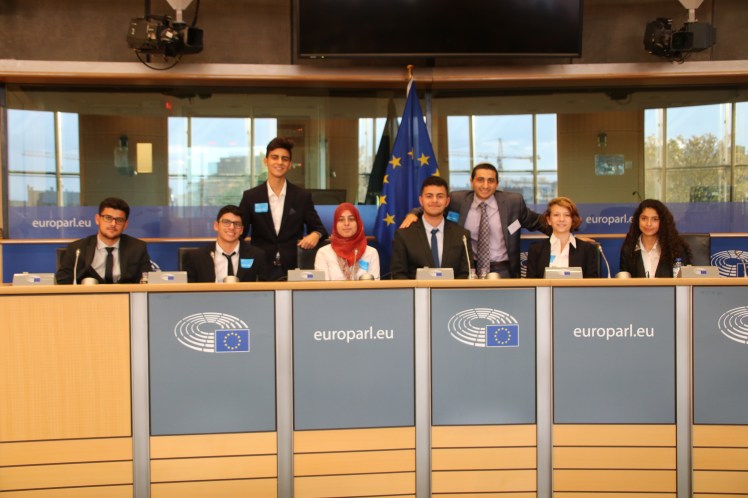
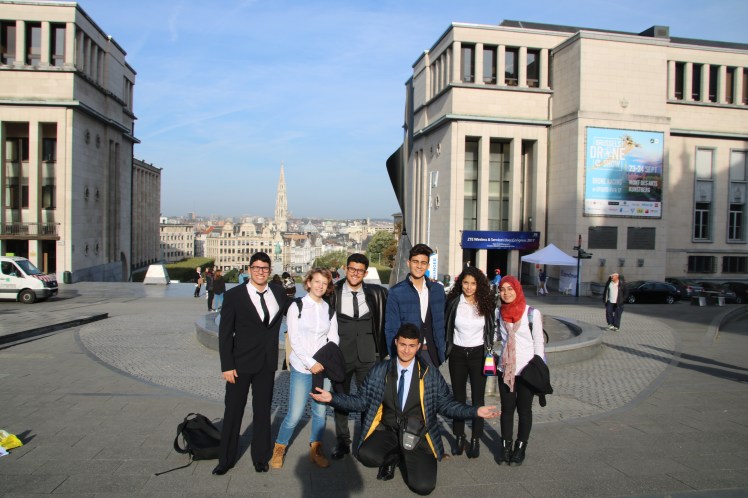
This month (October 2017) a group of six participants in the “Debate for Peace” MUN network, accompanied by Steven Aiello- the “Debate for Peace” founder and a “Debate for Peace” alumna- Hala Majadley, traveled to Brussels, Belgium. The highlight of the trip was participating in a special session at the European Parliament that tackled the Israeli-Palestinian conflict with an emphasis on civilized cooperation between the two nations.

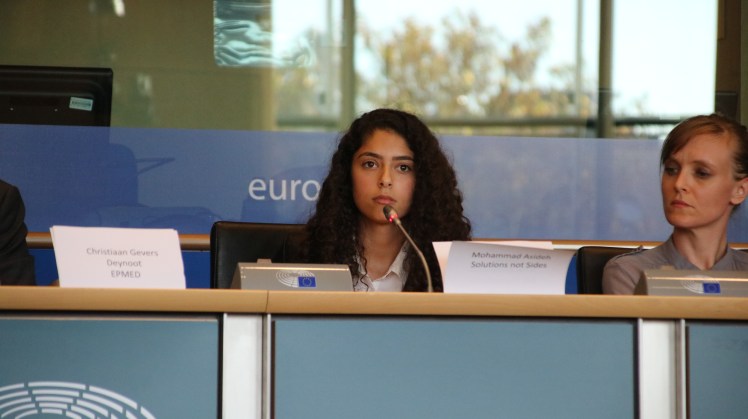
On the first day that followed the group’s landing in Brussels the group attended the European Parliament, where they have heard two different panels of speakers talk about their perspectives and personal experiences with the Israeli-Palestinian conflict. The first panel was named “Local perspectives on the peace process – Identifying needs – based solutions.” Steven Aiello was the first panelist, and he spoke about his experience with MUN in Israel and the founding and development of “Debate for Peace”. Steven was followed by Sara Linder, the founder of the “Political is Personal” organization that emphasizes the “feminine” side of the conflict, bringing both Israeli-Jewish and Palestinian women together in order to create and spread the value of peace. After Sara, Mohammad Asideh – A Palestinian non-violent activist had the floor and spoke about the importance of civilized, non-governmental cooperation between the civilians of Israel and Palestine. The founders of the “Path of Hope and Peace”, Phil Saunders and Ziad Sabateen, had the floor after Mohammad. Phil Saunders spoke mainly about his move from the Israeli metropolis Tel-Aviv to a small town called “Tzur Hadassah”, located just inside the so called “Green Line” and about his cooperation and experience with the Palestinians. Ziad expressed his dissatisfaction with the political efforts on both sides. Yafa Nassar a “Debate for Peace” student and participant, helped translate Ziad’s speech from Arabic to English for the audience.

IMG_1758.JPG
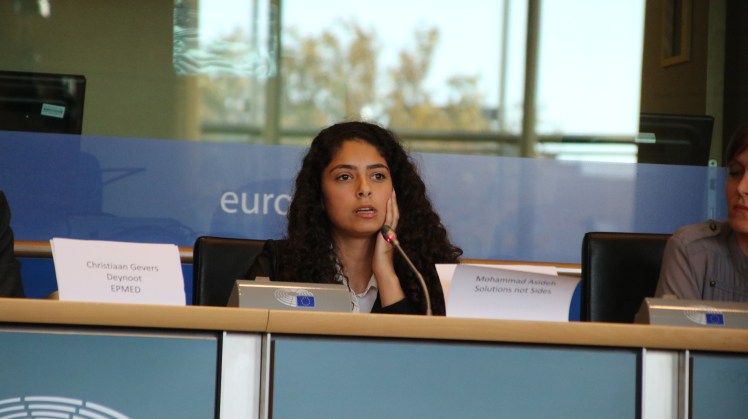
Debate for Peace member Yafa Nassar translates at the European Parliament

The second panel was titled “Beyond the Paris Peace Conference – what role for the EU in the peace process” and consisted of three panelists who gave different perspectives about the way the EU should\shouldn’t intervene in the Israeli-Palestinian conflict.

The first panelist who had the floor was Kai Brand-Jacobsen, the director of PATRIR. Kai spoke about the somewhat decreasing belief in the “peace process” on both sides and about how peace is better built through talks and projects than weapons. The second speaker was Nicolas Suran, the ambassador of France to the EU, who mentioned the French support to the conflict and also spoke about the importance of taking advantage of the peace opportunities that we have today because they may not be there in the future. The last panelist Dr Tony Klug – special advisor on the Middle East to Oxford Research Group, consultant to the Palestine Strategy group and Israel Strategic Forum, talked about his hope for peace and how we should not trust slogans but take actual acts, to achieve peace.

After the second panel came to an end the floor was open for questions from the audience. One of the Israeli students Aviv Hanuka got the opportunity to ask the panel a question about what future peace efforts by the EU could do to perform better than previous efforts that have failed to achieve peace between the two nations.

IMG_1779.JPG
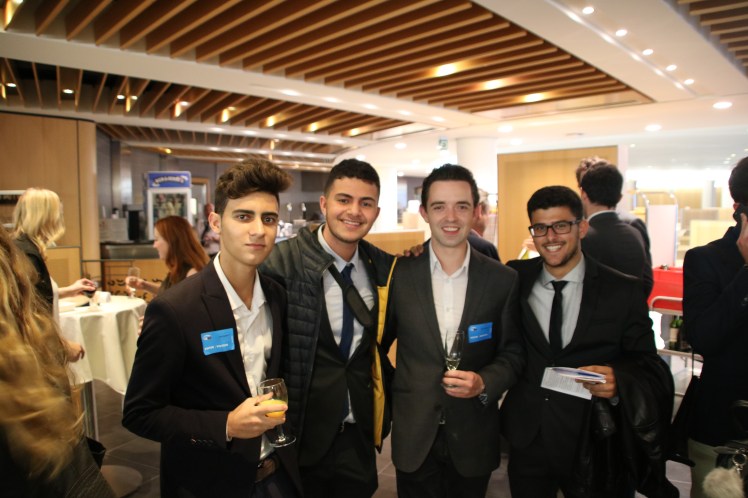
DfP students Aviv (right), Omar (left) and Marsel (2d from left) with audience member

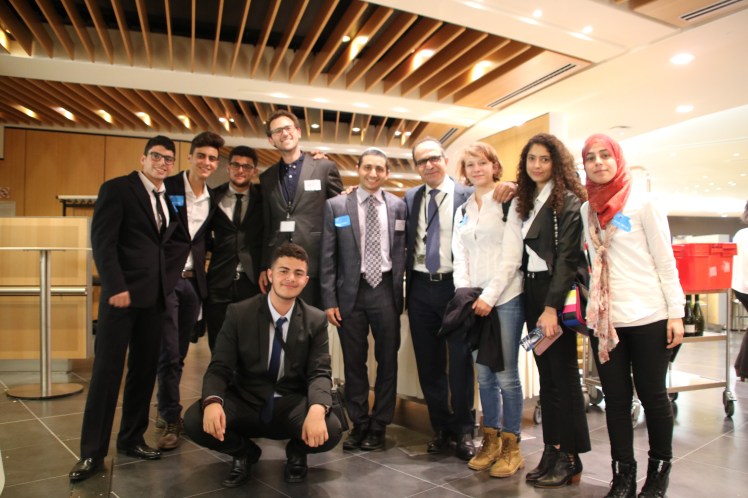
Right after the panel the students also got the opportunity to attend a reception with the audience, and the other panelists, which was a great chance to talk with the many interesting people who attended the conference.

IMG_1787

Another enriching experience that the students enjoyed in this delegation occurred the next morning, when the group participated in a peace and conflict solving strategic workshop run by PATRIR’s Director of Peace Operations -Kai Brand-Jacobsen. The students discussed a lot of important questions such as:  Why creating a strategy is especially important in peace building and how to create the pathways for peace.

As Claire Payne, Founder, EPMED, & PATRIR IPDTC Global Coordinator said: “It was wonderful to have the students of Debate for Peace among us for the EPMED PATRIR Conference ‘Palestinians and Israelis: Moving Towards Needs-Based Solutions’. They brought a whole new level of energy, passion, determination, and most importantly, hope. They showed the European Parliament an initiative which most in the room had never heard of, and rather than the typical negative dynamics we so often hear and experience in an event on this contentious conflict, we instead felt uplifted and reassured that the youth may be able to take us in a new direction. Rather than focusing on the past, they focused on the future. Each of them used the opportunity to the full, networking and questioning senior officials on their career paths, how they themselves could get there, and what they should study. In a politically-charged environment, with discourse stuck in tit-for-tat retributions, Debate for Peace was a breath of fresh air, and I have  no doubt that they will go on to do great things for their country and the world”.

On Friday evening the Arab-Jewish delegation attended services at a liberal synagogue in Brussels. In addition to the prayers, the students got to present themselves and answer questions, and then shared a potluck dinner with the synagogue and its members and friends.

WhatsApp Image 2017-10-23 at 3.12.56 PM.jpeg
At the Beth Hillel synagogue

On Saturday, the last day of the delegation to Brussels the students started off with a breakfast and introduction with Avi Goldstein- the director of PATHWAYS institution for negotiation education. As Avi said later: “It was a pleasure to meet the participants from Debate for Peace during their recent visit to the European Parliament in Brussels. Composed, focused and motivated, they formed an inspiring inter-communal delegation with a timely message of the importance of joint problem-solving, two-way communication, and honest – even if sometimes difficult – discourse about tough, systematic issues. We can all learn much from these young leaders.”

IMG_1709.JPG
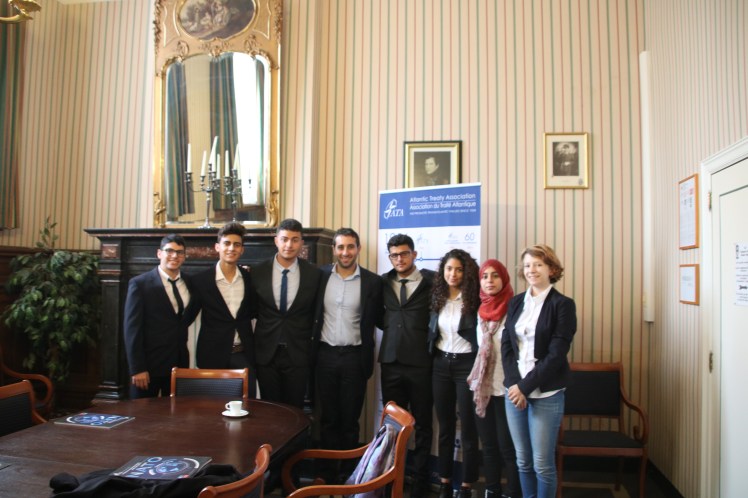
Debate for Peace at the Atlantic Treaty Association


The group also had the chance to visit and learn about the Atlantic Treaty Association, and the Brussels Parliament. After three intensive days of learning, presenting, and eating waffles, it was finally time to return home to Tel Aviv.

IMG_1689
Seeing the sights on the way to the European Parliament

Celebrating United Nations Day 2017

WhatsApp Image 2017-10-24 at 12.54.26 PM (1)
Or Moshe represents Debate for Peace at United Nations Day 2017 in Jerusalem

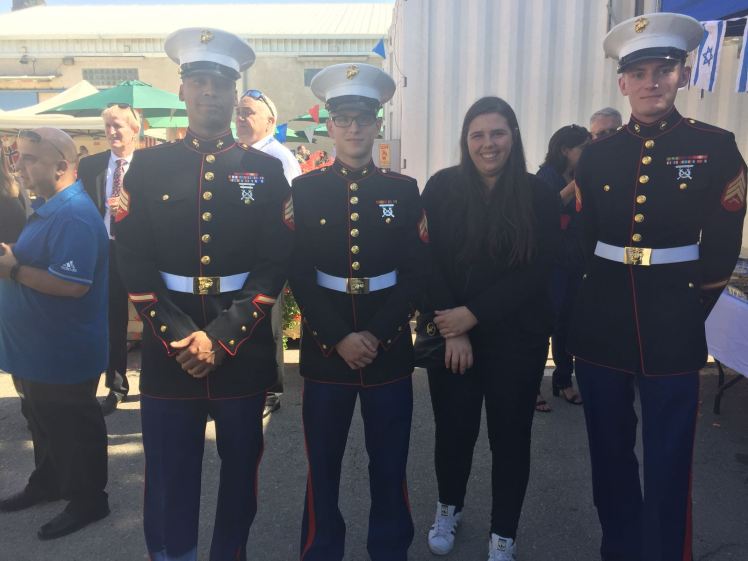
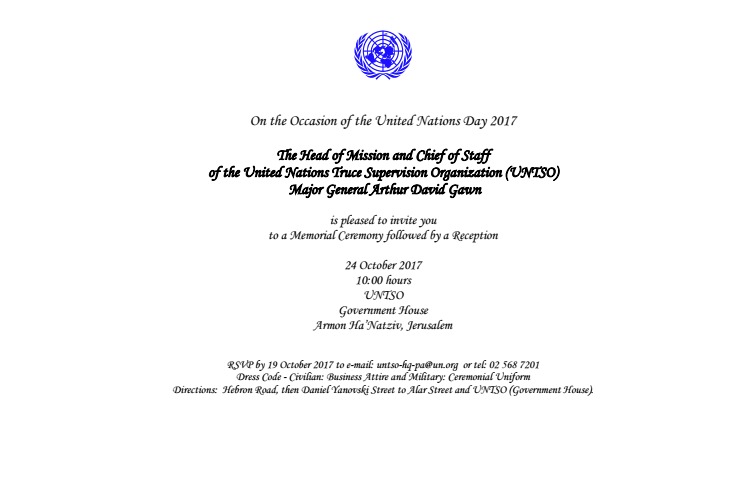
United Nations Day–on October 24th, marks the signing of the UN Charter in 1945. It has been recognized as a holiday for almost 70 years, since 1948. Yesterday, Ort Givatayim senior Or Moshe got to represent Debate for Peace at the 2017 United Nations Day celebration, at the UN building in Armon Hanatziv, Jerusalem. We are grateful to UNTSO for extending the invitation and helping to strengthen the UN-Model UN connection. Or was one of the youngest participants at the event, and she shares her thoughts on the occasion below.

WhatsApp Image 2017-10-10 at 5.13.23 PM

“Today, I had the opportunity to participate in an actual UN event and get a glimpse into the world of professionals. It has been an incredible experience. I have met and talked with people from UNTSO and the Israeli office for foreign affairs. I had the honor of participating in a UN memorial ceremony with soldiers from all over the world. I learned about different countries and cultures around the world and even tasted exotic food from the Caribbean.”

WhatsApp Image 2017-10-24 at 12.54.27 PM (1)
Flag Salute Ceremony, UN Day 2017, Jerusalem

Tomorrow’s Leaders Learn about Accountability from the UN Secretary General

When UN Secretary General Antonio Guterres addressed a closed audience at the Diaspora Museum in Tel Aviv University last month, 8 Debate for Peace youth leaders had the opportunity to be part of the audience. We thank the staff of the UN Special Coordinator for the Middle East Peace Process (UNSCO) for helping to ensure that the leaders of the future get to hear from today’s global leaders.

WhatsApp Image 2017-09-20 at 07.52.18
Waiting to hear from the UN Secretary General


As their comments after the event show, students were appreciative of this special opportunity, and especially impressed by how the UN Secretary General addressed the difficult history of Jews in Portugal head-on, acknowledging travesties and tribulations, and taking responsibility for part iniquities.


Yuval (Ort Rabin in Gan Yavne)

Meeting the Secretary General was truly an experience. His speech was very interesting and meeting such an important diplomat is truly an honor. I’m very glad I had the opportunity to attend the event.

Sana (Al-Qasemi High School in Baqa al-Gharabiya)

The UNSG was very warm and thankful to be there, and I am very happy I got to be a part of something like this, something that doesn’t happen often. It was a great opportunity and a wonderful experience

Alon (Ben Gurion High School in Petah Tiqva)

The experience of hearing Mr. Guteress’s speech was very interesting. It was a huge honor for me to attend the speech of such an important person. I learned from the speech that Portugal had an unfortunate history with its own Jews.

Ben (Yachad High School in Modi’in)

It was such an interesting environment to be in, and it really puts you in perspective where you will you be if you’ll work hard enough. Hearing the Secretary General talking about problems relevant to this day and apologizing for his native country’s crimes against the Jewish community back in the 15th century was extremely moving.

Zohar (Wizo Hadasim High School in Even Yehuda)

The UN Secretary General spoke truthfully about his country [Portugal], about its mistakes during the Second World War and has apologized. It showed that he has taken responsibility of their past and that he truly strives to improve the situation.

Yafa  (Bashaer High School in Sakhnin)

It was an honor to meet the Secretary General of the United Nations. I felt a wonderful feeling: everything was perfect and exciting. It was an unforgettable experience that I would like to repeat again.

Gaining Renewed Energy from New Friends and New Experiences

UNSC
A visit to the UN Security Council Chamber

Hey everyone! I wanted to share with you my life-changing trip to the US this summer.

Following Debate for Peace MUN conferences, I was invited to the Jerusalem PeaceBuilders summer camp in Houston, Texas. In the beginning I had some doubts about the camp and the fact that I was going to be the only Israeli Jewish male in the camp, but I went anyway. I was wrong to doubt– the JPB camp was beyond my expectations!

WhatsApp Image 2017-08-18 at 23.32.42
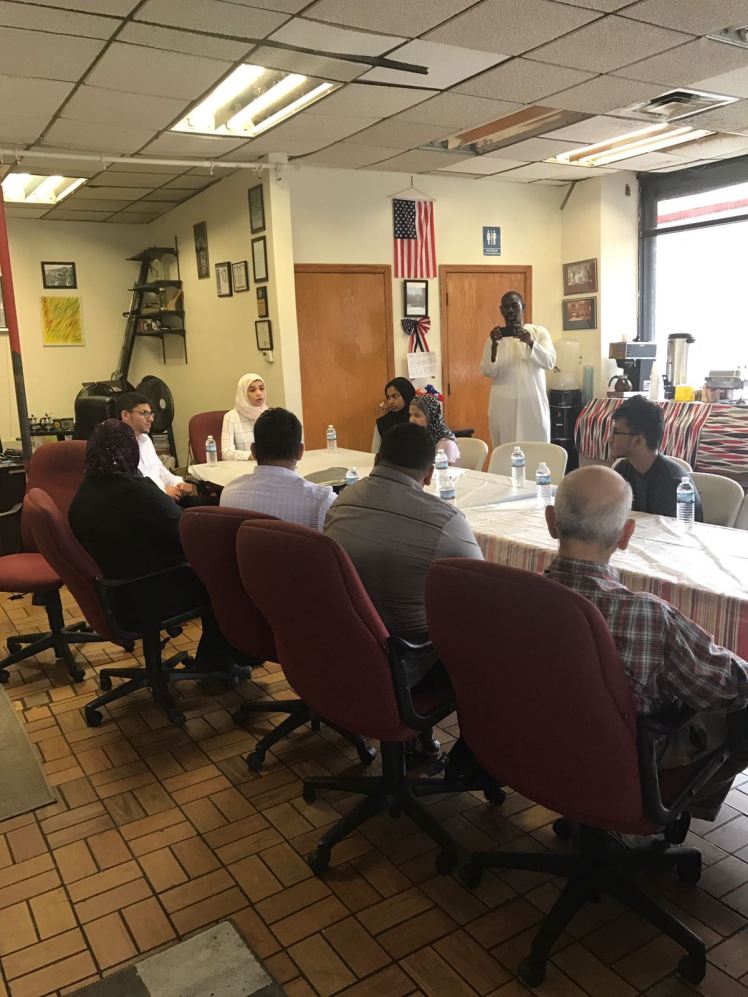
Speaking at a mosque in the Bronx

In this camp I got the unique opportunity to spend almost 2 weeks with youth in my age. I met so many new friends and we had so much fun together doing summer camp activities and peace-building dialogues. The meaning of the camp for me was creating these bonds between the religiously diverse participants and making us better interfaith citizens.

In our time at the JPB program I got to attend a Juma’a prayer in a mosque and a Communion service in a cathedral for my first time! It was so new for me and I’m glad I could observe it. We also went to a Reform Judaism synagogue, where we held a service in different way from what I’m used to, as an orthodox.

21055890_276690756148919_422204309660594278_o
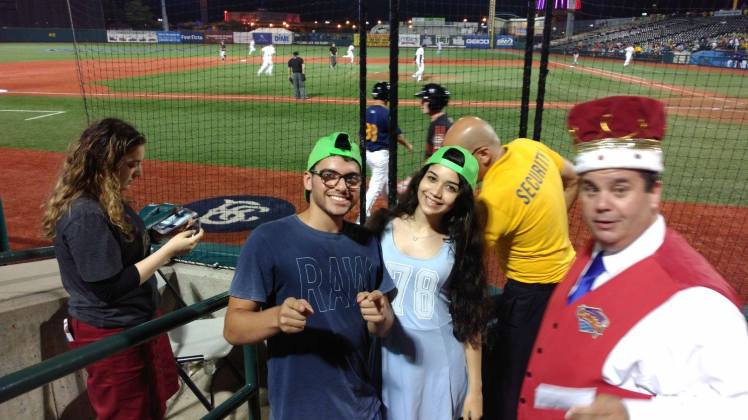
Preparing to go on-field at our first baseball game!

The second part of my trip was in NYC and NJ. Together with Debate for Peace director Steven Aiello and a fellow Muslim Arab student Khetam Kalash, we represented Debate for Peace and talked to fellow interfaith leaders in the metropolitan area of New York. I had so much joy spending time with people who care about a better, peaceful future. I feel as they brought me a new, stronger second wind to work harder for bringing people together, and creating more friendships between those close, yet so far, communities.

A Muslim Arab from Israel Preaches Peace at Mosques and Synagogues in NYC

IMG_0465
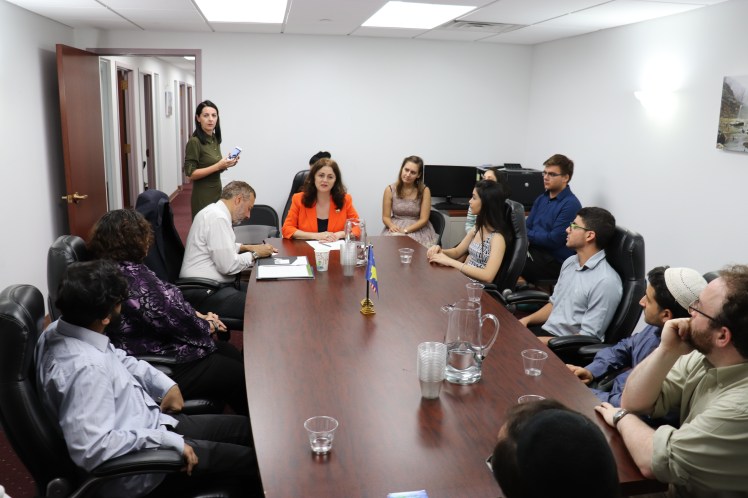
Interfaith Summit with the Ambassador of Kosovo

Khetam Kalash, 16, from Nahda High School in Kufr Kara, spent 2.5 weeks this summer at the Jerusalem Peace Builders camp in Houston followed by the Debate for Peace extension in NYC. These are her reflections from the trip:

I don’t know from where to start, it’s just too much to tell, but the most important: it’s unforgettable.

On the 2d of August, it all started.

My parents left me with the JPB (Jerusalem Peace Builders) participants in the airport after a lot of hugs and instructions; I’m leaving them for 3 weeks! And after 15 hours of flights, we finally arrived in Texas, USA to start the journey or you can call it a challenge too, for two weeks.

Now you’re probably wondering what is JPB? JPB is an American organization that picks all different (and unique) Muslim, Jewish, and Christian students from Israel and the US ages (14-18) and brings them together to discuss how things go in the Israeli-Palestinian conflict, how people see it, what’s the point of view for each one of us and how can we bring peace and live together in one country, or maybe two in the future!

We heard from an imam, a rabbi and a priest, we prayed together, we ate together, we slept together, we shared everything together, we had no hate for anyone, we were such a family! And yes, it was amazing and brought hope for each one of us that this is gonna happen! That we don’t have to hate each other because of political reasons that have no sense maybe, we’re all humans who bleed the same blood, we’re all equal! What made me strongly believe in this, once during the program we went to a church, the imam and the rabbi sang there like we’re all the same belonging to the same god, religions can’t divide us!

Dasha
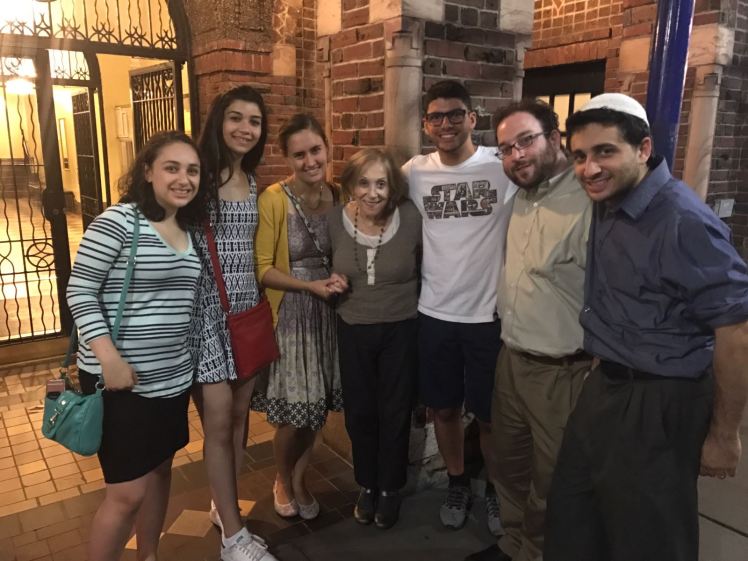
Meeting a Holocaust survivor friend in Manhattan

After these beautiful 2 weeks, me and Omri (a Jewish student my age) got to travel to New York to share and talk about a program we have in Israel called “Debate For Peace” for high school students (aged 15-18), which brings Arab and Jewish students together in different (Arab and Jewish) cities all around Israel through the school year, and sometimes in the summer vacation too! We debate and discuss different topics that usually students don’t think about or don’t have the chance to talk about it.

In this program we have a conference every 3 months on average, and each conference has a topic like religions/ peace/ refugees.. and it’s divided into committees (25 student for every committee). Each participant has a random country to represent in some topic, and should represent it well even if its policies don’t agree with our beliefs, and in the end we have a best and an outstanding delegate for each committee. But the main goal is not about winning and debating, it’s mainly about gathering Arab and Jewish students together, as well as improving our English (as a third language for Arabs and a second language for Jewish students) and raising our self confidence by challenging ourselves to stand up and speak.

20953679_276706716147323_1835802251016531059_n
Speaking on a panel at a synagogue in New Jersey

So what did we do in New  York City for a week? We visited 2 mosques and 2 synagogues, the embassy of Kosovo, the Center of Jewish History, and did a lot of other interesting and fun things.

We got the chance to introduce our program (Debate for Peace) and talk a little about our experience in JPB, and as you would expect, we had a lot of support and a lot of questions about Israel and Palestine, and how Arabs, Muslims and Jewish people live together.

For me it was such an unforgettable experience that changed me in a good way, how to see and deal with things better, and how “physical age” can’t stop you from accomplishing “big things” or things that older people don’t have the courage to do. For instance, I was the first non-jewish Arab speaker in one synagogue in New York to come talk about peace, and I’m only 16! What you only have to do, is to believe in yourself and then you can achieve great things!”

Volunteering Event

On April the 21st, our group volunteered to help take care of kids in a kindergarten in south Tel-Aviv, as a way to strengthen the sense of community in a place where it is much needed,  as well as empowering the sense of team work and self worth.

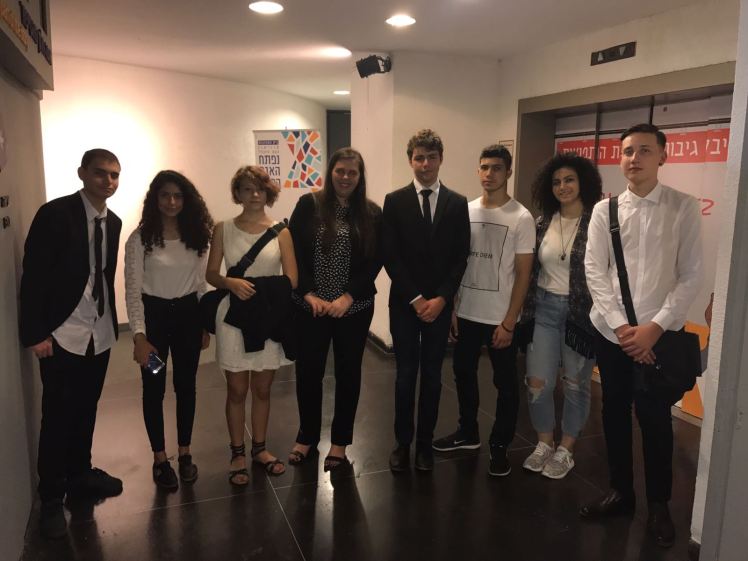
Our group is constructed of about eleven 16-19 year old students who come from all over Israel, starting with Kufr Bara All the way to Gedera, and who come from different religious backgrounds. Here is some of the feedback we got from the kids:

“It was an amazing experience,
I really enjoyed it even though it was a little bit tiring. So happy that I got to meet the lovely children. Hope that we could do it again:)”

-Donia Daghash

“The other day was a great experience even though there were some challenges with people, I enjoyed having fun with the kids”

-Serena Bush

“I think it was a good experience to volunteer in tel aviv
But it was. Hot outside and we didnt have that much fun

-Lana Wattad


UNSC Crisis Committee: Iran-Israel

The Simulation

“Iran has continued its aggressive anti-Israel rhetoric, along with intercontinental ballistic missile tests. There have been little repercussions for its choices—as part of the nuclear deal agreed to through the UN, sanctions have been lifted, Iran’s economy is growing and Asian and European countries are trading with it. The hopes of some that a new US regime would take a more aggressive stance towards Iran failed once President Bernie Sanders came into office—his presidency has become even more willing to look the other way with Iran’s double-dealings. With more leeway and more resources, Iran has increased support for Hezbollah and Hamas, as well as continuing to strengthen its influence in Syria and Iraq.

Israel as well as Saudi Arabia and the Sunni Arab states have grown frustrated by Iran’s seeming ability to do whatever it wants, without any repercussions for its actions. On January 15th, Israel launches a comprehensive attack on Iranian military installations, including several underground research and development facilities. The attack involved flying over Jordanian and then Saudi airspace.”

This is the scenario that a dozen high school students found themselves in on Sunday, April 10th. Simulations of this nature are typically run by academics and policy experts, but as part of our Model UN program, we asked our most advanced students to represent a stacked version of the Security Council—one which included countries like Egypt, Iran, Israel, Lebanon, Saudi Arabia, Turkey and the Emirates, as well as Germany and the P-5 countries. In Model UN parlance this is called a “Crisis Committee”, and attempts to mirror real-life situations by introducing periodic “updates.” Delegates (aka students) must then respond dynamically to one another’s speeches and ideas, as well as the evolving circumstances. In keeping with our MUN program’s focus on Middle East-related topics, we chose to simulate a comprehensive Israeli airstrike. Delegates were informed that Israel had hit 13 targets, but that information about what precisely had been targeted was not yet available.


Opening Salvos

The Iranian delegate opened the conference by calling attention to the improvements that Iran had been making in the global economic order and calling the attacks not just an unjustified violation of national sovereignty, but harmful to international interests. That was hardly surprising however. It was Saudi Arabia that was the first country to change the internal dynamics, when it used its opening speech to declare its support for Israel, which it defended as having acted under threat from Iran. We had deliberately left the simulation instructions and information provided vague enough to allow delegates like the Saudi one to determine whether they were going to openly support one of the two sides, or maintain neutrality and condemn both sides.

China followed up the Saudi speech by in turn excoriating Israel for its attack on Iran. Israel spoke next and justified its attack as being in response to Iranian threats. Lebanon supported the Iranian position, again unsurprisingly, and referenced prior Israeli strikes on Iraq and Syria in an attempt to show a pattern of unilateral and unjustified attacks by Israel. Turkey brought up Israel’s possession of nuclear weapons as evidence that Israel was no more innocent in that area than Iran, However the American delegate followed that up by silencing Iran and its supporters by citing Iran’s launch of missiles with an explicit call to wipe out Israel, as the threat justifying Israel’s attack.


An Evolving Game

As promised, less than an hour into the simulation, delegates received their first “update.” They were informed that although information on the Israeli airstrikes was still limited, it had now been confirmed that at one of the sites, 200 Iranian civilians—primarily factory workers, had been killed, and that what was believed to be a fortified research facility was actually a bicycle factory, located underground, presumably as a decoy target by the Iranians in the event of just such an attack.

After receiving some time to process this new information, delegates continued discussing among one another before returning to the formal debate, where Iran and its supporters attempted to use this information to pressure Israel and censure its actions. Israel did not back down however, nor did many delegates seem swayed, as they stuck with the argument that it was Iran’s fault for deliberately hiding a bicycle factory in underground bunkers and putting civilians at risk of harm (for its part, Iran called this response “Israeli propaganda”).

A later update told delegates that there had been a double terror attack perpetrated on Israeli Embassies in Argentina (a repeat of the 1992 attack) and Mexico, with the latter attack leaving an Israeli diplomat hospitalized and 8 local workers killed between the two attacks. The attacks were believed to have been perpetrated by Hezbollah-linked agents.

Although changing the focus of the discussion, neither update significantly set the delegates off-topic, and they maintained focus on the primarily plot-line—the Iranian-Israeli nuclear issue, and what should be done to prevent future violence from occurring.


The Suggestions

France had suggested improved supervision of Iran’s nuclear program (a consensus of most of the countries and indeed of the simulation itself being that there was significant mistrust of the status quo supervision). There was soon a working paper in circulation which called for sending a UN supervising force to be stationed in both Iran and Israel, with Russia overseeing the Iranian mission and the US overseeing the Israeli mission. This suggestion was supported by 9 countries, including France, Russia, the US and Israel.

An alternative working paper called for sanctioning Israel for its actions, monitoring Israel’s nuclear plants (arguing that Iran was already under supervision), and sending a UN team to monitor Israeli military activities and prevent future outbreaks of violence. This initiative was put forth by China, Iran and Lebanon.


Compromise and Conclusion

Given that 9 of the 12 delegates supported the more neutral language of the first working paper, it became a question of convincing China, which could veto any draft resolution, to lend its support. This was eventually achieved by a bold—albeit vague, call for Israel to announce its nuclear activities. China accepted this compromise, and the resolution passed by overwhelming majority, bringing the committee to an end. The delegates of Israel and Iran received commendation from their peers as the Best and Outstanding Delegates respectively.


Takeaways

The simulation showed what might happen if Israel felt pushed to the brink by US and European rapprochement with Iran, but on the other hand, received tacit support from Saudi Arabia and other key Sunni states. The proceedings indicated that given the chance, many of those countries would take the opportunity to call for a deal with more robust supervision on Iran (and for the Sunni states, greater supervision of Israel in the name of neutrality was an added bonus). Although it’s debatable whether and which Arab states might publicly declare their support for Israel in this hypothetical, the mistrust of the deal itself could lead to an attempt to rewrite its terms, as happened in our simulation.