Mousa’s “I wonder” piece explores the questions of a child living through war.
A two-year-old says, “I wonder”
The taste of fresh water.
A two-year-old child from the war tells me, “I wonder”
The taste of oranges.
A two-year-old who lived only two years in a camp in Gaza during the war says, “I wonder”
I wonder”
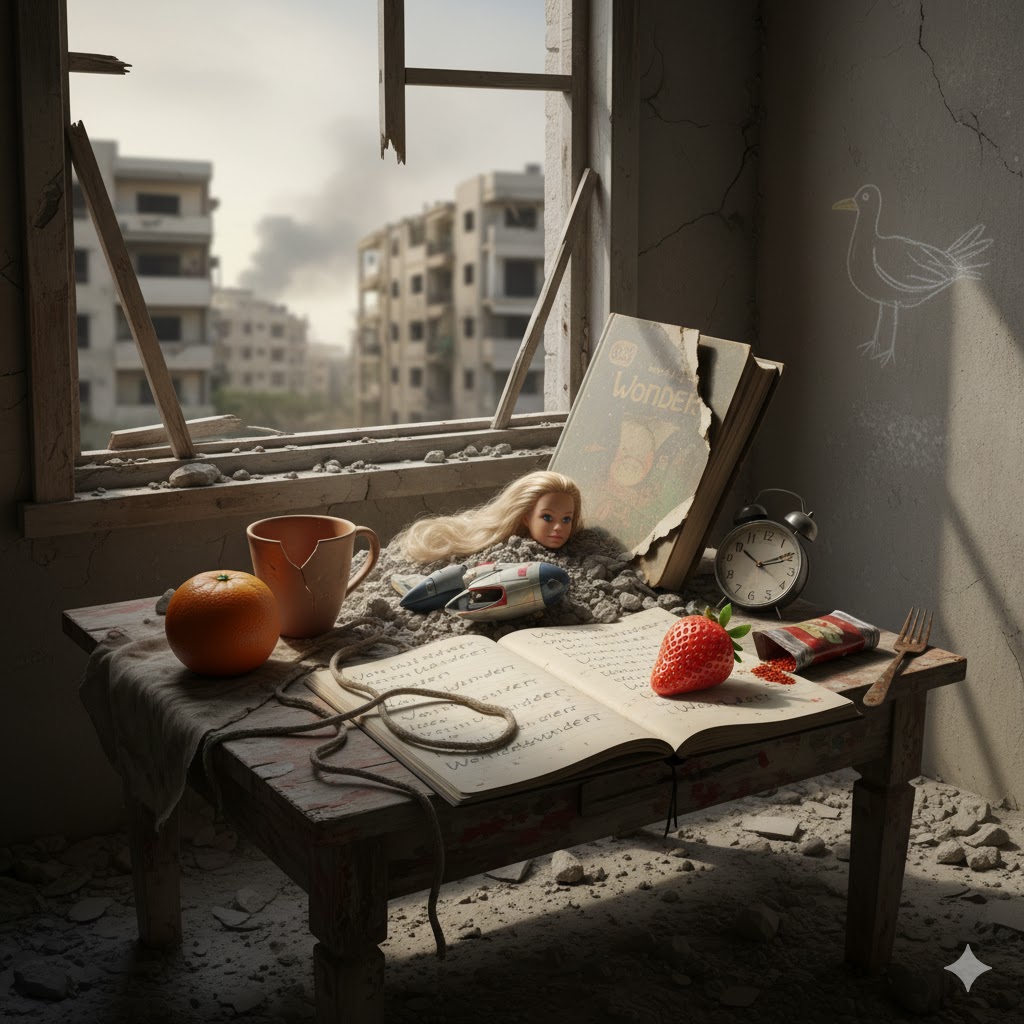
The shape of the roof of the house, says a two-year-old child, “On top of the forgotten wall next to the tattered tent.”
I wonder” The shape of the shoelace, says the two-year-old child.
I wonder” The shape of the red fruit with the green head, someone tells him it’s a strawberry that used to be grown in Gaza.
I wonder” The shape of the 80-page book lying on the school window in Gaza.
I wonder” The small and large hands of the clock in the bite of this time in Gaza.
I wonder” The taste of the red chicken seasoning on the worn-out table.
From the Barbie toy, and the spaceship toy that I’ve only seen on my phone. Oh, I forgot to wonder before that.
I wonder” The sound of calm that I haven’t heard in the past two years. What does it sound like?
I wonder at the shapes of the white seagulls. Oh, I forgot that the sea has become far beyond the limits of the clean water filling station.
I wonder at the two years that have passed here. They have seemed like a thousand years, or even more.
The two-year-old finished his pen and said, “I don’t know how many more years I will remain without wondering,” to recover from his state of astonishment.
This piece is from Noor in Gaza, and part of the Writers Matter collection “Light through the Darkness.
In a time when darkness multiplies around us, light remains the undying hope,
the vision that guides us when paths blur into one another.
And because light is not merely something seen, but a soul that is illuminated, I share with you this text that touches the essence of words and draws from their glow the meaning of life.
Among the most beautiful things ever said about light is the saying of God Almighty in His noble Book:
“Light upon light. Allah guides His light whom He wills” (Quran 24:35)
It is a light that transcends the limits of sight, reaching into insight, with which God guides whom He wills of His servants to the paths of tranquility, purity, and guidance.
And how could light not carry such majesty, when our Lord said in the decisive revelation:
“Allah is the Light of the heavens and the earth. The example of His light is like a niche within which is a lamp…”
A divine light, not perceived by our senses, but seen by souls attached to truth and guided by it through the maze of life.
Light… a word that holds in its letters the secret of life, the music of serenity, and the fragrance of hope.
Light is nothing but a beginning to every dark ending, a promise at the heart of pain that nothing lasts forever—not even darkness.
Light is not just the sunlight. It is the spark of hope in a chest worn by sorrow, the smile of a heart that chose to shine for others even as it faded within.
It is the sound of a prayer in the depths of night, reaching the sky with confidence, returning as light into the heart—even without words.
I’ve learned that light cannot be bought, nor borrowed. It is born within us when we believe that every darkness has an exit, and every trial holds a space for relief.
Light lives in sincere intention, in a gentle word, in a beautiful coincidence that changes the course of a gloomy day.
Sometimes, light is a person who passes through our lives like a breeze—not staying long, but leaving an unforgettable trace.
And sometimes, the light is within us, though we do not know it. We light the way for others with our presence, our patience, with a story that no one has heard.
Light is what pierces your heart at the height of darkness.
It may come in the form of a prayer, a kind word from a stranger, or a smile you weren’t expecting.
Light isn’t always a beam… Sometimes it’s a person, a moment, a dream.
In moments of brokenness, you need nothing more than “a small light.”
Be the light—in your words, in your patience, in your kindness. Even if the whole world is darkness, it’s enough to be a flame for someone, and to carry within you a light that never fades.
Let light be your path—not only what you see, but what you see with.
And be among the people of light… those who mend hearts with words, and grant peace through silence.
Light cannot be extinguished when it comes from within.
Storms cannot erase it. Winds cannot put it out. For it is not just light—it is a creed, a soul, a purity.
And so, light remains the most enduring legacy in pure hearts, and the unforgettable message in times of confusion.
Let us be among those who carry the light in their eyes and hearts—not to be seen, but to illuminate.
For true light is the one that never dies, because it was born from within.
In this piece from the Gaza Writers Matter group, Farah asks, “Do you really know me?”
Do you really know me? You may think you know me. You see my calm features and my smile. You think my life is going well. But you do not know that behind that smile lies a story burdened with pain and sorrow, and a heart full of scars — that those calm features conceal a noise inside that never quiets.
The war left me facing a heavy reality I did not choose. Two years were enough to change everything in my life. In them, I lost more than I ever imagined a person could lose in an entire lifetime.
I lost my sense of safety, which I once believed was a basic right for every human being. I lost my passion, my dreams, my home. Each dark night took a piece of me away. I lost the joy of graduation.
I had dreamed of graduating amid celebrations and applause, of throwing my cap into a blue sky. I do not know why that sky was replaced with one of gray, and the ground beneath me turned into a heap of ashes. Smoke erased the outlines of any tomorrow I had imagined.
You do not truly know me, because you have never felt the weight of the emptiness left behind as my dreams fell one after another, nor the bitterness of the nights I cried until my tears ran dry.
But I am the girl who masters the art of pretending to be strong, of hiding her pain even as she stands on the edge of breaking.
I am the girl who, though the war stole so much from her, did not let it steal her will. The one who defies the circumstances that try to break her, still searching in the darkness for a glimmer of light.
So do you know me now? I am not a stranger — I am you, if you were in my place. I am the other face of humanity, the one that must be seen and heard, not ignored.
And if you do not feel pain for me, then know that you do not know me yet.
The following piece is by Mariam in Gaza and is from the “Light Through the Darkness” collection.
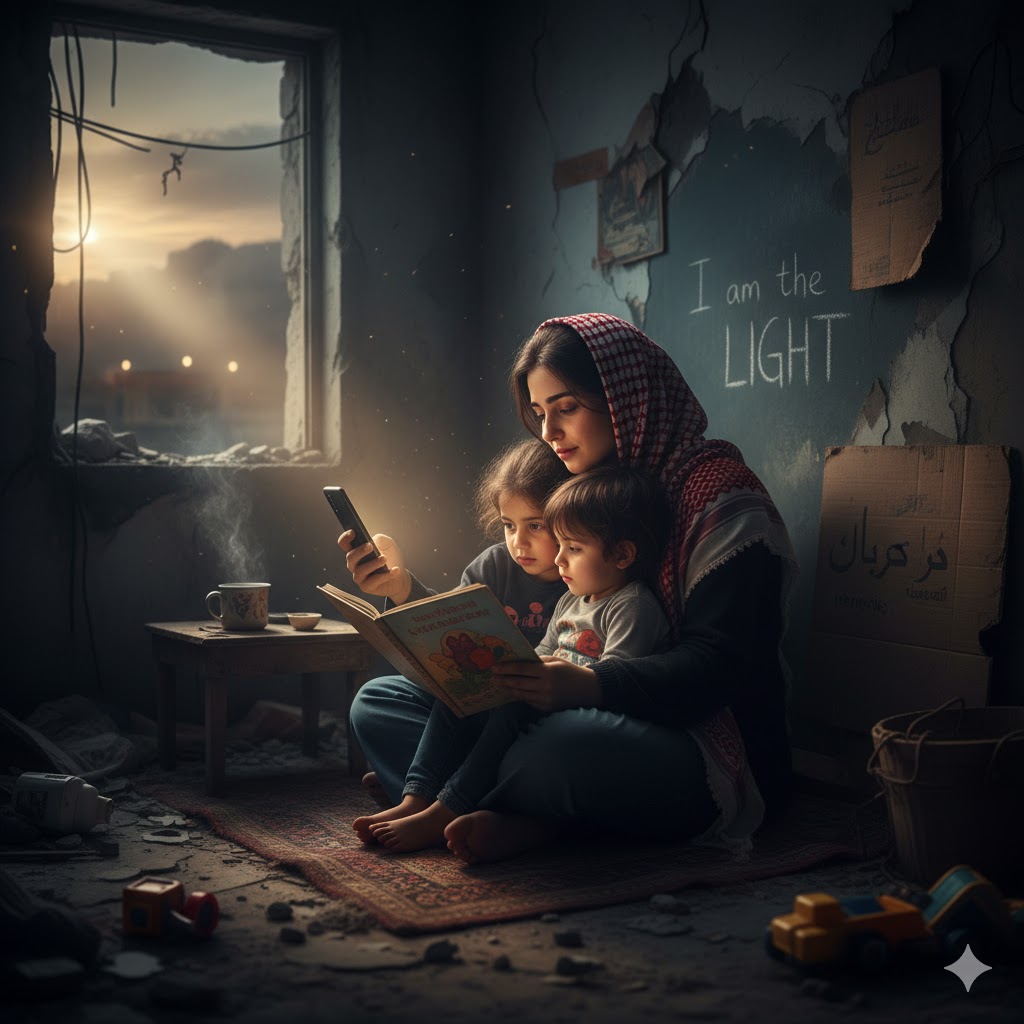
I am a young mother… My eyes are tired, pale… (from the severity of pain, fear, sleeplessness, and crying). I have two children… Two wonderful, beautiful children… I possess my embrace for them; I own nothing else for them but my arms. I carry for them patience like a mountain and an unending prayer. I cook for them over the fire of memories, and I warm them with stories of a better tomorrow, God willing. Every night, I whisper to them that the light is coming, even if it is from afar. I stay up next to them in the dim light when they are weary, planting seeds of light in their souls and reviving hope in their lives with the simplest of means. I am a mother… I am the Light. I create a life for my children out of nothing, a life born of an undying hope. My children are the tomorrow, the hope, the light for a promising and better future.
I am Gaza… Darkness in Gaza manifests in the power outages, forcing us to spend our nights in the faint light of a cell phone—the only light I possess. And also in the siege, where there is no food, no medicine, and not the slightest basic necessity for a dignified life in Gaza. As for travel, I cannot speak of it because it is now far, far away. It is also in the eyes of my children; they see pain, hunger, and death more than they see their toys. Despite all this darkness, I say… I am a mother… I am the Light… I am Gaza. The light comes from my heart, my heart that knows how to love despite all the pains, screams, and sighs we live through.
I am the Palestinian teacher… I teach my children that education is the light, and it is the strongest weapon against darkness. A question lingers in my mind… Is it possible for the threads of hope to intertwine with the threads of sorrow and pain? After much thought, I say yes, this happens when we write stories of invincible patience. At that moment, hope embraces pain. In this time, I find refuge in my books, and in my letters, I find everything that makes me forget my sorrows.
But… Sometimes despair creeps into my life, and the lights of my heart go out. So, I rise with strength, determination, and persistence to ignite a new light, to draw a new smile, and to build a better tomorrow. Darkness is not an end, but a beginning to test the light within us. And all of this stems from my hope in God Almighty. My hope in God Almighty is the light that illuminates my path, my heart, and my entire life. It is the beam that brightens the blackness of night and the shadows. My certainty is that after every hardship comes relief… And after every difficulty comes ease… For I do not despair of the Spirit of God.
This second piece from Gaza is by Hour, and part of the “Light throught the Darkness” collection. For more details on the Writers Matter project, please see here, here and here.
In a world filled with pain and unanswered questions, there is always a ray of light breaking through the darkness, giving us the strength to carry on.
From Gaza—under siege, among ruins—I write these words to speak of the light that never dies within us, no matter how heavy the darkness becomes.
I do not write from a quiet place, nor do I live a normal life.
I write from a place where everything seems ready to collapse: walls, schools, dreams—even childhood itself.
But despite the darkness that surrounds us, there is a small light that lives deep inside me—a light that ignites my heart when sorrow tries to extinguish it.
That light is not something seen with the eyes. It is faith that lives within us, the hope we cling to when all doors close, the smile we draw even while in pain.
It is those moments when we help each other, when we comfort the tired, when we give from the little we have, and keep walking as if nothing hurts.
“Light through the darkness” is when you open your book during a power outage and decide to keep studying because you believe in your future.
It’s when you console a mother who lost her child and whisper, “He’s safe in heaven now.”
It’s when you rise from the rubble, put the broken pieces back together, and smile because you survived.
Gaza taught me that light doesn’t always come from outside—it grows inside.
In the heart that refuses to give up, in the eyes that have seen too much yet still seek beauty, in the call to prayer during an airstrike, in the smell of bread despite the shortage, and in the laughter of a child who only knows he wants to live.
Darkness is not the end—it is a test of how strong our light can be.
The road may be long, but we will walk it, carrying our light in our hands, lighting our steps, and sharing its glow with others.
From Gaza, from the heart of pain, we write, we dream, and we love—because we believe true light cannot be defeated, even by the deepest darkness.
This piece, part of the Writers Matter program, comes from Melo in South Africa, and is part of the “This Scar is from” collection:
This scar is from the summer I learned that courage doesn’t always look like bravery—it sometimes looks like falling hard, crying loud, and standing up anyway.
I was nine years old, knees scraped more often than not, running wild through the school play ground afterschool with a confidence only kids know. One afternoon, I dared myself to jump from the top of the old school slide while everyone else was just sliding normally down the hot slide. It was those tall, metal slide that became boiling hot in the afternoon and burned your legs in the sun and groaned under your weight. Obviously it was dumb to jump down. But in that moment, I wasn’t trying to be careful. I wanted to land without suffering on the hot slide or climb down like some 8 year old coward. Everyone else was playing on the ground, leaving the slide. All the teachers on watch didn’t pay attention to the slide because barely anyone was on it. So as soon as I saw a clear landing point, I took a deep breath and jumped.
Unfortunately, as my feet were off the surface my shoelaces were actually lose and got caught on the edge– stuck. So I didn’t soar—I slammed hard on the floor, unable to get my feet on the ground on time. My right knee hit the gravel hard, tearing open skin on impact. Blood poured, and so did the tears. I remember a few kids surrounding me, the embarrassment, the sting, the smell of rust and heat, the way the world narrowed to that single point of pain. I remember one of the teachers running across the grass, her face a mixture of fear and frustration.
They cleaned the wound, stitched it at the clinic, and told me not to pick at the scab. I did, of course. More than once. The scar stayed. At first, I hated it. It was ugly. It made shorts embarrassing. It reminded me that I didn’t fly—I fell. But as the years went on, I came to see it differently. That scar wasn’t just a mark from a clumsy jump. It was proof that I tried something bold. That I failed quite miserably. That I got back up.
Looking at it now, I don’t remember the pain as clearly. But I remember the lesson: sometimes the only way to learn your limits is to push them. Sometimes courage means being reckless enough to leap—and strong enough to heal when you land hard. This scar, right there on my knee, tells that story. And I carry it proudly.
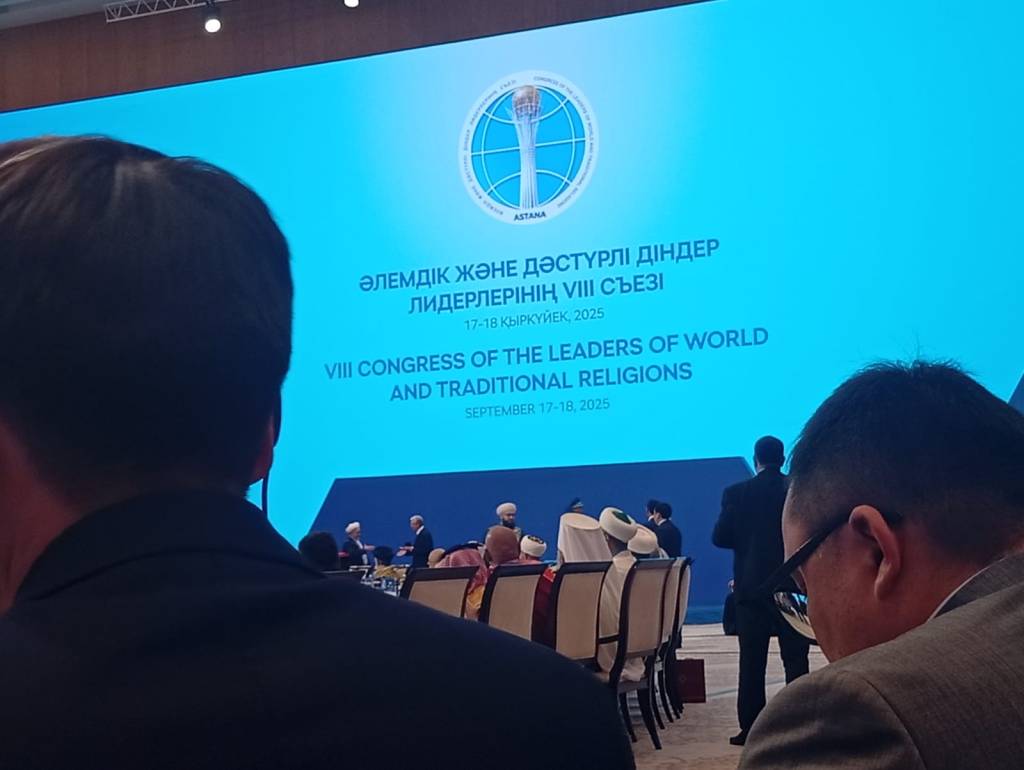
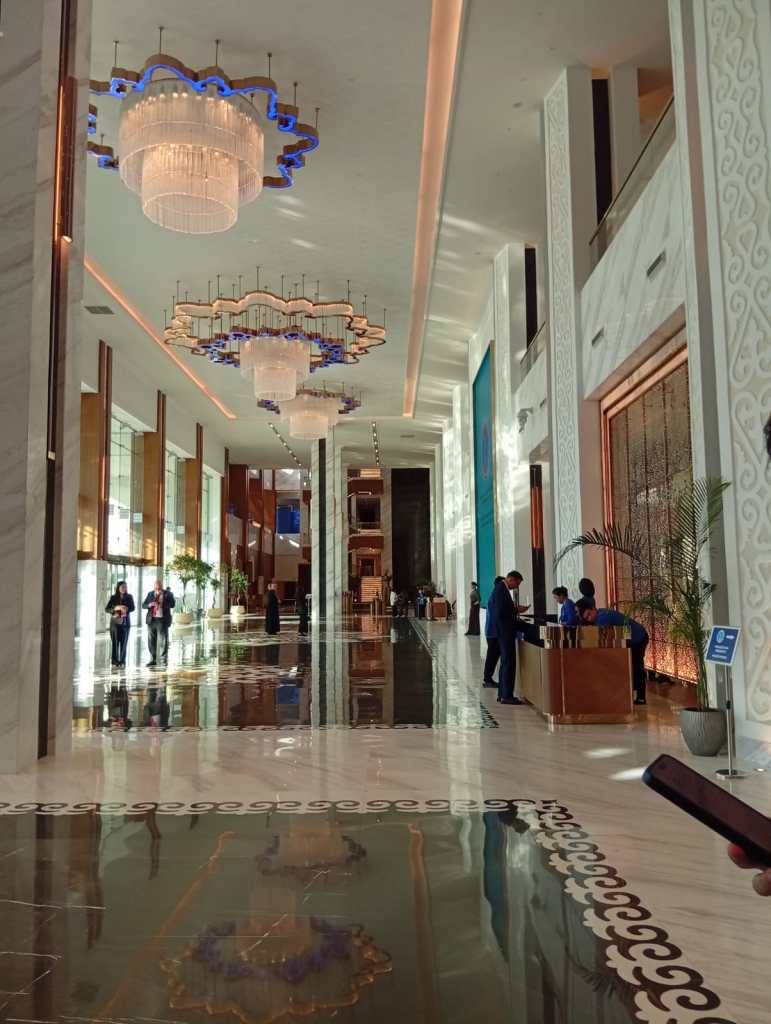
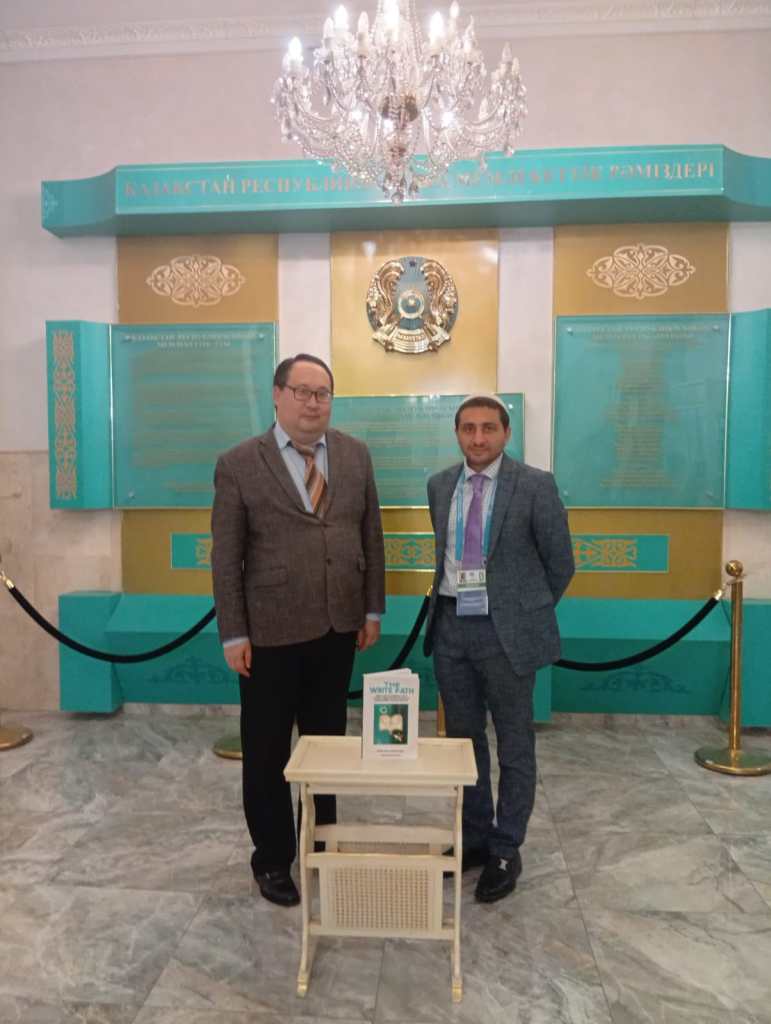
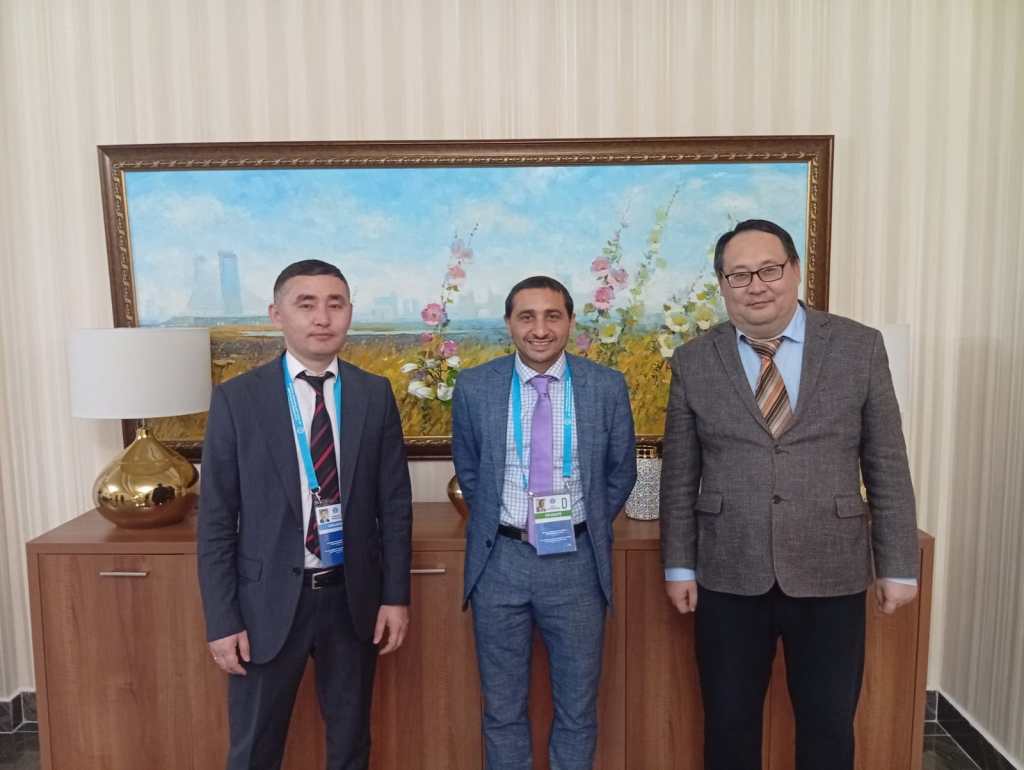
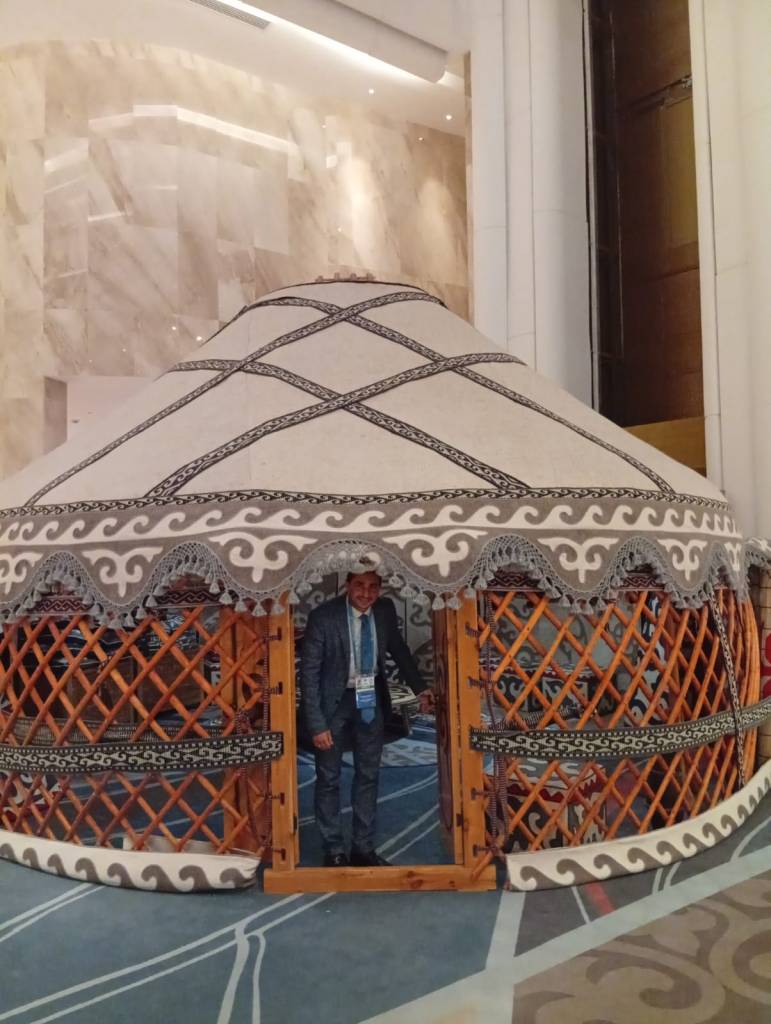
Debate for Peace director Steven Aiello participated in the Second Annual Forum of Young Religious Leaders, as part of the Congress of Leaders of World and Traditional Religions, held in Astana, Kazakhstan. This year’s Congress, the 8th triennial gathering, featured the theme “Synergy for the Future”, and was hosted at Independence Palace in Astana. The plenary session of the Congress was chaired by Mr. Maulen Ashimbayev, Chairman of the Senate of the Parliament of Kazakhstan, and Chairman of the Congress of Leaders of World and Traditional Religions. The conference was opened by President Tokayev, the President of Kazakhstan, who welcomed all of the participants, and noted the importance of striving for dialogue, and of religious leaders leading a global movement of peace for humanity.
Following the President, Mr. Ashimbayev provided a summary of the Congress’s activities, and called up speakers, including Patriarch Kirill of Moscow, head of the Russian Orthodox Church; Cardinal George Jacob Koovakad, prefect of the Dicastery for Interreligious Dialogue at the Vatican; the Ashkenazic and Sephardic chief rabbis of Israel; the Greek Orthodox Patriarch of Jerusalem, Theophilos III; Secretary General of the Muslim Council of Elders; Anglican Bishop Jo Bailey Wells; President of the World Fellowship of Buddhists; Minister for Religious Affairs and Interfaith Harmony of Pakistan, Mr. Sardar Muhammad Yousuf; Chancellor of Somaiya Vidyavihar University, Mr. Samir Somaiya; Al Azhar University representatives; Chairman of the Muftis of Russia, UN Undersecretary General and High Representative of UN Alliance of Civilizations Miguel Angel Moratinos, and OSCE High Commissioner on National Minorities, Mr. Christopher Kamp, along with additional leaders.
The plenary remarks, delivered in more than half a dozen languages, with simultaneous translation, focused on the common values that the world religions share, and how to engage in “spiritual diplomacy” rooted in core values like peace, justice, and coexistence. It was expressed that the Congress of World and Traditional Religions serves as a “moral compass” for the world; the need to engage in constructive dialogue with one another to find a common path to realize a better future for all; and acknowledgement that dialogue begins with listening, which often takes courage.
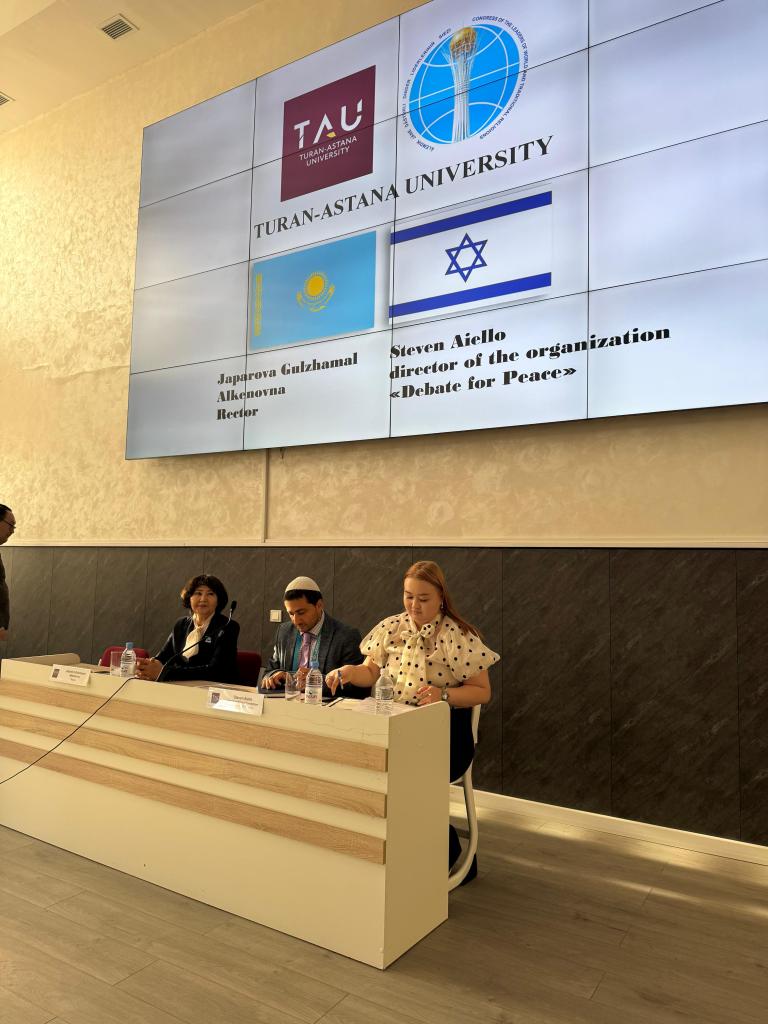
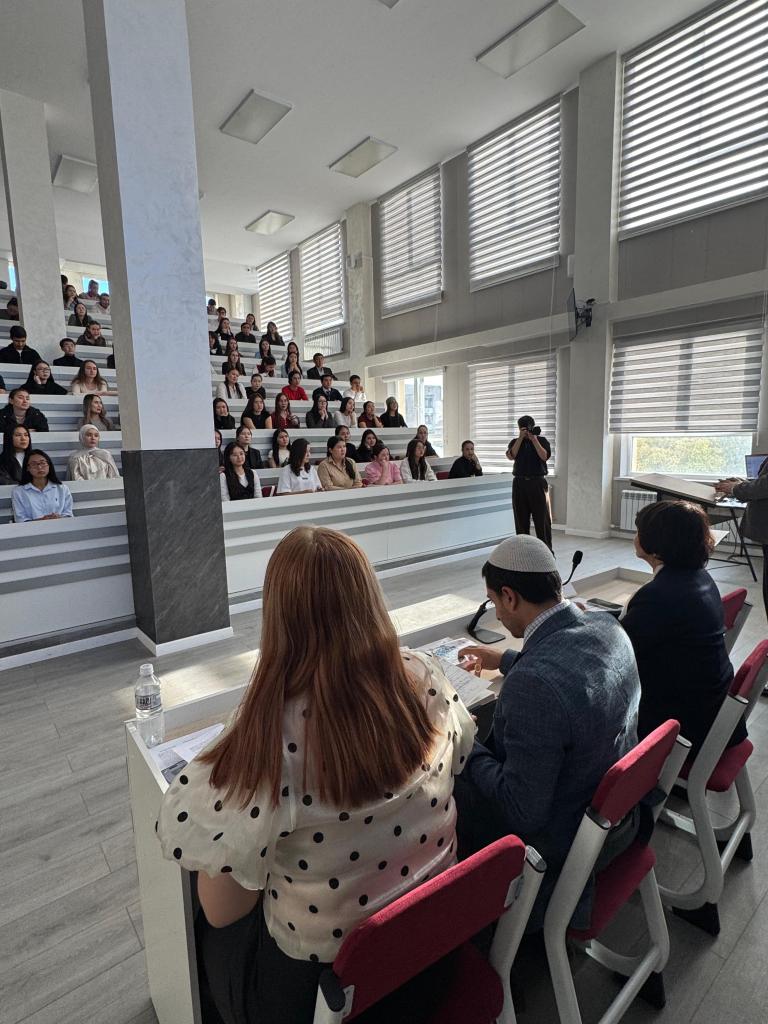
Following the first day of the Congress, Debate for Peace director Steven Aiello met with administrators and over 100 students from Turan-Astana University, where they discussed the work of Debate for Peace to promote peace and reconciliation among youth via educational initiatives, as well as possible areas for cooperation in the future.
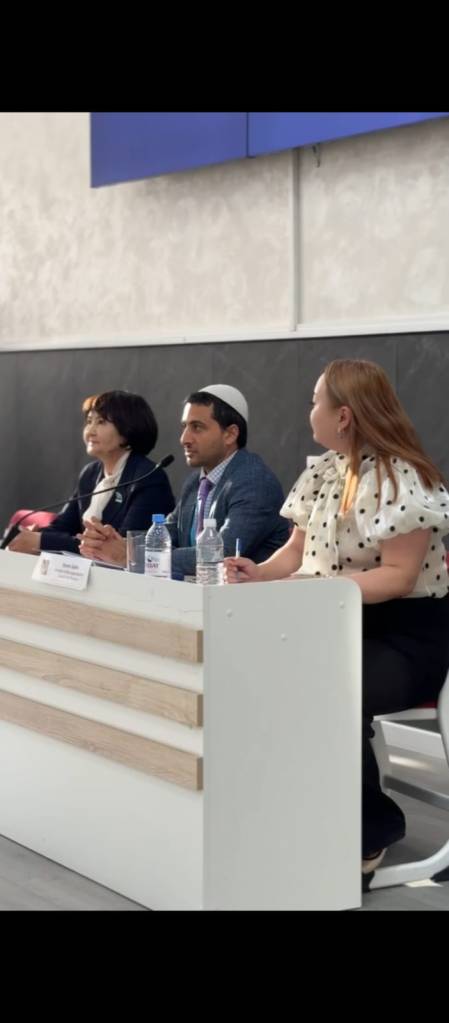
The Forum of Young Religious Leaders was held on the second day of the Congress, including opening remarks from Chairman Ashimbayev, emphasizing the important role of Youth in promoting religious dialogue and leadership. The opening panel, chaired by Bishop Jo Bailey Wells, included Ms. Zainab Ali Mahmood, head of the PR Services of the Grand Imam of Al Azhar; Dr. Abhishek Ghosh, Dean of Faculty at Somaiya University; Associate Prof. Ivan Ivanov, Chairman of the Board of the International Center Alliance of Civilizations, Ms. Zarina Kudabayeva from International Center for Interfaith and Interreligious Dialogue in Kazakhstan, and the Undersecretary General for Legal Affairs of the Muslim World League. The forum’s opening panel discussed going from texts to practice, in incorporating religious values into daily action, to engage with and address challenges of the present and future.
In the “Forum Talks” session, Renz Argao (Coordinator of Religions for Peace International Youth Committee and head of the Asia-Pacific Interfaith Youth Network); polyglot social media activist Madi Fazyl, Sri Lankan Anglican Church activist Ninadi Heshara, Imam Nurlan, chief imam of the Yryskeldy Haji mosque in Astana, and Debate for Peace director Steven Aiello each presented talks on “Synergy for the Future”. These speeches, in Ted Talk style, challenged the audience members to seize a “seat at the table,” use common values to build bridges with diverse communities, and take action to create a better future for all.
The forum then concluded with a recitation of the communique “Youth for Peaceful Coexistence” by Emmanuel Ganse, President of the Tonafa Institute in Benin, before the members rejoined the Congress for its concluding session, once again joined by President Tokayev.
That evening, participants of the Congress and the Forum enjoyed a lavish reception at the Astana Hilton, which included a rich program of music and dance, showcasing the diversity of Kazakhstan’s cultural heritage.
Debate for Peace extends its appreciation to the Government of Kazakhstan, for its firm and unwavering support of peace and interreligious harmony, as showcased in the Congress of Leaders of World and Traditional Religions and to the Embassy of Kazakhstan for the opportunity to participate in the Congress and the Forum of Young Religious Leaders.
Amidst a summer of record-breaking heat and divisive war, Children of Abraham brought together 200 Palestinians and Israeli Jews for a fun day of camping together.
The event was multigenerational, with parents, grandparents, and children of all ages, coming from cities and towns around Israel and Palestine. Children were welcome to join Marc’s arts and crafts station, play with puzzles and inflatable carnival games, and get facepainted by a clown. Throughout the event several stands also provided handmade Palestinian crafts for sale, to help support local women artisans.
After enjoying a group dinner, a DJ played ambient music chosen to help everyone relax after a stressful summer. There were also dialogue circles and a Writers Matter group for participants to express their perspectives and experiences. The next morning breakfast was provided for all participants.
With 100 tents spread out on several levels, there was ample space for everyone to sleep comfortably, although some chose to take advantage of this opportunity to stay up late discussing peace and unity with friends from such diverse backgrounds across the holy land.
During the opening remarks of the evening, Children of Abraham programs director and Palestinian peace activist Mohamad Jamous greeted all of the participants and welcomed them to another initiative to bring people from different communities together in solidarity and friendship. Subsequent speeches emphasized the diversity of the group, as well as the importance in choosing to come together in peace and friendship, for a better shared future. After these warm words, a special award was presented to Children of Abraham founder Jerry Katz for his dedication to Abrahamic peace in the holy land, and globally. For more information about future Children of Abraham events, please contact Mohamad (050-3190239; Mohamad.jamous26@gmail.com).
Organizer Mohamad Jamous thanked those who had supported the initiative, including David, Leah and Yoel, and shared his thoughts on the successful event:
Here I am, waking up to a new day in my journey along the path of humanity and peacebuilding.
I walk like an old man, weary in his features, whose face has been carved by years of pain, carrying on his shoulders a burden heavier than mountains… the burden of two peoples exhausted by wars, torn apart by bloodshed.
For fifteen years, I have stood—again and again—against despair, to organize yet another event, yet another gathering, that brings together what wars have divided.
I bring together people from different religions, nationalities, and backgrounds, to build a bridge of encounters, smiles, and humanity.
I have always—and still—worked to reunite people, just as I did with thousands over the past years.
I walk tirelessly, with no compensation, no salary, no reward.
I walk, carrying wounds that pierced my heart and soul, surrounded by a deep sadness that never leaves me. But I swore to continue… and I have continued.
And today, among the hundreds of programs I have led, I organized an interfaith summer camp that brought together about 200 people—young and old—inside 100 tents.
A camp that restored smiles to the faces of children, smiles I wished I could plant in the heart of every child on this wounded land… in Palestine, in Israel, and across every corner of the world.
Two hundred people shared their days and nights inside tents filled with stories, with tears, with pain…
But also filled with hope.
The theme of our camp this year was: “Justice, Humanity, and Equality for both the Israeli and Palestinian peoples, and for all peoples of the world.”
And I extend my heartfelt gratitude to everyone who stood with me and supported me, as always, to make this gathering possible—a gathering that unites us, that brings us together, and whispers to us that tomorrow will be better.