IOMUN XIX: Women’s Rights and Robot-Human Crisis

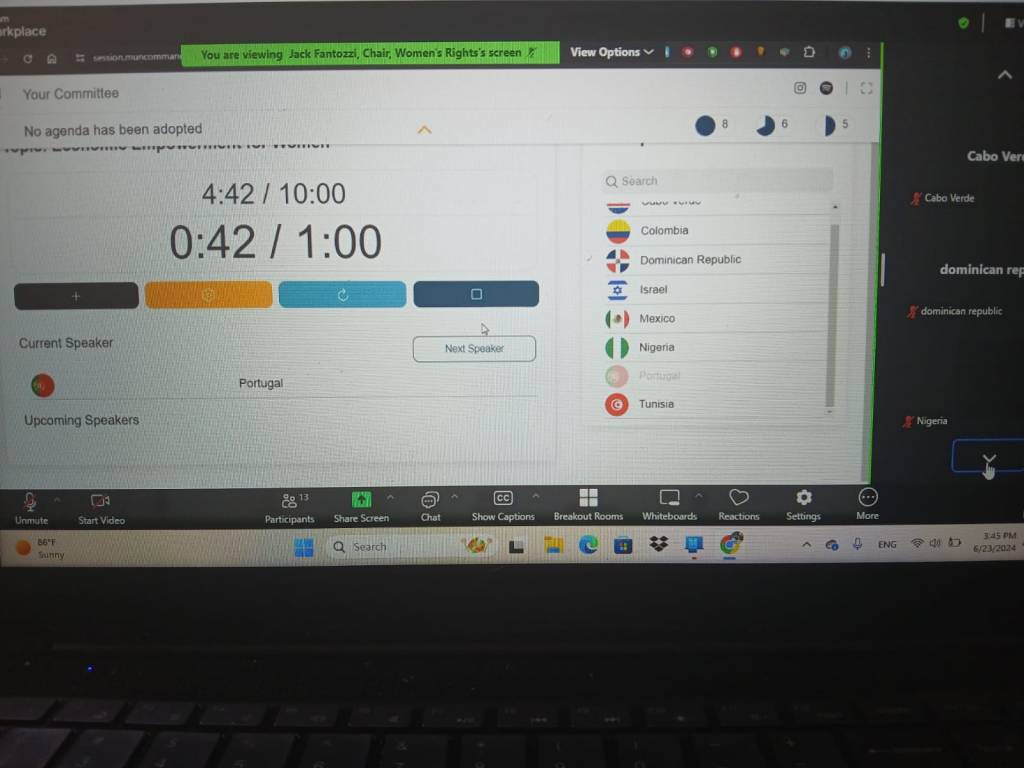
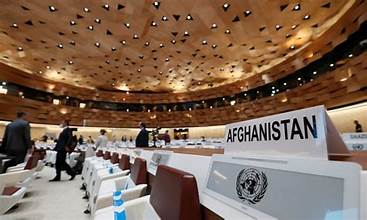
IOMUN XIX took place on Sunday June 23, with students from over a dozen countries and 4 continents competing in two virtual MUN committees. In the UN Women committee, delegates debated the many challenges facing women’s rights in Afghanistan following the return to power of the Taliban, trying to advance solutions to improve the situation. In the crisis committee, students time-traveled to 2075, where a (hopefully) fictitious war between humans and robots has broken out. The students represented humans and robots and tried to avoid a catastrophic end of the world.

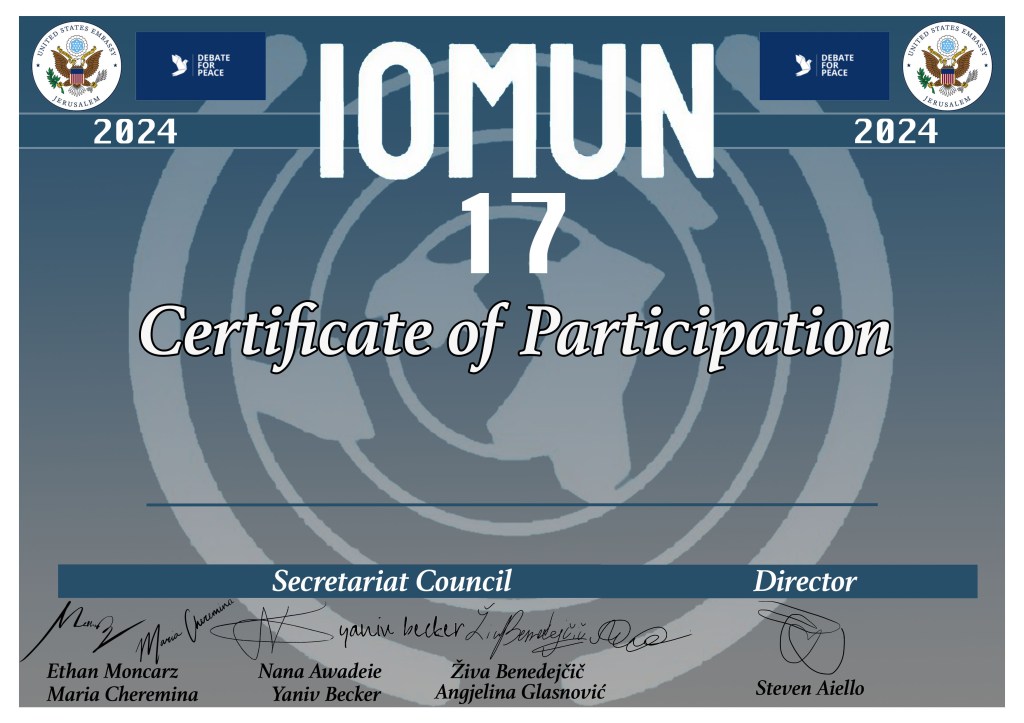
The conference lasted for well over three hours, as both committees built up momentum. Finally during the award ceremony at the end, their achievements were recognized. Each participant will also receive a certificate of participation. A special thanks to the Secretariat team of IOMUN XIX: Angjelina, Nevan, Sai and Ziva. IOMUN is supported by the US Embassy in Jerusalem and run by an international Secretariat of students on three continents. In addition to the virtual conferences, IOMUN runs delegations to the UN, and to Model UN conferences abroad, in partnership with Debate for Peace.

TIQVAMUN IX at China International University: 150 students debate human rights, sustainable development, and war

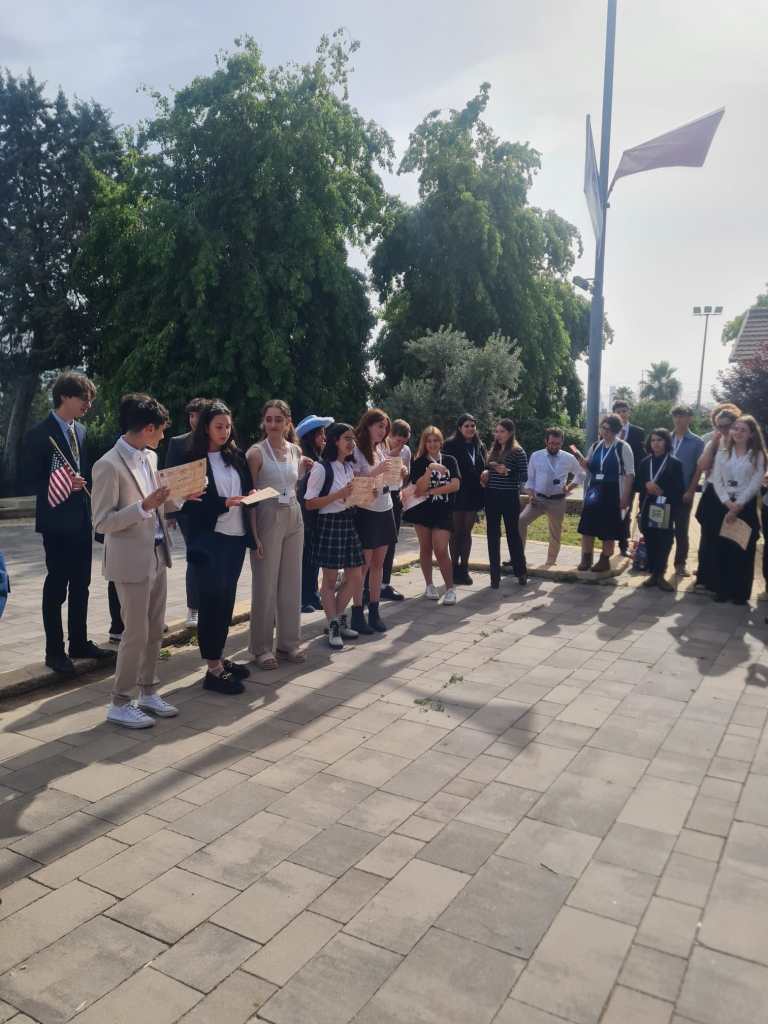
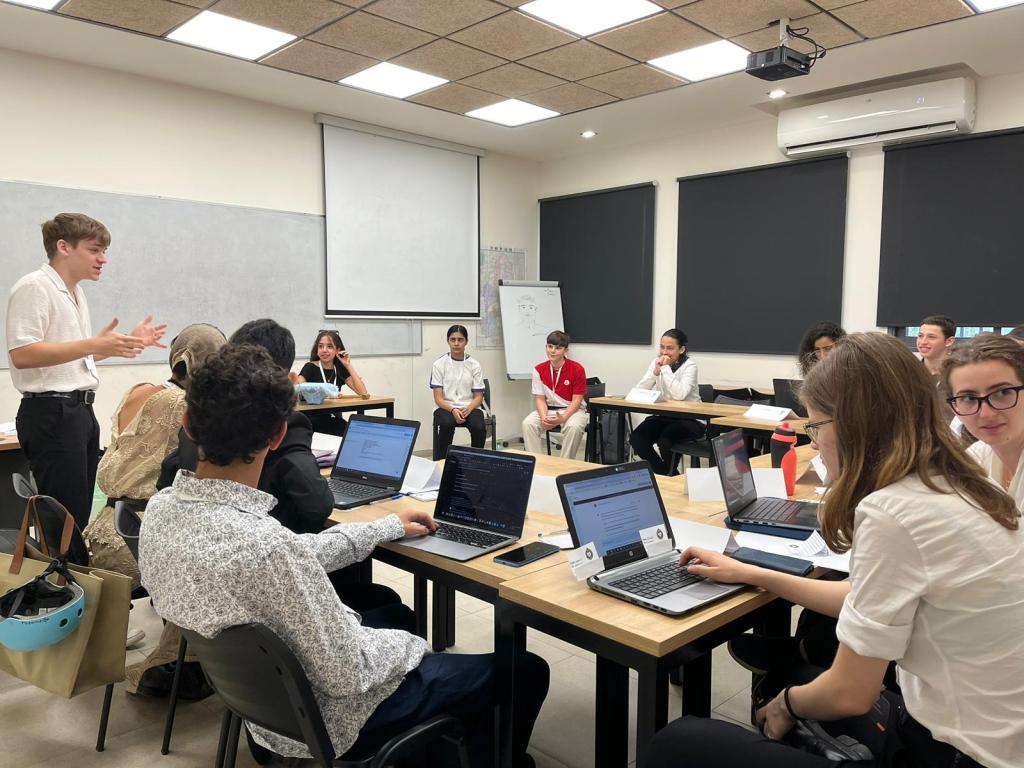
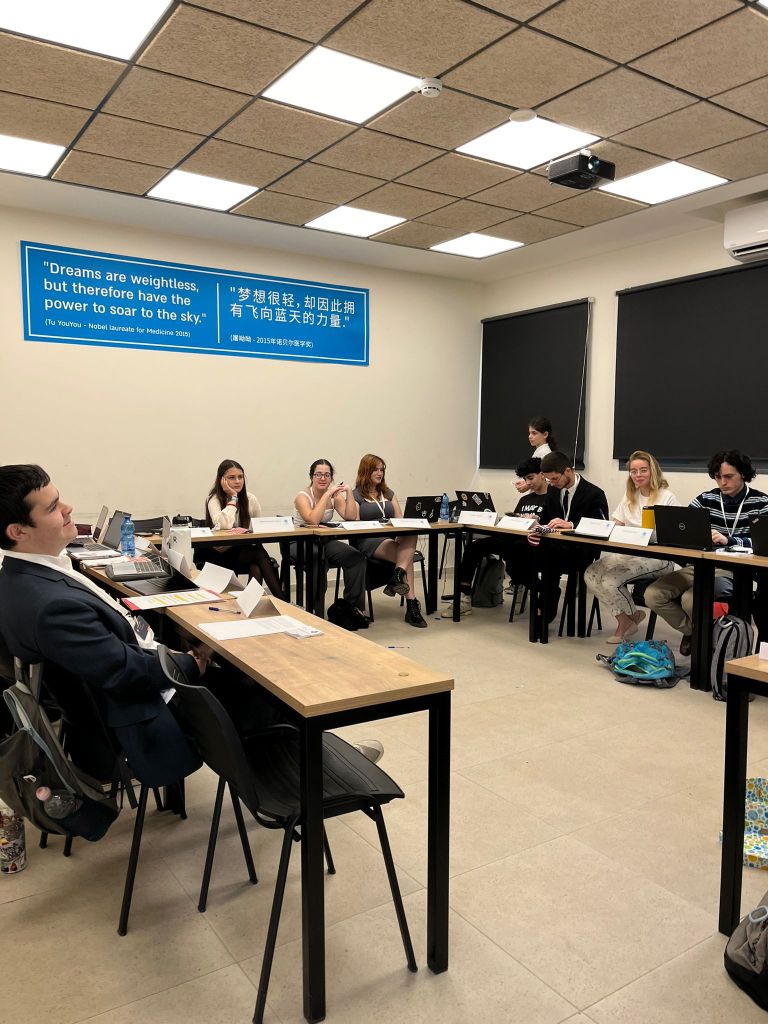
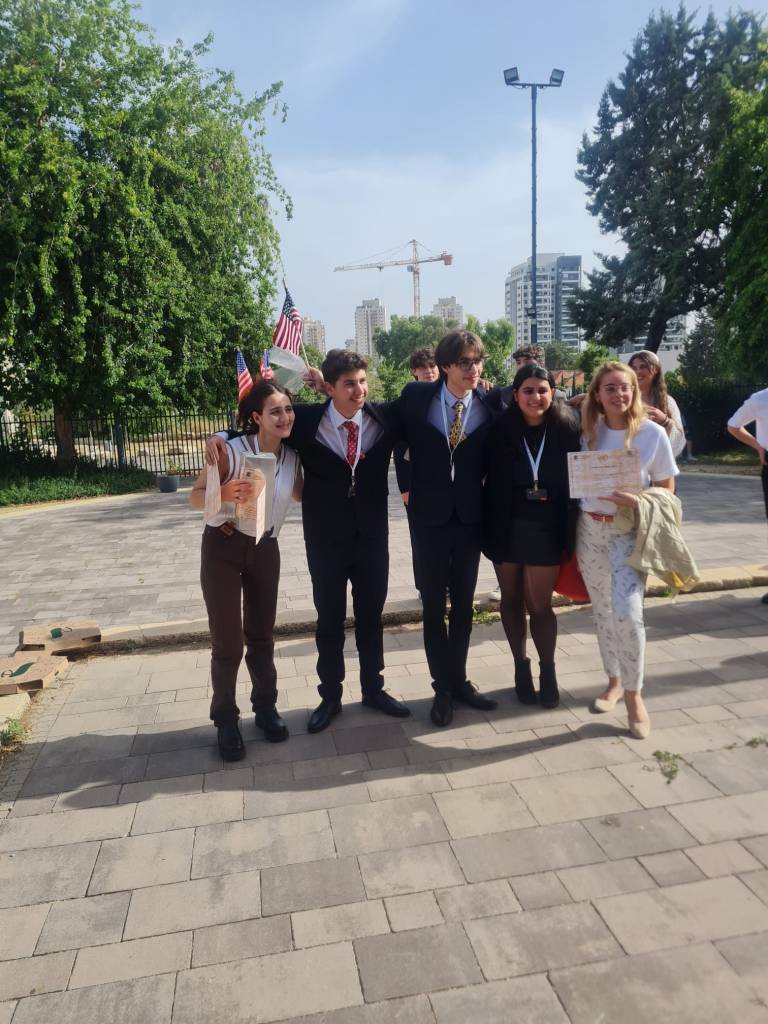
TIQVAMUN, Israel’s second oldest MUN conference, was hosted by the Chen Young Ambassadors School at Thursday, May 23. This year the conference brought together 150 students from over a dozen schools and cities for a full day of Model UN at the UIBE-ISRAEL China International University in Petah Tiqva. The students competed in six committees ranging from beginners (Human Rights Council; UN Environment Programme) to intermediate (UN Development Programme) to advanced (African Union, and 9/11 two-cabinet crisis). 

After a full day of the conference, the awards were announced: In HRC, Maya Kessel (Hadassim), Shachar Cohen (Hadassim) and Maya Sinclair (Yachad) were Outstanding Delegates, while Guy Regev (Atid Lod) was Best Delegate. In UNEP, Yuval Prusak (Misgav), Hili Michaeli (Atid Lod), and Yarden Indursky (Meitarim Ra’anana) were Outstanding Delegate, while Omer Attia (Hadassim) was Best Delegate. In UNDP, Amir Liba (Shoham), Hadar Rosenfeld (Atid Lod), and Naya Sagiv (Atid Lod) were Outstanding Delegate, and Rotem Weiss (Branco Weiss Rabin Keshet Mazkeret Batya) was the Best Delegate.

In the advanced committees, in the African Union Tzlil Israeli (Atid Lod) and Gilad Revel (Branco Weiss Mazkeret Batya) were Outstanding Delegates, and Alon Rozenson (Shoham high school) Best Delegate. In the US Cabinet, Roy Bernstein (Atid Lod) and Nika Berditchevsky (Debate for Peace) were Outstanding Delegates, and Alma Ben Avraham (Shoham) was Best Delegate. In the Taliban-Al Qaeda cabinet, Rotem Tsadok (Branco Weiss) and Ziv Maman (Shoham) were Outstanding Delegate, and Ward Uweis (Debate for Peace) was Best Delegate.

Director of the Young Ambassadors School, Sharon Seiden Volcani, congratulated the students who organized and participated in the conference, and said that the conference instilled values of democracy, diplomacy, problem-solving, debate, civil discourse, and negotiation skills to the participants. TIQVAMUN IX’s Secretariat included Maya Avraham (Secretary General), Yaniv Becker (USG), Eve Burde, Amichai Kremer, Shani Eigerman, and Ella Fishler. Thanks to the US Embassy for its support of the conference, and of MUN in Israel.

Two Sides, One Humanity: An Israeli-Palestinian Poem

The following poem was cowritten by a Jewish Israeli author and a Palestinian author as part of the Writers Matter program led by Professor Bob Vogel. The juxtaposition of two stories (fictional names based on the tragic reality of the ongoing war and surrounding conflict) illustrate how there are two human sides to the conflict, both suffering and both struggling to see one another’s pain.

Two Sides, One Humanity

It’s Sunday morning. I wake up, drool on my pillow, sheet marks scattered across my body, face still puffy. I turn on the TV to watch my favorite cartoon when unintentionally I see the news. I only linger for a moment.

On the news, they say it was them. How can I love them? They are the devil. How can I love them?

My friend Mohammad lost his parents in 2014; they were killed by a bomb. Before that, he used to be the life of the party, his smile shining bright, laughter filling my ears anytime I was around him. He loved to play soccer and play “bananir” and “8omida.” He had a dream; he wanted to be a therapist, to help heal souls, broken souls.

He doesn’t smile anymore, only the pity smile he gives to the people who say, “Sorry for your loss.” He doesn’t care about souls anymore; he doesn’t believe everyone has them. I threw a ball at him and said, “Come on, let’s play.” He kicked it back like it was never a part of him and said to give it to a kid who would enjoy it. I think I saw a tear fall, but I didn’t say anything because kids were orphaned all the time. Looking back now, I would have hugged him and told him everything would be okay. But that was a lie, and we both knew it even then… Ten years later, Mohammad was killed during the war. Then I knew it would never be okay.

My friend Yoav lost his brother during the second intifada. He was always a quiet kind kid and never let anyone fall behind. He loved to read books and go to the beach. He said he was at peace there. Yoav wanted to write books and travel the world.

Yoav is still quiet, but the kind of quiet that you notice, the kind that comes from people who have lost the will to say anything. He doesn’t read books because his brother would be the one to bring them to him. I don’t remember the last time I saw him holding a book. Yoav doesn’t come to the beach anymore. I wonder if he even has a place for peace. He doesn’t travel. I think he felt guilty to travel when his brother was six feet under. Looking back, I would have hugged him and told him everything would be okay. But that was a lie, and we both knew it even then… Twenty years later, Yoav was killed at the nova party. Then I knew it would never be okay.

Sometimes I wonder how you expect us not to hate the very people who took everything away from us.

Mohammad, even when he didn’t get to be a therapist, he was my therapist. He never liked seeing me sad, so why leave? He taught me so much and even showed me how to love myself. He used to help his mom and everyone around him. When he was killed, I didn’t just lose my friend or my therapist; I lost a part of me. A big part of me is with him in heaven. Maybe he can be that part’s therapist.

Yoav was everything to me. He was a brother. He wrote me little stories and held me up when life got tough. So why leave? Yoav was a pure-hearted boy. He wouldn’t hurt a fly. And now he’s up in the sky. My dear Yoav, are you looking down on me, guiding and protecting us?

Mohammad? 

Yoav? 

Just feel, take a deep breath, and let go. 

Stretch your hand and lay your head on my chest over my heart. 

Can you feel my heartbeat? 

I can’t feel yours. 

Why can’t I feel yours? 

Can you hear me? Are you listening? 

Are you there? Maybe if you don’t have a rhythm, you can follow mine, the rhythm of love. 

Love? I think I mean the rhythm of fear.

Eyes, beautiful eyes left open even when life went. 

Ears, clogged. Leave the ignorant bliss and educate yourself. 

Stop hearing and start listening to me. 

I will own up to my part in our story. 

But stop hiding. 

You are not innocent; a victim maybe, but you played a hand in your own downfall.

Tongues, swear to god. 

They spread empty promises and lie 

until those little white lies turn the tongue into black dust. 

You promised a future, but Palestinians in Gaza fail to pass the age of 18. 

A nation of children who never grow up. 

You promised a place where I could be me. Israeli Jews massacred in their own country. 

A nation that has been slaughtered since the beginning of time.

Our senses make us senseless. 

Paralyzed in fear like a child abandoned 

angry like the breeze slapping the trees.

Two sides, always two sides, yet only one ever seen or one you choose to see.
I Am From- by Dana

Part of the Writers Matter program led by Professor Bob Vogel

I Am From / Dana Khatsevich

If you ask me where am I from

I’ll remain silent and won’t answer at all

I would be staring right into the void

Afraid to say something and regret afterward. 

If you ask me where am I from

I’II imagine all the hurting souls

Screaming and prying trying to go back to their homes

Covered in blood and wounds

Afraid to move to not get shot

If you ask me where am I from 

I’II be frozen and won’t move at all 

I would try to avoid my thoughts 

Because I know deep down 

That they are just lost hope

If you ask me where am I from

I want to shout out the name of my home 

I want to say 

I am from a beautiful place

with a loving community and a welcoming hand.

I am from a beautiful place 

With shining smile and unforgettable face

The place that I should never be afraid to represent

but what can I say, I’m afraid of everyone to find that I am from Israel

Delegation to Philadelphia and DC with Writers Matter and Heart of a Nation Brings Message of Hope and Empathy

In the immediate aftermath of October 7th, Debate for Peace partnered with Professor Bob Vogel to run a 9 week writing course to help students and teachers process the emotions that they were facing. The writing, which covered themes ranging from fear and pain caused by the war, identity, questions about the future, and more, turned out to be very powerful and moving. 

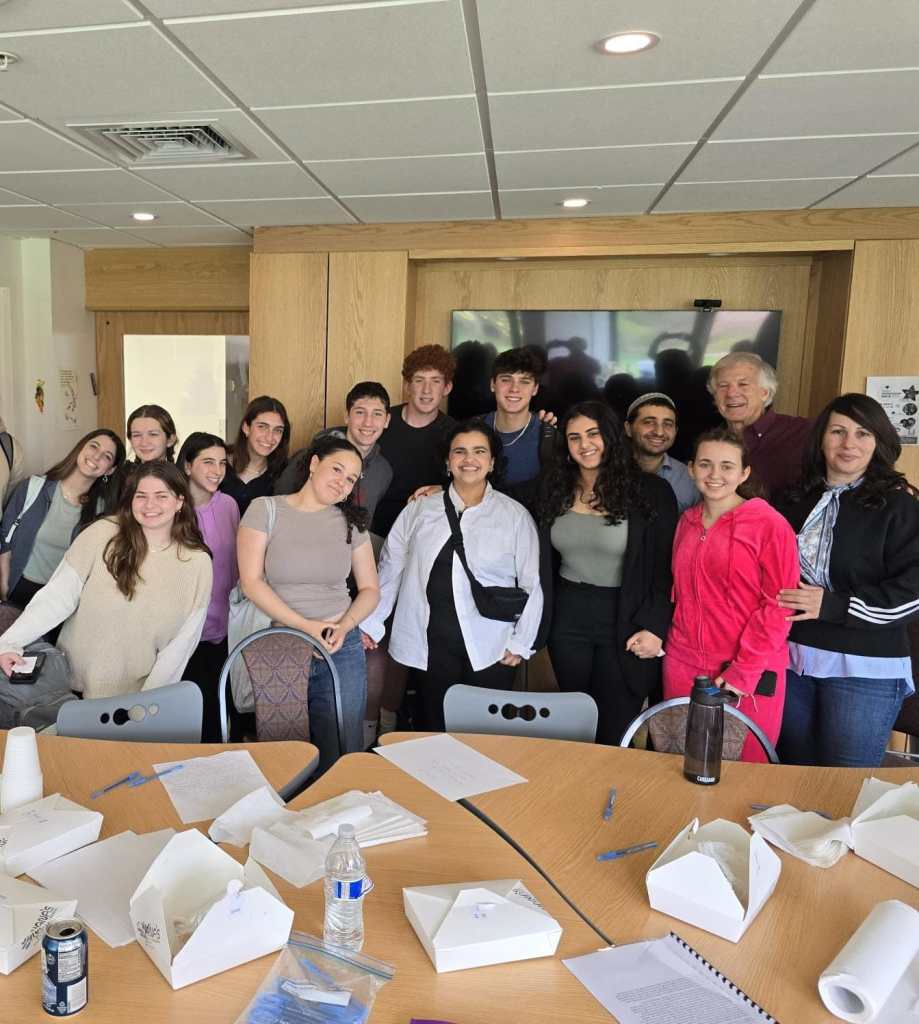
Over the last week, with the help of Professor Vogel’s Writers Matter, and Jonathan Kessler’s Heart of A Nation, a delegation of six students and two teachers traveled to the US to read their work and speak about their experiences. These meetings highlighted the difficulties that Jewish Israeli and Palestinian teenagers have faced in the last six months, as well as their dedication to forge a new, peaceful future together.

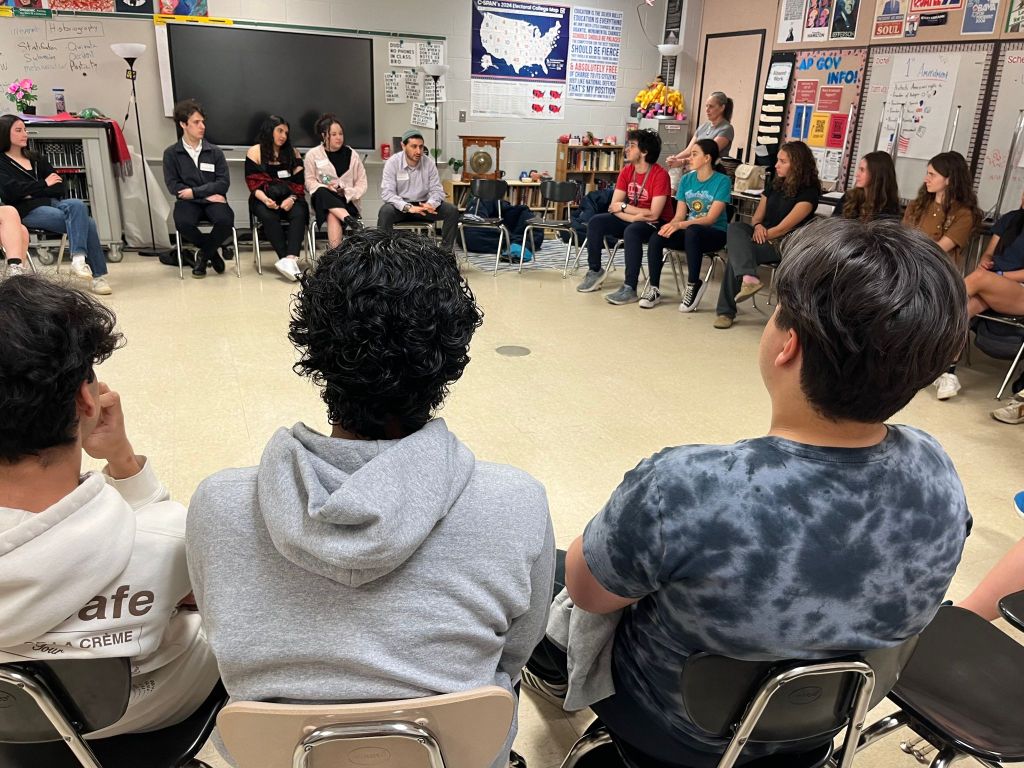
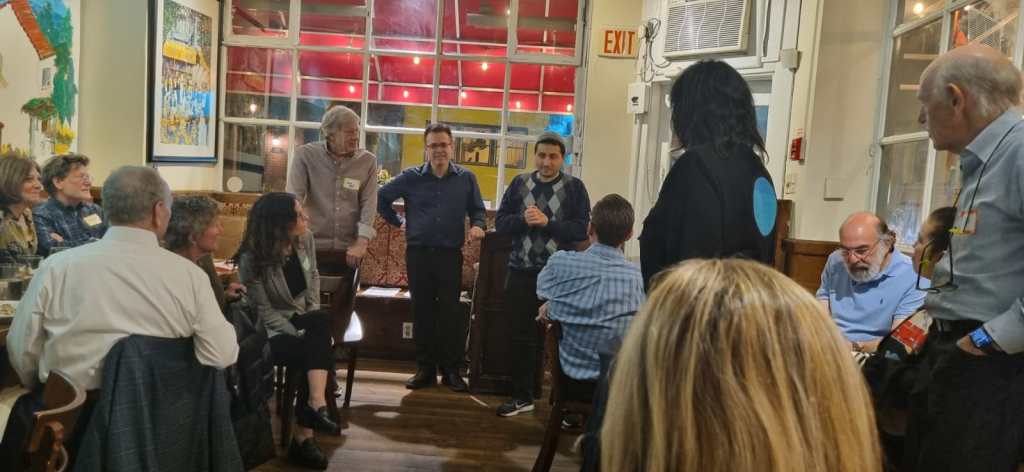
The group met with public and private middle school and high school audiences, visited four college campuses, several synagogues and a church, met young professional groups, and spoke at the World Affairs Council in Philadelphia and the Israel Policy Forum in DC. In Philadelphia they also had a chance to interact with local participants of the Writers Matter program, and to lead a peer writing session. 

In total, the delegation met with about 500 people during the course of the delegation. The reactions were overwhelmingly positive, with many audience members and participants mentioning how inspired they felt, encouraging the students to keep writing together, and even asking how they could get involved.

Debate for Peace is grateful to the US Embassy for its support, to Professor Bob Vogel for his selfless dedication to giving students a voice, to the generous donors who enabled the delegation, to Mr. Jonathan Kessler and Heart of a Nation for hosting and facilitating the delegation’s visit to DC, and to all of the groups who invited the delegation to present.

Debate for Peace Visits European Parliament and UNRIC; Competes in YMUN Europe

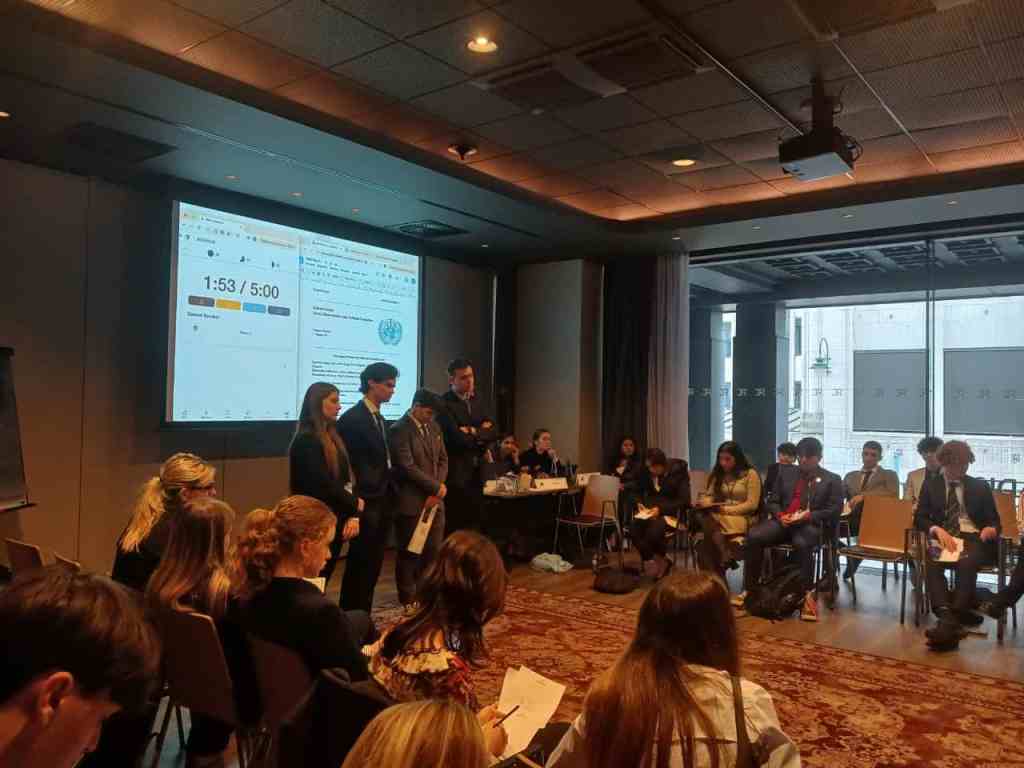
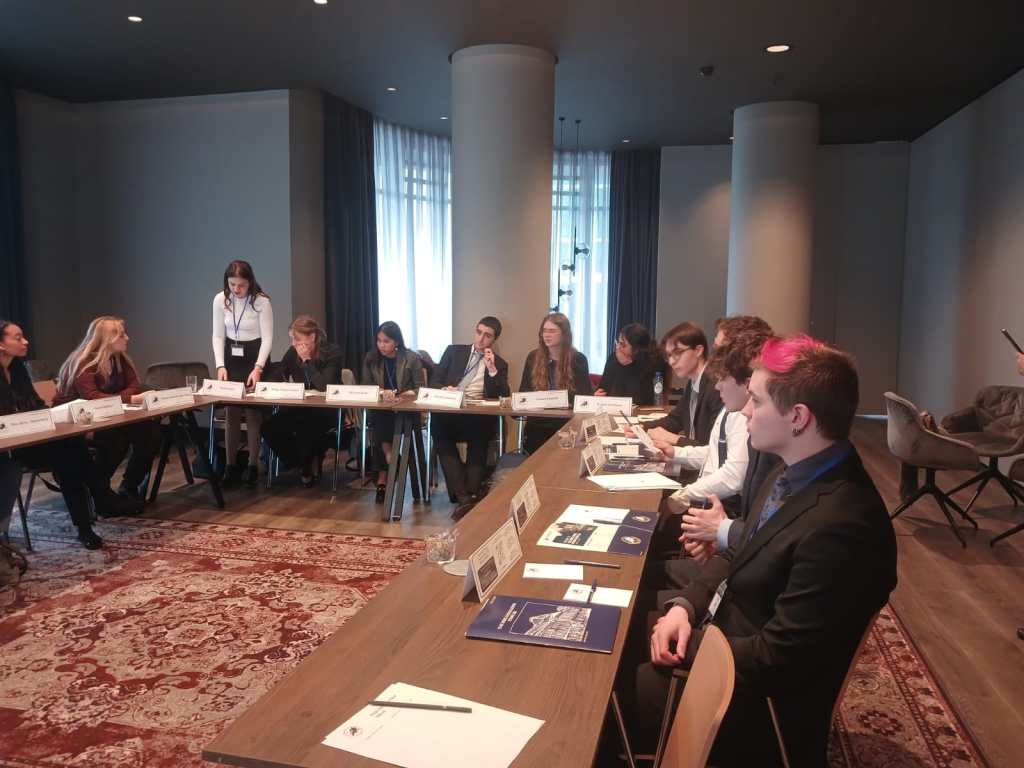
Yale Model UN Europe brought together students from top schools across North and South America, Europe, and Asia for three rigorous days of MUN, March 15-17. Debate for Peace was proud to take part in this prestigious conference, held in Brussels, Belgium, the heart of the European Union.

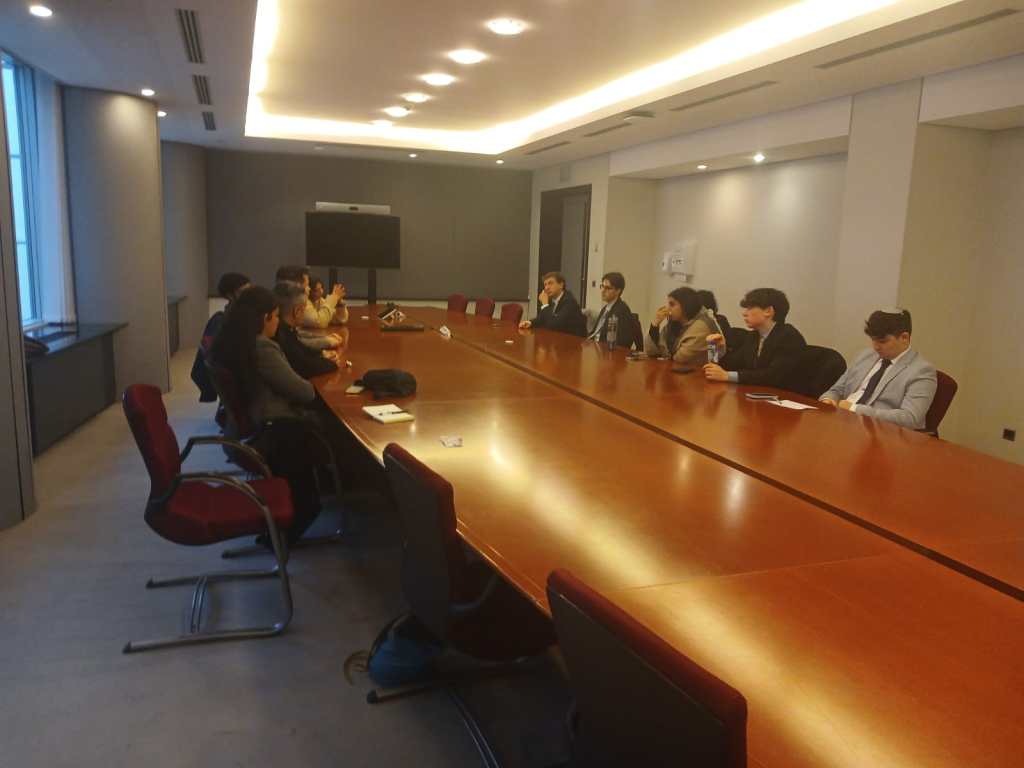
The Debate for Peace delegation included students from six schools around Israel, as well as two students from Pristina high school. The group held a day of briefings on Thursday, March 14th, meeting with the German mission to the European Union, the Human Rights Action Unit at the European Parliament, the UN Regional Information Center (UNRIC), followed by a discussion with Simone Susskind with the Actions in the Mediterranean group.

The delegation then competed in six committees, ranging from historical crisis committees to the EU, SOCHUM and ECLAC committees. Each delegate put in hours of research to prepare for the conference, and the team as a whole performed at a high level, as befitting such an international competition. A special congratulations to Ari Plosker (Best Delegate Historical Security Council) and Yara Huleihel (Essay competition winner).

Debate for Peace thanks the Yale Model UN team for a special MUN conference, and for helping bring together students from such diverse backgrounds for this wonderful experience.

IOMUN 17: Delegates on Five Continents Address Challenges of the Past, Present and Future

On Sunday, March 3, 40 students from over 15 countries participated in IOMUN 17. The latest iteration of international online MUN, featured three committees: UNESCO (redesigning education); UNOOSA (addressing space challenges in 2075), and a historical Crisis committee dealing with the 9/11 attacks.

The conference opened with a guest speaker, Jake Morris, who spoke about how his own MUN experiences, from a delegate in high school to helping run Johns Hopkins University MUN, helped prepare him for a career in international relations.

After the ceremony, delegates began their opening speeches, before moving to collaborate and negotiate as they attempted to write a comprehensive resolution to their respective challenges. Despite being from a wide range of time zones, the delegates worked for nearly four hours, going down to the wire, before the final votes, or in the case of the crisis committee, the final directive.

During the award ceremony, in UNESCO, Teo Leon Villa (Estonia), was Honorable Mention, Maheswaran Narayanan (Estonia) was Outstanding Delegate and Shaurya Shetty (Mozambique) was Best Delegate. In the UNOOSA committee, Giancarlo De La Cruz Rodriguez (Spain) was Honorable Mention, Mahir Kridai (delegate of UKSA) won Outstanding Delegate, and Goutham Sivasailam (ROSCOSMOS) was Best Delegate. In the 9/11 crisis committee, Naomi Gildor (John Ashcroft) received Honorable Mention, Ayushmaan Mukherjee (Head of FBI) was Outstanding Delegate, and Guy Bar Gil (CIA Head) won Best Delegate.

IOMUN 18 will be held on April 14th. IOMUN is supported by the US Embassy in Jerusalem and run by an international Secretariat led by Nana, Yaniv, Ziva, Angjelina, Nevan, Sai, Anna, Sami, Ethan and Maria.